

Food of the plains
Llanero food: the cooking of the Colombian and Venezuelan plains
Beef roasted beside the fire, river fish, corn and rice: what the llanos eat and how to cook it at home.
The llanos are the vast tropical grasslands of the Orinoco basin, split between eastern Colombia and western Venezuela, and a llanero is the cowboy who works them. Their food follows the cattle: beef roasted slowly beside a wood fire with nothing but salt, like mamona, or ternera a la llanera, and carne en vara; beef cooked, shredded fine and fried dry, like pisillo; river fish such as cachama; and corn and rice doughs wrapped in leaves, like hallaquitas and tungos, served with the roast. Almost nothing is spicy: the flavor comes from wood smoke, salt and the sauce on the table.
Below, the dishes are grouped by type, with how long each roast takes and the oven or grill temperature that replaces the fire, what gets served at a llanero cookout and when, which fish to buy in the US and UK, and what the Colombian and Venezuelan sides share. For each country as a whole, see traditional Colombian food and traditional Venezuelan food.
What is llanero food?
It is the cooking of the Orinoco grasslands: Meta, Casanare, Arauca and Vichada in Colombia, and Apure, Barinas, Guárico, Portuguesa and Cojedes in Venezuela. This is cattle and river country, and that shapes the plate: beef roasted slowly beside the fire, beef salted to keep, freshwater fish, cassava, plantains, corn and rice. The roast gets only coarse salt, rubbed on the day before; garlic and chili go on the table, in a sauce on the side.
Llanero beef: mamona, carne en vara and carne a la perra
Mamona, also called ternera or carne a la llanera, is young veal in large cuts threaded on wooden stakes that are driven into the ground at about 45° beside the coals, never over them. It gets only coarse salt, rubbed on and chilled for 12 hours, then spends 4 hours by the fire, turned every 40 minutes and never pierced. The butchery is its own: la osa (neck, tongue and dewlap), los tembladores (the chest), la raya (the hindquarters) and la garza. At home it works in an oven or covered grill at 300-320 °F (150-160 °C) for 3 to 4 hours, over a tray of water, with a mix of beef short ribs, chuck and brisket.
On the Venezuelan side the same fire is called carne en vara. The home version feeds 8 with beef short ribs and picanha (top sirloin cap), 7.5 g of coarse salt per kg of meat the night before and indirect heat at 300 °F (150 °C): the ribs take 3 to 4 hours, to 200-205 °F (93-96 °C), when a skewer slides between the bones like butter, and the picanha comes off at 131 °F (55 °C), gets seared over the coals and rests up to about 145 °F (63 °C). The same coals will take beef skewers, 8 minutes to feed people while they wait, and lomo al trapo, beef tenderloin cooked 14 minutes in a salt crust. The chart compares the time and temperature of each.
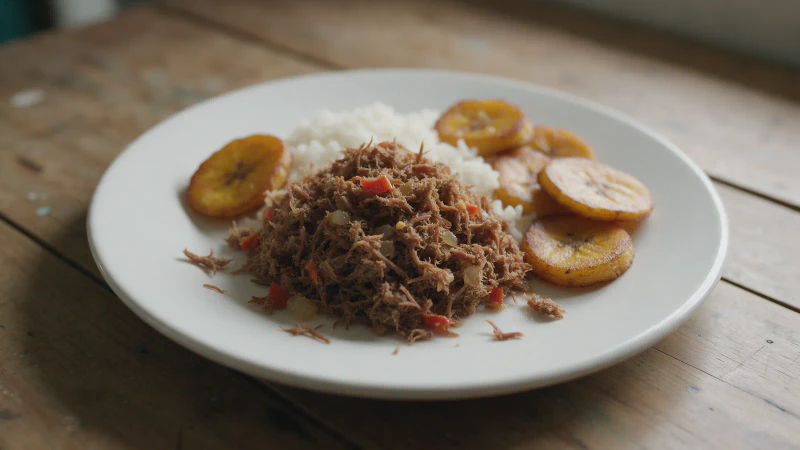
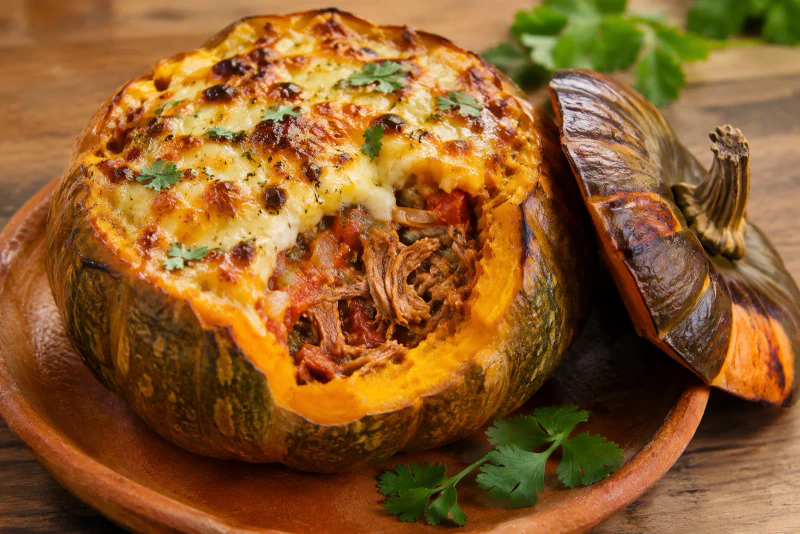
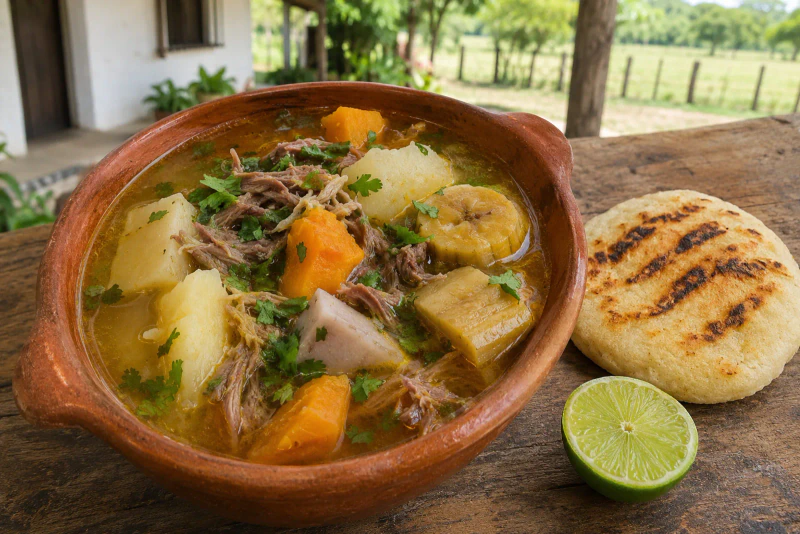
Carne a la perra is the third, and it has no home version: beef with onion, garlic and salt, sewn inside a cowhide and buried under the coals for about 12 hours. It is eaten the day after the party, for the hangover, which on the plains is also called la perra, hence the name. The beef that never sees the fire is pisillo: flank simmered 2 hours, shredded very fine and fried dry for 35 minutes with ají dulce (a mild sweet pepper), cumin and annatto. On the plains it was made with salted, sun-dried beef; at home, the safe way to air-dry beef is the fridge, as in carne oreada. In Arauca, capón de ahuyama is a whole squash stuffed with shredded dried beef, a tomato and onion stew and cheese, then baked at 350 °F (180 °C). And in Barinas and Apure, picadillo llanero is a thick soup of beef, cassava, yam, malanga, green plantain and squash, all diced to ½ inch (1 cm); Apure cooks use salted beef.
 Lunch
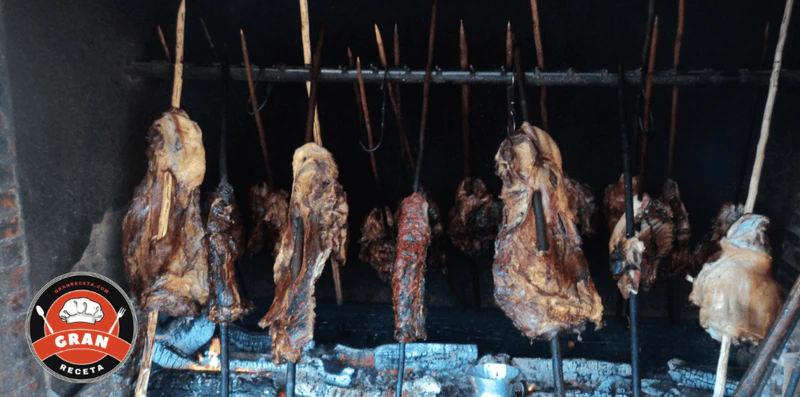
Ternera a la Llanera, Colombian Stake-Roasted Beef
Colombia's llanero barbecue: a young calf butchered into four named cuts, driven onto stakes beside a wood fire and roasted 4 hours with nothing but salt. The fire, the four cuts and a home version at 310 °F.
 Lunch
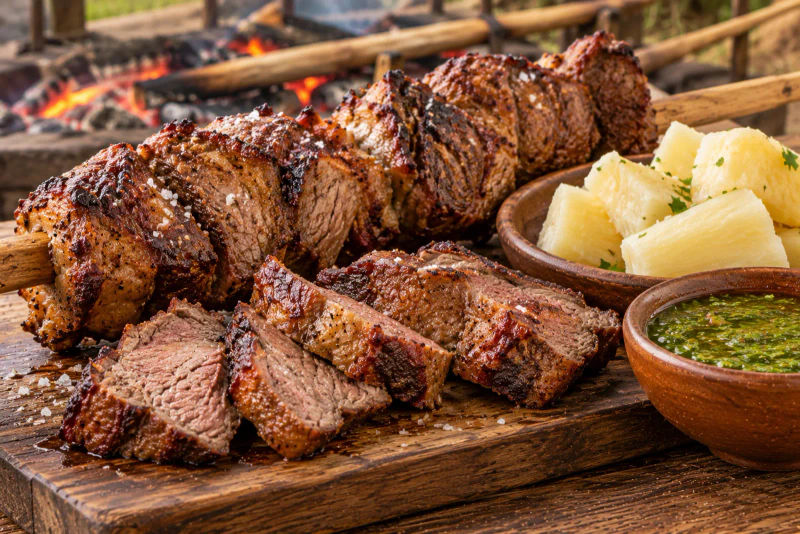
Venezuelan Carne en Vara, Salt-Only Beef for Grill or Oven
Venezuelan carne en vara is beef ribs and picanha seasoned only with coarse salt and cooked low and slow beside the fire. Here's the home version on a lidded grill or in the oven at 300°F (150°C), with doneness temps for each cut, for 8.
 Lunch
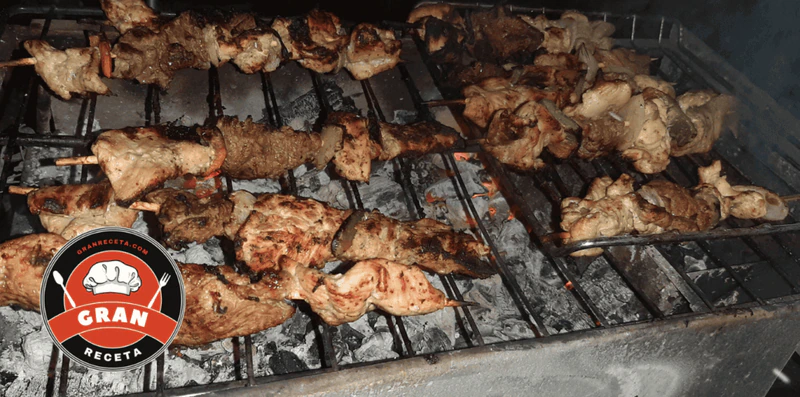
Chuzos de Res, Colombian Beef Skewers
Colombian beef skewers use sirloin cap in 1½-inch cubes, a beer and garlic marinade and eight minutes over medium coals to 145°F. How far a marinade really travels, and which cut survives a grill. Four servings.
 Lunch
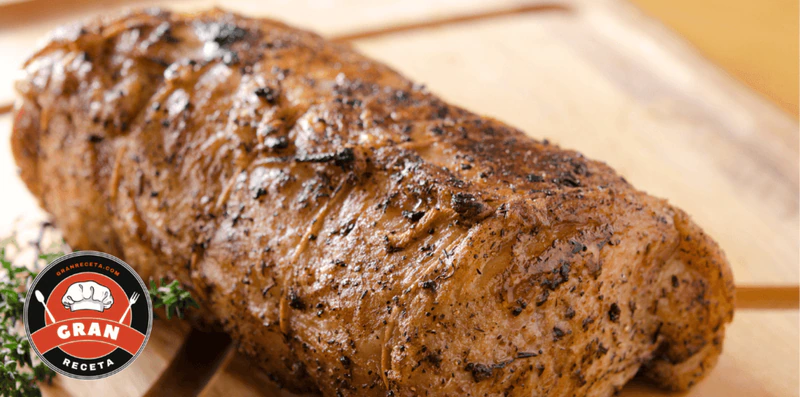
Lomo al Trapo, Salt-Crusted Beef on the Coals
Colombian lomo al trapo: beef tenderloin rolled in a cotton cloth packed with coarse salt and cooked straight on the embers, about 7 minutes a side, checked by thermometer. Why it is not salty, the safe temperature and what ruins it.
 Lunch
Venezuelan Pisillo, Dry-Fried Shredded Beef from the Plains
Venezuelan pisillo is flank steak simmered 2 hours, shredded into very fine threads and dried 35 minutes in a skillet with ají dulce and annatto. Serves 6 in 3 hours 25 minutes, with salted-beef soaking times, US and UK cuts and freezing.
 Lunch
Capón de Ahuyama, Colombian Stuffed Squash with Dried Beef
Capón de ahuyama is a whole squash from the Colombian plains, stuffed with shredded dried beef, a tomato and pepper sofrito and salty white cheese. It bakes twice at 350°F (180°C), serves 4, and works with kabocha or butternut.
 Soups
Picadillo Llanero, Venezuelan Plains Beef and Root Soup
Picadillo llanero is a thick Venezuelan beef soup in which the beef, cassava, yam, malanga, plantain and squash are all cut into ⅜-inch cubes. When each root goes in, how to soak salted beef, US and UK swaps, and 150 minutes for 8 bowls.
 Lunch
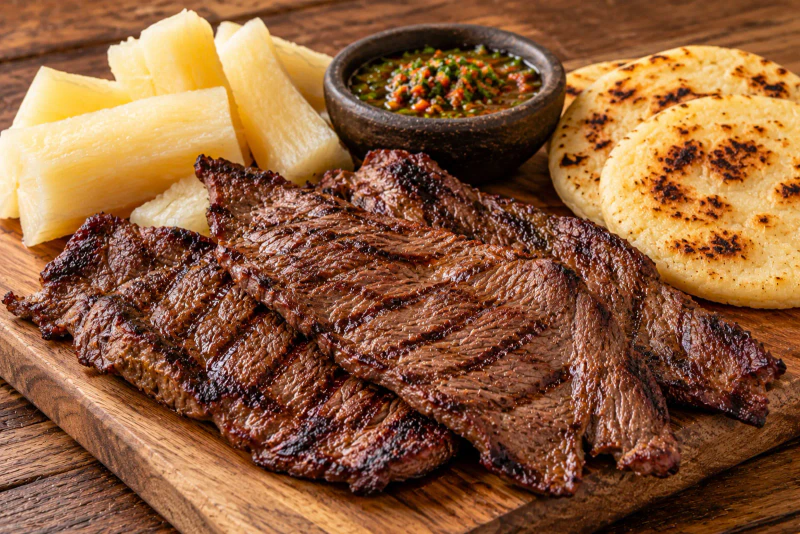
Colombian Carne Oreada, Panela-Marinated Air-Dried Beef
Colombian carne oreada is thin-sliced beef rubbed with panela, sour orange and cumin, air-dried overnight and grilled. The safe fridge-drying method, which cut to buy in the US and UK, and what to serve with it, for 4.
River fish: cachama, bagre and what to buy instead
The rivers of the plains supply freshwater fish, and the signature one is cachama, grilled over coals in Meta and Casanare, whole or butterflied, with garlic, lime and scallions: the recipe is in grilled cachama. Bagre, a South American catfish, is the other big one: firm, a little fatty and almost boneless, sold as steaks, and it holds up in a pot better than anything, which makes it the swap that changes a recipe least when another fish is missing. Bocachico has firm white flesh but lots of fine pin bones, and mostly goes into broth, whole or as bone-in steaks, as in Colombian river fish stew.
In the US, use bone-in catfish steaks for bagre; they are a little softer, and in the UK catfish is rarely sold. The red mojarra of Colombian markets is red tilapia, so buy whole tilapia, often frozen, in Asian and Latin grocery stores on both sides of the Atlantic, as in fried mojarra. Cachama itself is sold frozen in the US as pacu or tambaqui in some Latin, Brazilian and Asian markets; failing that, a whole tilapia, sea bream or branzino of 1 to 1¾ lb (400 to 800 g) works, leaner and less bony, so it cooks faster. What won't work is a boneless tilapia or swai fillet: without the bone the fish falls apart. The chart lists each fish with its swap.
During Lent in Venezuela people eat fish pisillo: salted fish soaked overnight, boiled, shredded and fried dry like the beef version, and a common empanada filling. Salted capybara meat (chigüire) is also sold in Venezuela at that time of year; in Colombia selling capybara is not allowed, so there is no recipe for it here.
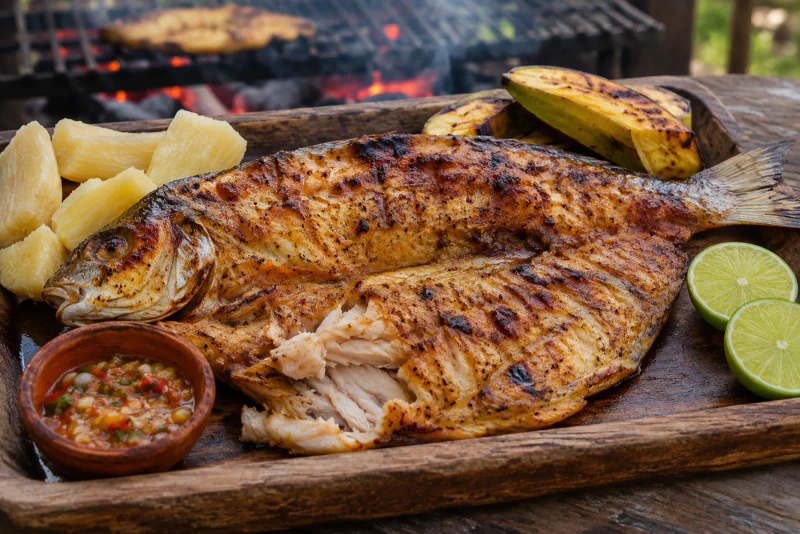 Lunch
Grilled Cachama (Pacu), Llanero-Style Butterflied Whole Fish
Grilled cachama the Llanero way: a butterflied whole fish rubbed with garlic, lime and green onion and grilled skin side down to 145°F (63°C). Oven and grill-pan methods, US and UK swaps for pacu, and how to eat around the bones.
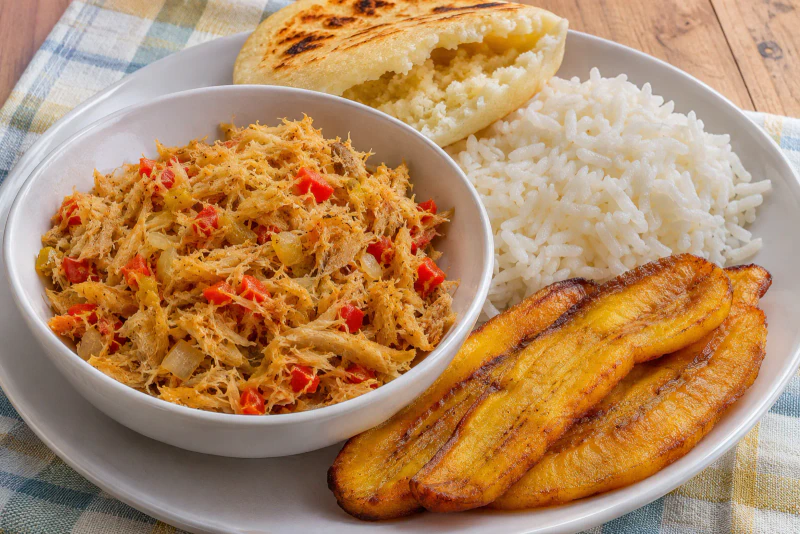 Lunch
Venezuelan Fish Pisillo, Shredded Dry-Fried Fish for Lent
Venezuelan fish pisillo is salt fish or fresh white fish, shredded fine and pan-dried with sweet peppers and annatto until loose. How long to soak salt cod or catfish, the taste test for salt, and a 75-minute plan for 6.
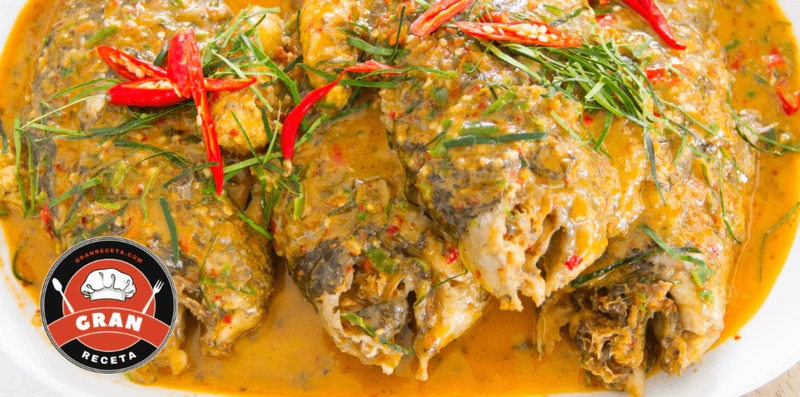 Lunch
Viudo de Pescado, Colombian River Fish Stew
Viudo de pescado is the Magdalena river's one-pot fish dish: whole fish steamed over plantain, cassava, potato and corn in a covered pot. Which fish to buy in a US or UK market, and the 145°F that tells you it is done.
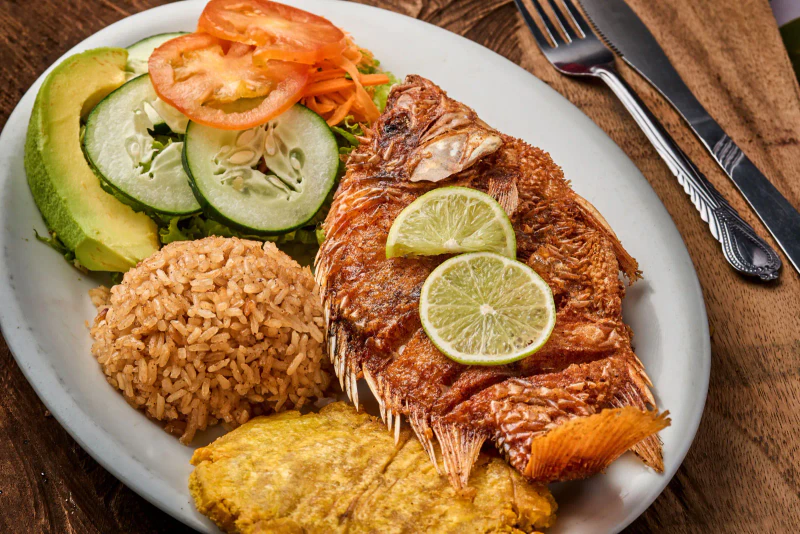 Lunch
Colombian Fried Mojarra, Crispy Whole Fried Fish
Colombian fried mojarra is a whole tilapia, scored and rubbed with garlic, lime and salt, fried at 355°F (180°C) for 6 minutes a side to 145°F. Serves 4 in 90 minutes, with times by weight, US and UK fish swaps and an air fryer option.
 Lunch
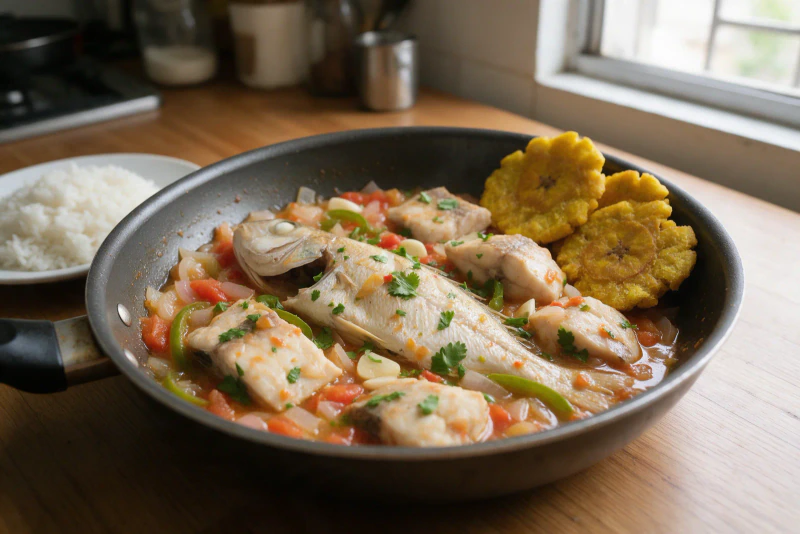
Colombian Pescado Sudado, Fish Braised in Tomato Hogao
Colombian pescado sudado is bone-in fish steaks cooked under a lid in a tomato, onion and pepper sauce, on a bed of potatoes with 1 cup of water. Ready in 65 minutes for 4, with US and UK fish swaps and the 145°F doneness test.
Corn, rice and cassava: hayacas, tungos, hallaquitas and pan de arroz
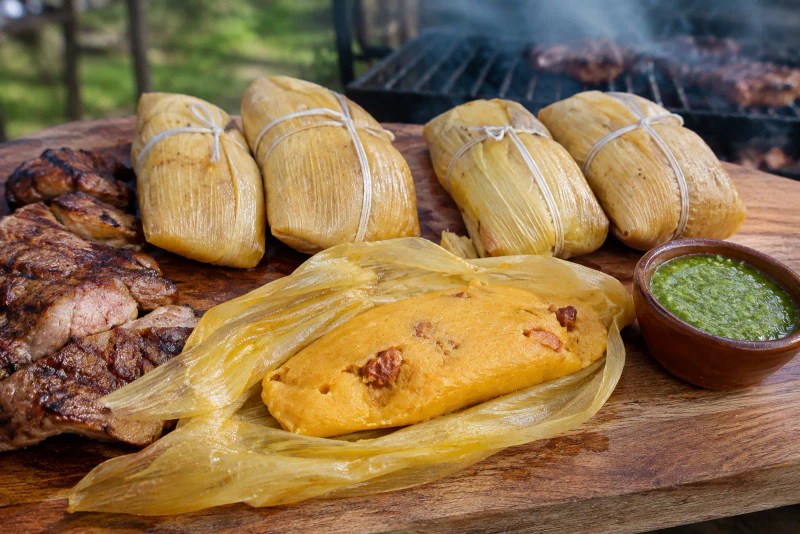
The bread of a llanero roast comes wrapped in a leaf. Venezuelan hallaquitas are arepa-flour dough with a little lard, rolled in corn husks and boiled 40 minutes, plain or with crushed pork rinds; they sit next to carne en vara with guasacaca on top, keep three months frozen and reheat on the grill in their husks. On the Colombian side, tungos play the same part with a rice and fresh-cheese dough wrapped in a leaf, and pan de arroz from Meta combines rice and fresh cheese with no wheat flour.
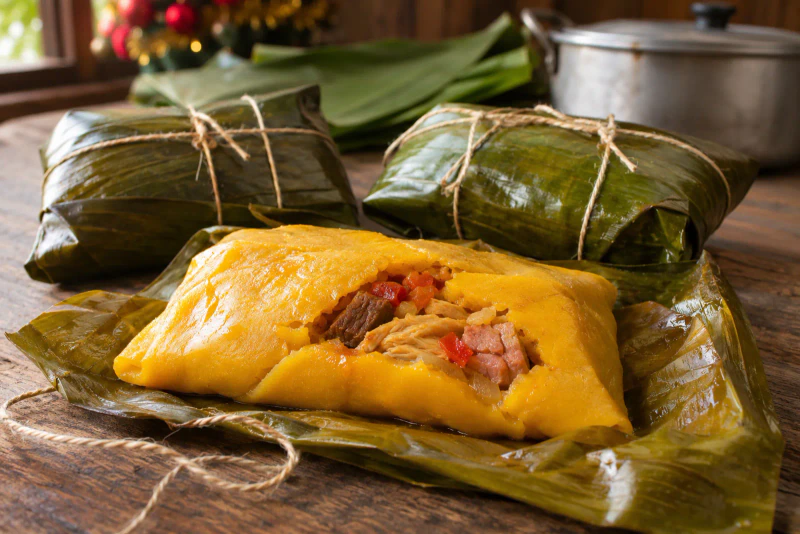
December brings the llanero hayaca of Casanare and Meta, a tamal with three meats wrapped in bijao or banana leaves. On the Venezuelan plains, the llanero version of hallacas, the one from Apure, has a filling made mostly with beef, and the leftover dough and filling become the Christmas bollos eaten for breakfast on December 25 or January 1.
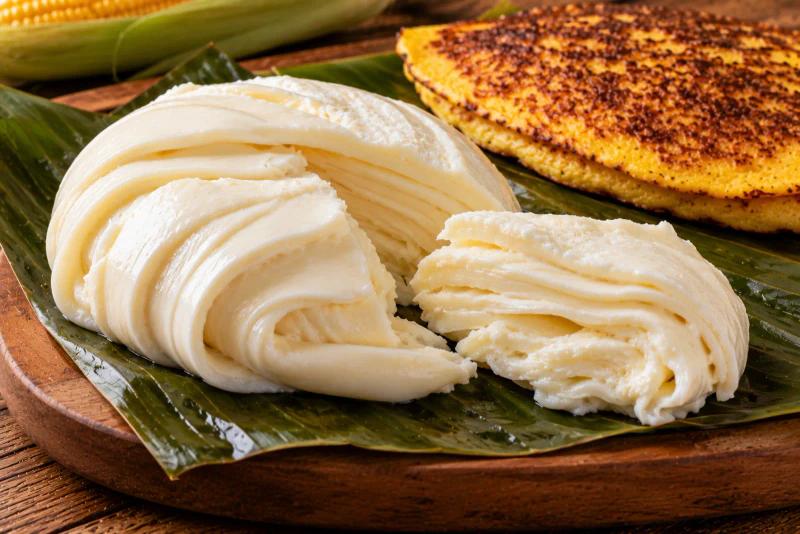
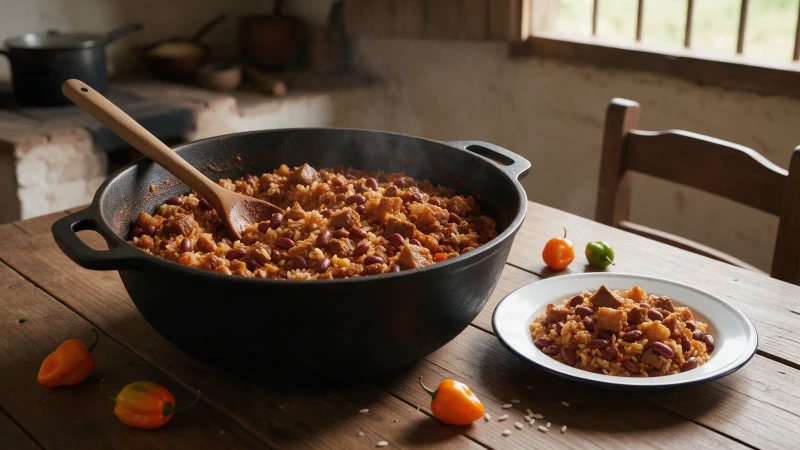
Fresh corn makes cachapas: 1.75 lb (800 g) of blended kernels and just 3 tablespoons (30 g) of flour, cooked on a griddle and folded over queso de mano, a soft white cheese that pulls apart in layers and can be made at home from a gallon of milk; at Venezuelan roadside stands they come with fried pork on the side. The everyday pot is palo a pique, rice cooked in red bean broth with beef and bacon, 2 cups of rice to 3½ cups of broth so the grains stay separate.
 Snacks
Venezuelan Hallaquitas, Corn Husk Rolls for the Grill
Venezuelan hallaquitas are arepa-flour dough rolled in corn husks and boiled for 40 minutes, plain or mixed with crushed pork rinds. How much dough per roll, how to tie them, how to tell they're done, swaps and freezing.
 Breakfast
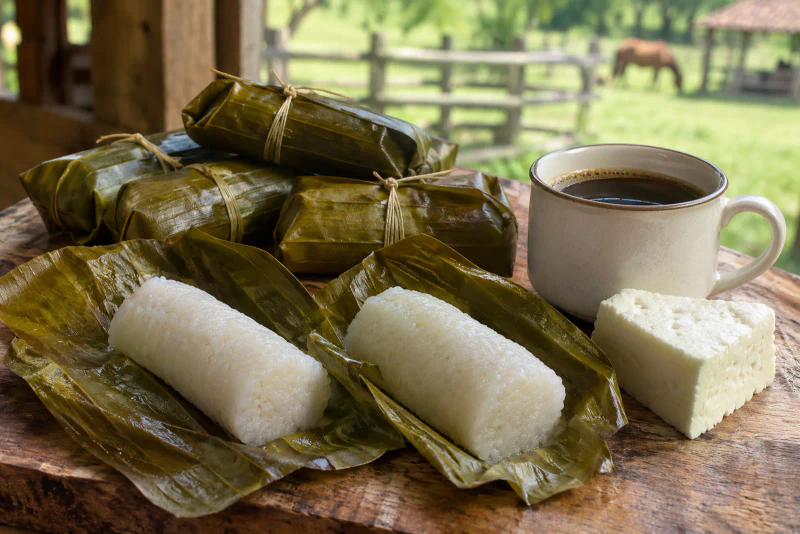
Tungos, Colombian Rice and Cheese Parcels from the Plains
Tungos are Colombian plains parcels of soaked raw rice ground with an equal weight of fresh cheese, packed into leaf cones and steamed 45 minutes. US and UK swaps for the cheese and leaves, the doneness test and freezing.
 Snacks
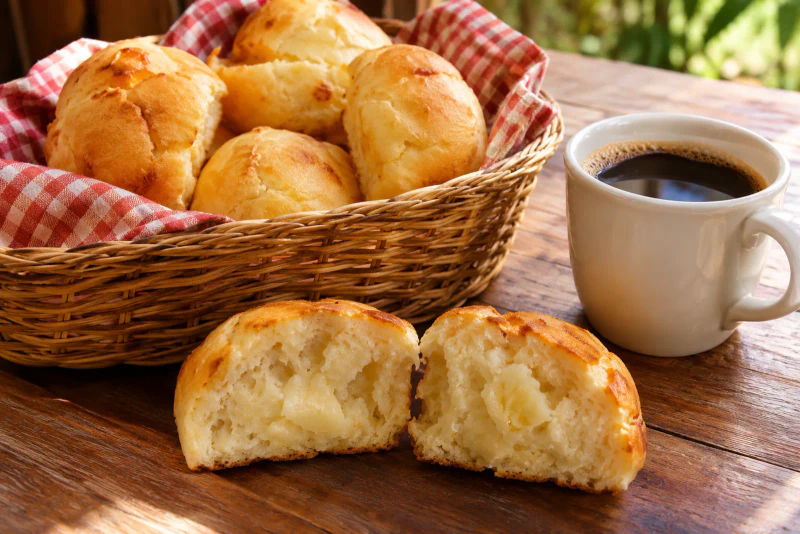
Pan de Arroz, Colombian Rice and Cheese Bread from Meta
Pan de arroz is a gluten-free Colombian bread of raw rice soaked overnight and ground with an equal weight of fresh cheese. Small rings bake at 480°F (250°C) for 7 to 10 minutes, soft, or dry overnight in the oven to go crisp.
 Lunch
Hayacas Llaneras, Colombian Plains Christmas Tamales
Hayacas llaneras are the Christmas tamales of Colombia's eastern plains, with beef, pork and chicken cooked first and dough made with their broth. Wrapped in banana leaf, boiled 90 minutes, with make-ahead, freezing and scaling notes.
 Lunch
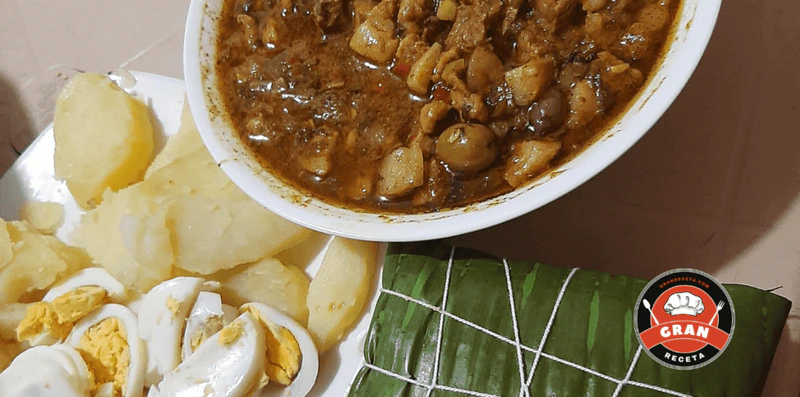
Venezuelan Hallacas, the Christmas Tamal Wrapped in Leaves
Venezuelan hallacas the family way: beef, pork and chicken marinated a full day, corn dough colored with annatto lard. Olives, capers and raisins, tied in plantain leaf and boiled, with US substitutions and a two-day plan.
 Breakfast
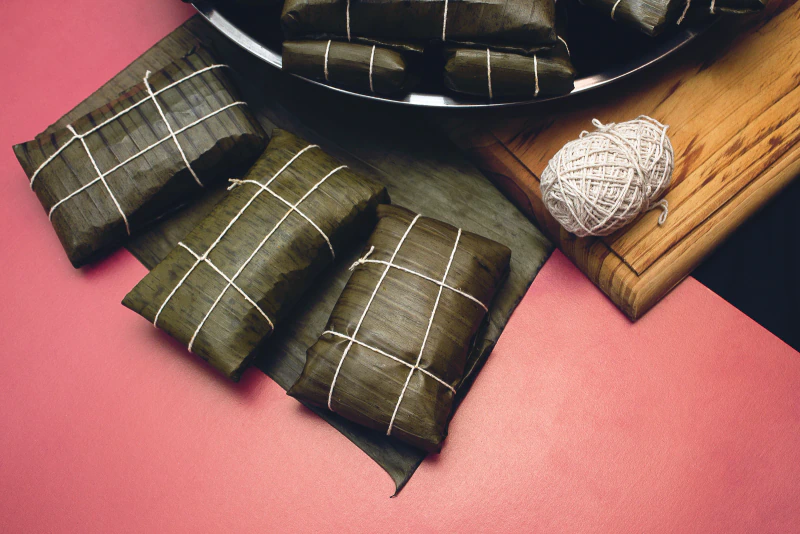
Venezuelan Christmas Bollos, Hallaca Leftovers in a Leaf
Venezuelan Christmas bollos turn leftover hallaca dough and filling into small leaf-wrapped corn parcels, boiled for 30 minutes. How much filling per pound of dough, how to wrap and tie them, the yield, and freezing them raw.
 Breakfast
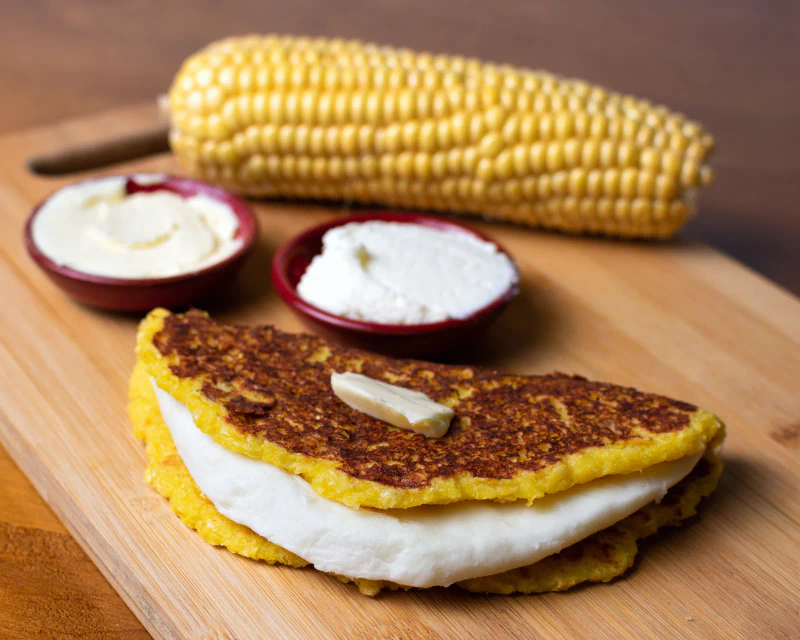
Venezuelan Cachapas, Sweet Corn Pancakes with Cheese
Venezuelan cachapas are sweet corn pancakes folded over soft white cheese, made from 1.75 lb (800 g) of blended kernels and little flour. Four in 60 minutes. Fresh, frozen or canned corn, US and UK cheese swaps, crowd amounts.
 Breakfast
Queso de Mano, Venezuelan Stretched Cheese Made at Home
Homemade queso de mano, the soft layered Venezuelan cheese for cachapas, from 1 gallon of regular pasteurized milk, citric acid and rennet. Why ultra-pasteurized milk fails, how to stretch curd safely at 175°F and what it yields.
 Lunch
Palo a Pique Recipe, Venezuelan Rice and Red Beans with Beef
Palo a pique is Venezuelan rice cooked in the liquid of red kidney beans with beef, pork belly and an annatto sofrito, all in one pot. Serves 6 in 2 hours 20 minutes, with the rice-to-liquid ratio, the bean boil and scaling to 20.
What gets served at a llanero cookout
A parranda llanera is a long party with the roast at its center, and nearly everything is done ahead. The day before, the meat gets salted, the cassava boiled and the desserts made; on the day, the wood needs about an hour to burn down to flameless coals, and the first skewers come off while the big cuts roast. The meat is served with cassava, boiled or fried, baked plantains with cheese or fried sweet plantains, hallaquitas or tungos, and a sauce: fresh chili sauce on the Colombian side and guasacaca, an avocado and pepper sauce, on the Venezuelan side. Plan on about 14 oz (400 g) of bone-in meat per person, which leaves about 6.5 oz (180 g) on the plate.
The next day, leftover mamona is eaten cold and thinly sliced, and leftover ribs get shredded for pisillo; carne a la perra belongs to that day too. To drink, cold papelón con limón, a raw cane sugar limeade whose concentrate is made the day before and gets its lime at serving time. The chart shows what to make ahead and when each dish is served.
 Snacks
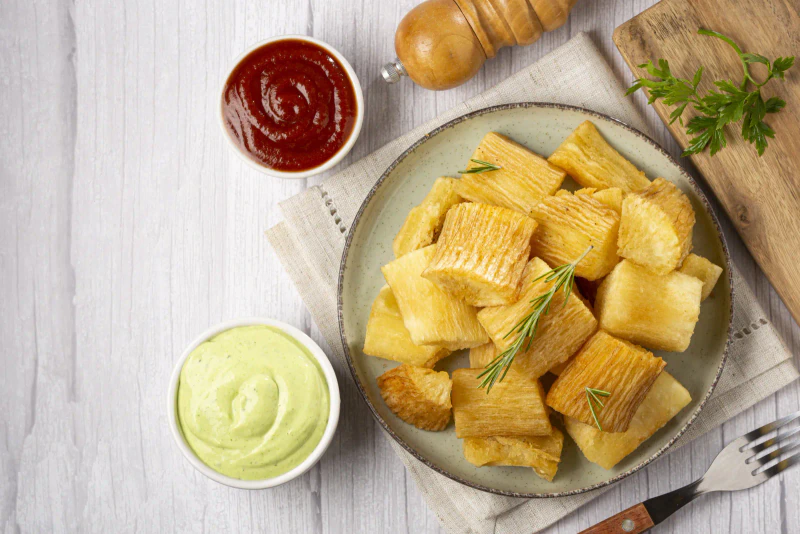
Fried Yuca, How to Make Crispy Yuca Fries from Scratch
Fried yuca, or yuca fries, is cassava boiled in salted water until it splits, then fried at 350-355°F (175-180°C) until crisp. Fresh vs frozen, peeling, safety, air fryer, oven, freezing and US cost. 90 minutes, 6 servings.
 Snacks
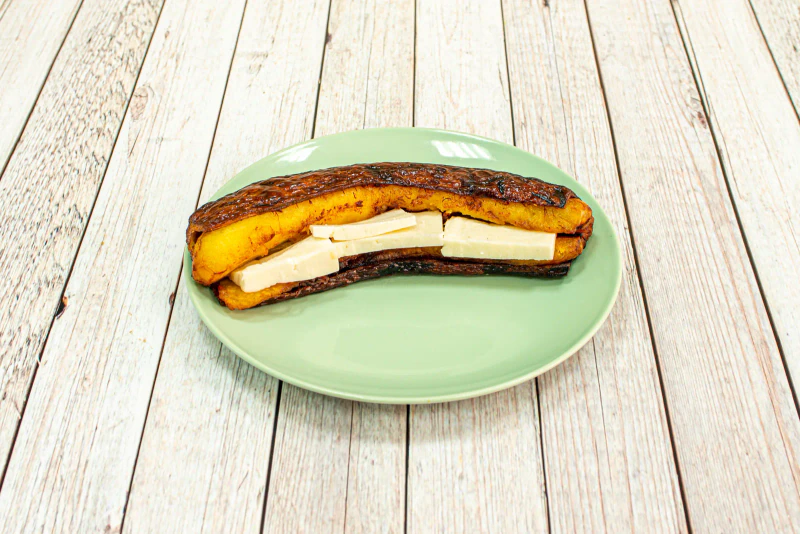
Baked Sweet Plantains with Cheese and Guava Paste
Baked sweet plantains with cheese, the way they're made in Colombia and Venezuela, roasted whole at 400°F (200°C) then split and stuffed. How black the peel should be, which cheese to buy, guava paste swaps and air fryer timing, 4 servings.
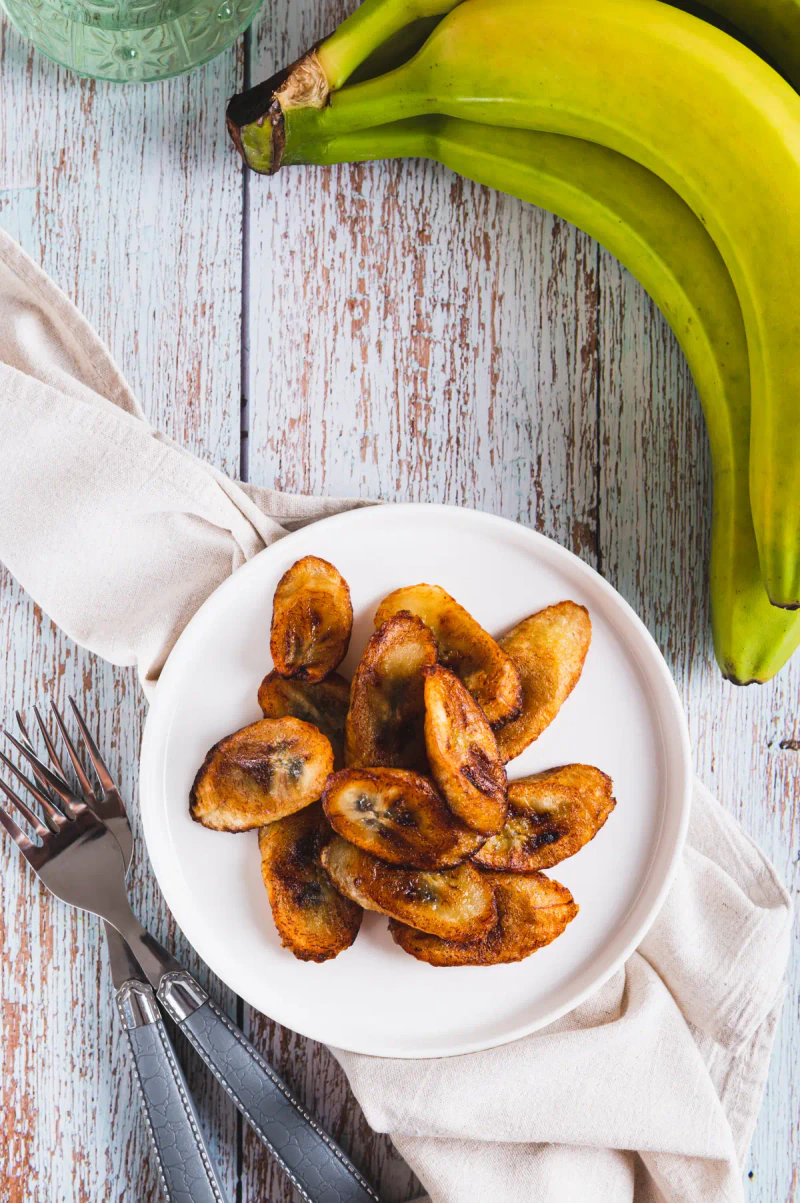 Snacks
Fried Sweet Plantains, Venezuelan Tajadas Step by Step
Fried sweet plantains the Venezuelan way, long ⅜-inch (1 cm) diagonal slices of black-skinned plantain fried at 350°F (175°C). Serves 4 in 30 minutes, with air fryer and oven versions, ripeness signs, US cost and reheating.
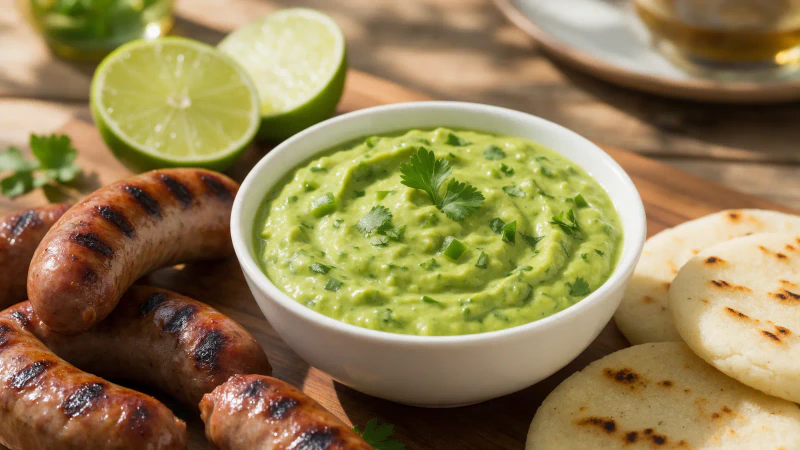 Snacks
Venezuelan Guasacaca Recipe, the Tangy Avocado Sauce
Venezuelan guasacaca is a tangy avocado sauce blended with sweet peppers, herbs, vinegar and oil, ready in 15 minutes for 10 servings. How it differs from guacamole, US and UK swaps, how to keep it green and how long it lasts.
What the Colombian and Venezuelan plains share, and what changes
On both sides of the border, many dishes are the same thing under another name. Mamona in Colombia and carne en vara in Venezuela: the same sideways fire and the same salt, though mamona uses young veal for 20 and the home carne en vara uses adult beef for 8. Hayaca in Casanare and Meta and hallaca llanera in Apure: corn dough with a meat filling, wrapped in leaves, for December. And pisillo is made in both countries: from beef, from salted beef, from capybara in Arauca and from capybara or fish during Holy Week in Venezuela.
The sauces and cheeses change. The Colombian table has ají, a fresh chili sauce; the Venezuelan one has guasacaca, blended with avocado, ají dulce, vinegar and oil and runnier than guacamole. The Colombian plains cheese is cuajada, a fresh curd cheese that goes into tungos and pan de arroz; Venezuela has queso de mano, soft and layered, and queso llanero, white, hard and salty, which doesn't melt and is grated over plantains. On the Venezuelan side, the Sunday soups are beef hervido, the standard on the plains, and cruzado, with beef and hen in the same pot.
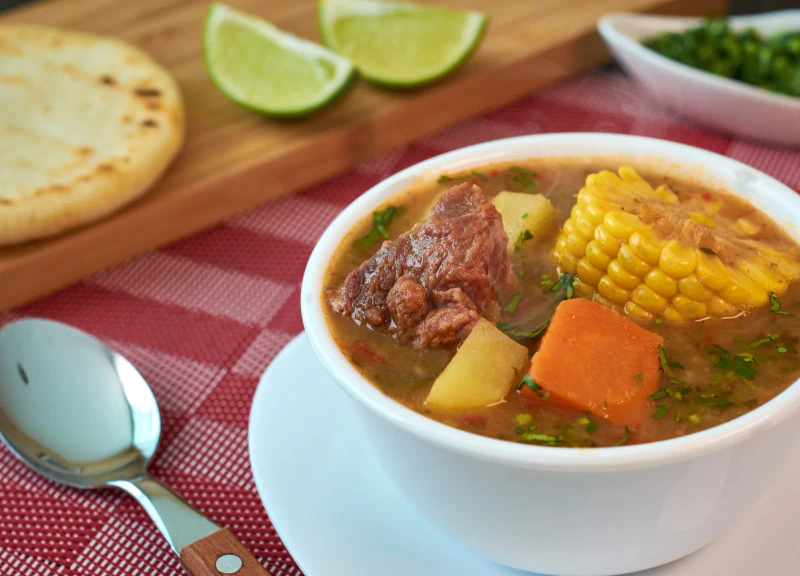 Soups
Venezuelan Beef Soup, Hervido de Res (Beef Sancocho)
Venezuelan beef soup, hervido de res, simmers short ribs and shank for 105 minutes before cassava, yam, malanga, squash and corn go in, hardest first. 170 minutes for 8 bowls, with US and UK swaps, pressure cooker times and a plan for 20.
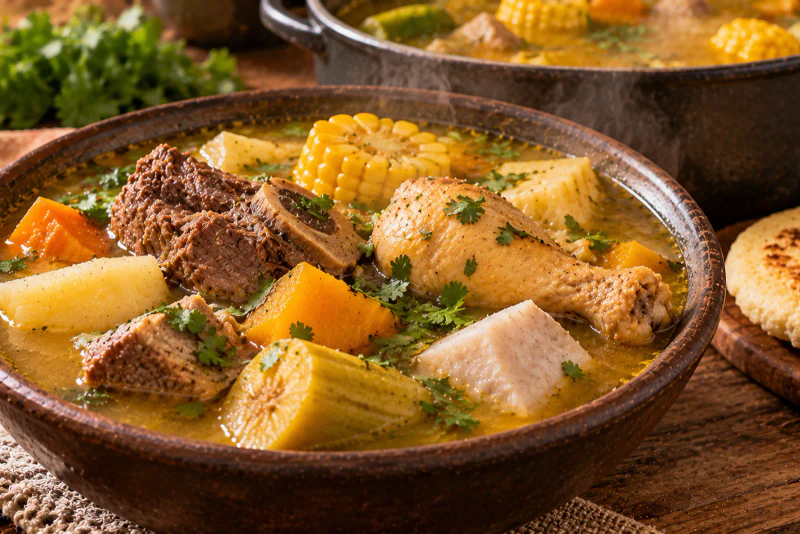 Soups
Venezuelan Cruzado, Beef and Chicken Soup in One Pot
Venezuelan cruzado is beef and hen (or chicken) simmered in one pot, the beef first and the bird later, with cassava, malanga and squash by hardness. Timings for hen or chicken, US and UK swaps, party sizes and 170 minutes total for 10.
Desserts and drinks of the plains
The December sweet is dulce de lechosa: green papaya strips candied with piloncillo, cloves and cinnamon, with the syrup taken off at 223 °F (106 °C) so it doesn't crystallize; it is made two or three days before Christmas Eve or New Year's and improves in the fridge. Majarete is a corn flour, coconut milk and cane sugar pudding that sets for 4 hours in the fridge, so it is made the day before and travels well in its dish.
To drink, papelón con limón, 125 g (4.4 oz) of raw cane sugar per liter, always ice cold; Venezuelan chicha, cooked rice blended with milk and cinnamon; and, on the Colombian side, masato, a rice drink fermented for 24 hours, sweet at first sip and tart at the end. In Meta, Casanare and Arauca there is also majule, a hot, spoonable drink of ripe plantain, milk and fresh cheese.
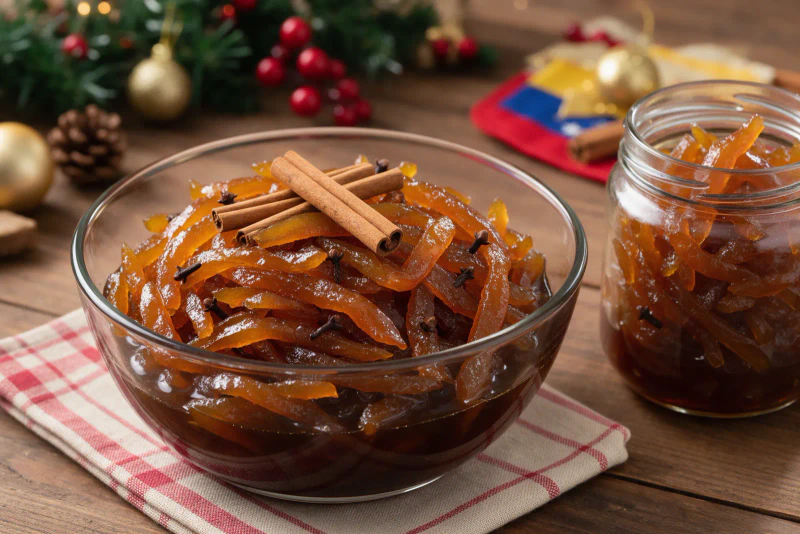 Desserts
Venezuelan green papaya dessert, dulce de lechosa recipe
Dulce de lechosa, Venezuela's Christmas dessert of green papaya strips candied in piloncillo syrup with cloves, off the heat at 223°F (106°C). Makes 3 lb (1.4 kg), 14 servings, in 3½ hours, with or without pickling lime and how to gift it.
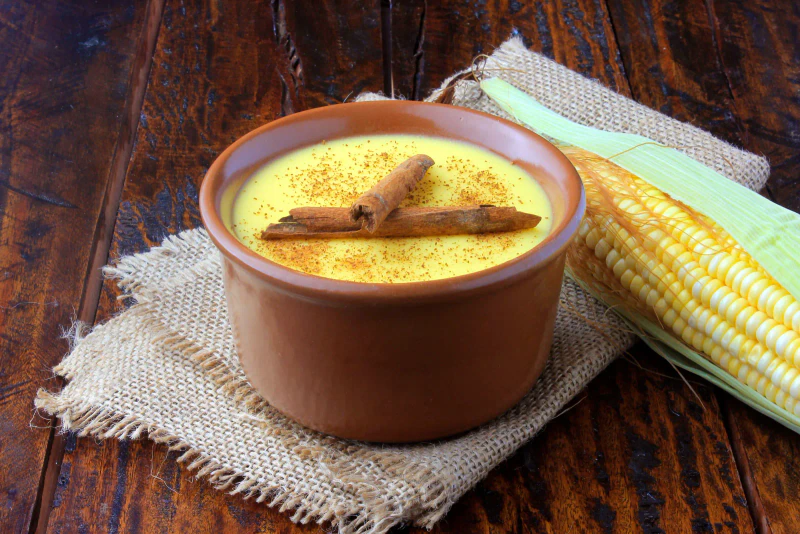 Desserts
Venezuelan Majarete, Coconut Corn Pudding with Papelón
Venezuelan majarete is a coconut corn pudding set with precooked corn flour, whisked into cold milk so it never turns lumpy. 40 minutes at the stove, 4 hours to chill, 10 squares, with brown sugar and UK swaps, storage and versions.
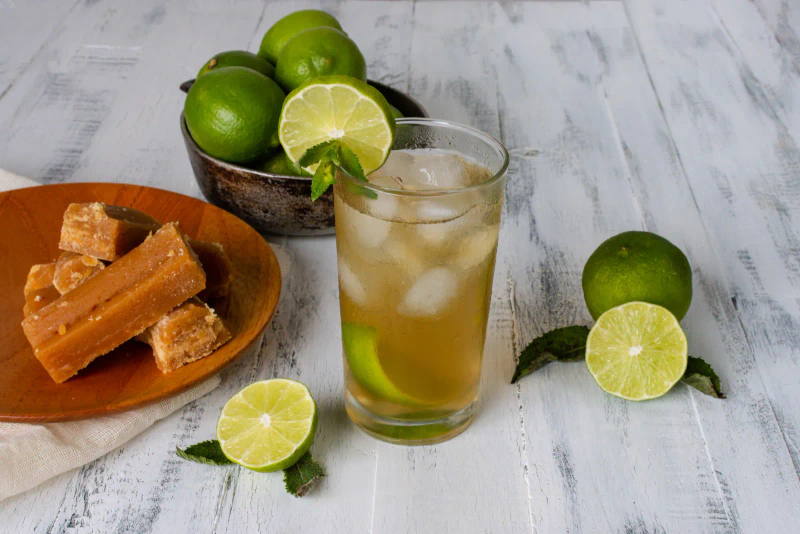 Drinks
Papelón con Limón, Venezuelan Panela Limeade Recipe
Papelón con limón is Venezuelan limeade: 125 g (4.4 oz) of papelón (panela) per liter, dissolved hot, topped up with cold water and lime, in 20 minutes. Serves 8. Lighter version, a batch for 20 and where to buy panela in the US and UK.
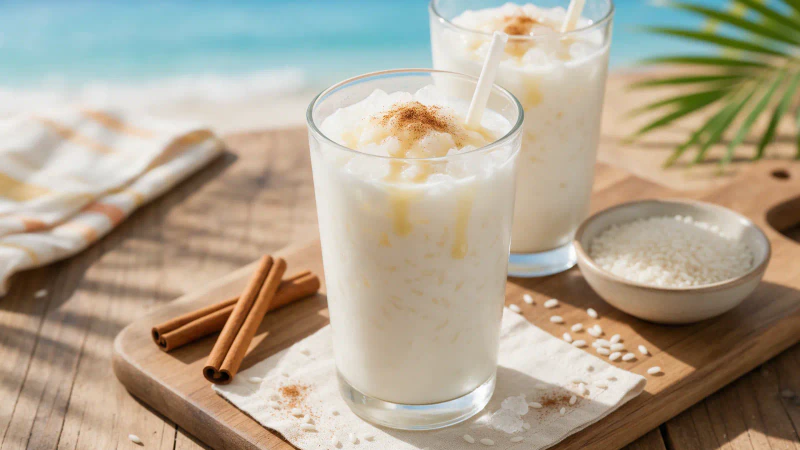 Drinks
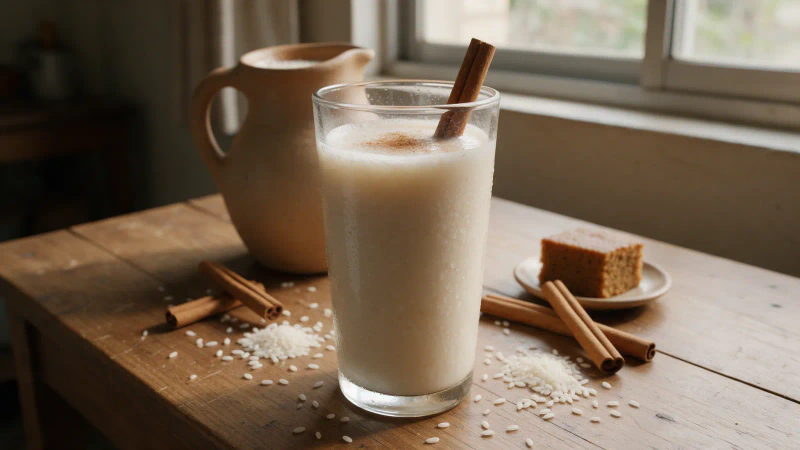
Venezuelan Chicha Recipe, Creamy Rice and Milk Drink
Venezuelan chicha is a thick, non-alcoholic drink of overcooked rice blended with milk, condensed milk and cinnamon, poured over crushed ice. This batch makes 10 glasses in 2 hours, with US and UK swaps, sugar control and party scaling.
 Drinks
Colombian Masato, Fermented Rice Drink Recipe
Colombian masato is cooked rice blended with water, sugar, cinnamon and cloves, then fermented 24 hours at 72-79°F (22-26°C) with a pinch of yeast. Ratios, signs it's ready, how much alcohol it has, when to toss it and a kid-safe version.
 Drinks
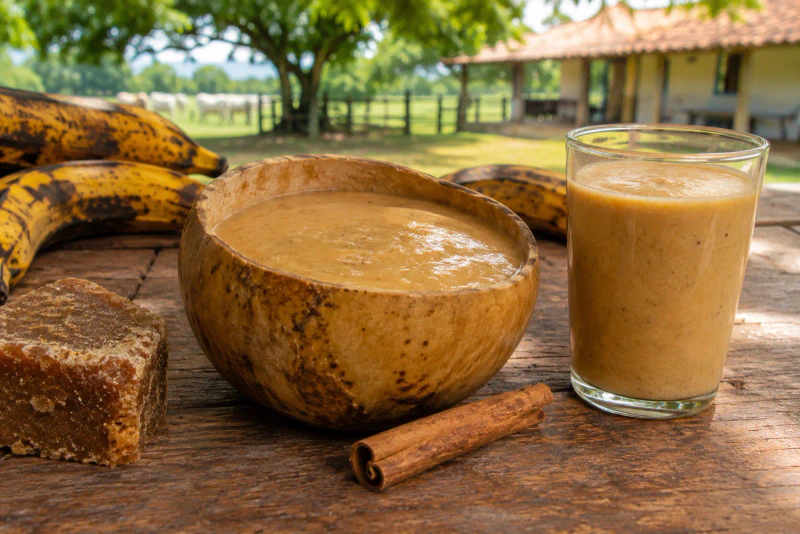
Majule, Colombian Ripe Plantain Drink with Milk and Cheese
Majule is a thick, hot drink from Colombia's plains, made with black-skinned plantains boiled soft, whisked into milk and finished with fresh cheese. How ripe the plantains must be, what cheese to buy in the US or UK, and how to store it.
Frequently asked questions
What is the typical food of the Colombian llanos?
Mamona, or ternera a la llanera: young veal roasted on stakes beside the fire with only salt, served with cassava, plantain and fresh chili sauce. By department, Meta has pan de arroz and grilled cachama; Casanare and Meta, the llanero hayaca at Christmas; and Arauca, capón de ahuyama and pisillo. On the Venezuelan plains, carne en vara, pisillo and palo a pique.
What animal is carne a la llanera made from?
Beef. Mamona is a calf still nursing, no more than 9 months old, though some areas stretch the word to 6 months to a year; its soft fat is what lets it roast 4 hours with nothing but salt. At home, use adult beef short ribs, chuck and brisket.
What is the difference between mamona and carne en vara?
It is the same technique under two names: meat on stakes beside the coals, with only coarse salt rubbed on the day before. Mamona is the Colombian name and uses young veal in large cuts for about 20 people; carne en vara is the Venezuelan name, and the home version uses adult beef short ribs and picanha for 8. At home, both cook at about 300 °F (150 °C).
What is carne a la perra and why is it called that?
Beef with onion, garlic and salt, sewn inside a cowhide and buried under the coals for about 12 hours. It is eaten the day after the party, for the hangover, which on the plains is also called la perra, hence the name. It has no home version; the roast that adapts to an oven is mamona.
What do you serve with llanero beef?
Cassava, boiled or fried, baked plantains, hallaquitas or tungos, and a sauce: fresh chili sauce in Colombia, guasacaca in Venezuela. Venezuelans add a tomato and onion salad, and to drink, papelón con limón.
What kind of fish is cachama, and what can I use instead in the US or UK?
A river fish of the Orinoco and Amazon basins, a cousin of the piranha and the most grilled fish on the plains, cooked whole or butterflied over coals, as in grilled cachama. In the US it is sold frozen as pacu or tambaqui in some Latin, Brazilian and Asian markets; otherwise use a whole tilapia. In the UK there is no reliable retail source, so a whole sea bream or sea bass of 1 to 1¾ lb (400 to 800 g) is the swap: leaner and less bony, and it cooks faster.
What are tungos?
Tungos are small parcels of soaked, ground rice mixed with fresh cheese, wrapped in a leaf and steamed. On the Colombian plains they go with mamona and are also eaten for breakfast. They are cousins of Venezuelan hallaquitas, which are made with corn flour.
Can you eat capybara (chigüiro) in Colombia?
Commercial hunting and sale of capybara are not allowed in Colombia, so the capybara pisillo of Arauca can't be made with bought meat. In Venezuela, salted capybara (chigüire) is sold during Lent and eaten as pisillo in Holy Week. Outside both countries it isn't available, and pisillo is made with beef flank.
What wood is used for llanero beef?
Dry hardwood: on the plains, local woods like guamo or yopo; elsewhere, oak or guava wood. Never pine or other resinous wood, which leaves a bitter taste, and eucalyptus is not one of the woods used in these recipes. The wood needs about an hour to burn down to ash-covered coals with no flame, and is fed with small pieces, since a big log throws up flames. Without wood, lump charcoal works under the same rule.