
Christmas
Colombian Christmas Food, From the Novena to Christmas Eve
What Colombians eat in December, what you can make days ahead and the recipes to do it at home.
Colombian Christmas food comes in two parts. For the nine nights from December 16 to 24, families gather for the novena, a short prayer with carols, and share natilla, a sliceable custard of milk, panela and cinnamon, with buñuelos, golden cheese fritters. On the night of the 24th comes the main meal: tamales wrapped in banana leaves, lechona (pork roasted inside its own crackling skin) or a roast pork leg, and in Bogotá often ajiaco, a chicken and potato soup. Christmas Day is for leftovers.
The season starts earlier, on the night of December 7, the Day of the Little Candles, when families light candles and paper lanterns outside and bring out the first natilla and buñuelos. The sweets change by region: milky manjar blanco and figs in syrup in the southwest, a milk-skin pudding around Bogotá, and a creamy egg liqueur called sabajón for toasts.
Below you will find the menu by course, a day-by-day plan so you are not cooking all of Christmas Eve, and US and UK shopping notes. Mixing traditions at your table? See Mexican Christmas food, Venezuelan Christmas food or our main Latin Christmas recipes guide.
A day-by-day plan for a Colombian Christmas
Nearly every sweet is made ahead, and the savory centerpiece needs a plan. This schedule assumes dinner at 9 pm on December 24. Pick one big main (lechona, pernil or tamales): two at once will not fit in one oven or one afternoon.
- From December 7. Shape the buñuelos and freeze the raw balls. They keep a month and fry straight from frozen with 2 extra minutes, so each novena night is just frying.
- One to two weeks ahead. Make a big batch of pork tamales or tamal tolimense and freeze them in their leaves for up to 3 months. The figs in syrup can be made now too, or buy figs already in syrup in jars at Latin grocers.
- December 21, evening. First boil of the milk for the natas dessert, which takes three short sessions over three days. If you are making lechona, order the pork skin from a butcher today, or a single piece of skin-on pork belly.
- December 22. Cook the manjar blanco, which improves overnight and keeps a week. Fry the hojuelas: dusted with powdered sugar they stay crisp 5 days in a tin. If your main is pernil, score and marinate it today.
- December 23. Natilla into its mold to unmold tomorrow, sabajón into the fridge (it needs at least 4 hours) and the natas dessert finished. Soak the yellow split peas for the lechona, or make the stock and shred the chicken for the ajiaco.
- December 24. Lechona runs about 7 hours start to finish, so begin around 2 pm; the pernil goes into the oven at 2:30. Ajiaco with yesterday's stock takes 45 minutes. Frozen tamales go into boiling water 30 minutes before dinner, and the buñuelos are fried last, since they lose their crunch within 20 minutes.
- December 25. Breakfast on leftover tamales with Colombian hot chocolate, or a calentado made from last night's rice and beans. Carved lechona keeps 4 days in the fridge and 10 minutes in a hot oven brings back much of the crackling.
Natilla, buñuelos and hojuelas for the novena
These are the sweets people expect at every novena night. Colombian natilla is an eggless custard firm enough to cut into squares; panela, the unrefined cane sugar that gives it its caramel color, is sold in US stores as Mexican piloncillo, and dark muscovado is the closest UK swap. Buñuelos are naturally gluten-free cheese fritters, and cotija is the best US stand-in for Colombian costeño cheese. Hojuelas are thin, orange-scented fried dough that keeps crisp for days.
Hosting a crowd? Make the natilla the day before, keep a tin of hojuelas ready and fry frozen buñuelo balls as guests arrive. A bowl of Colombian rice pudding next to the natilla is also common in December.
 Desserts
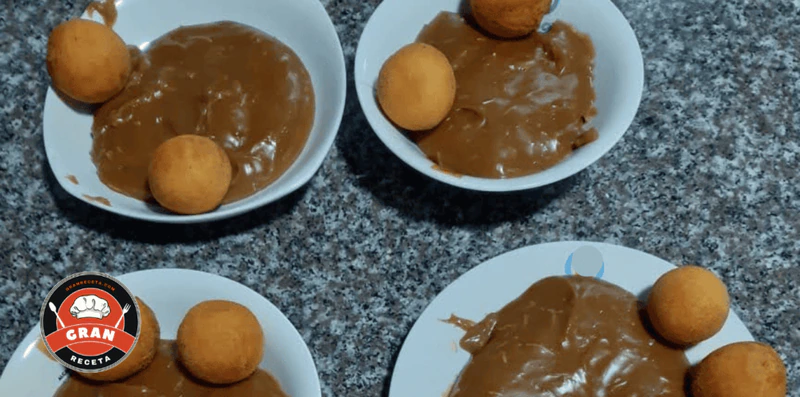
Colombian Natilla, the Eggless Christmas Custard
Colombian natilla, the firm eggless Christmas custard of milk, cornstarch, panela and cinnamon, made for 10 people. Fifteen minutes of work plus 4 hours chilled, how much cornstarch per quart and why it will not set.
 Desserts
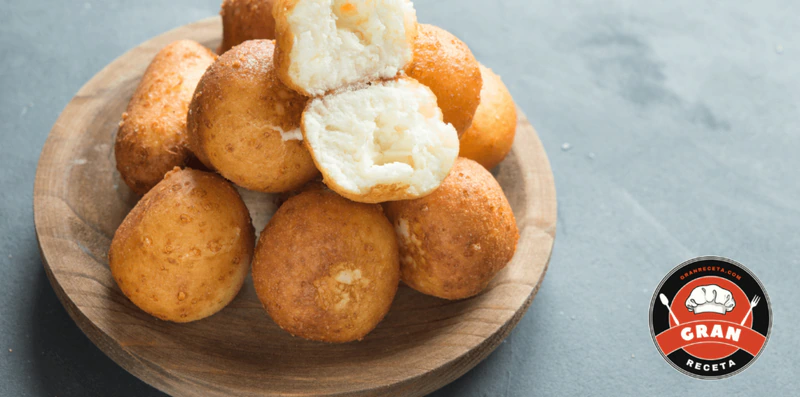
Colombian Buñuelos, the Christmas Cheese Fritters
Colombian buñuelos, the salty cheese fritters of Christmas, made with cotija or queso costeño, cornstarch and tapioca. Fried at 300-330 °F so they puff without splitting, 20 of them in 57 minutes. Cheese swaps and why they burst.
 Desserts
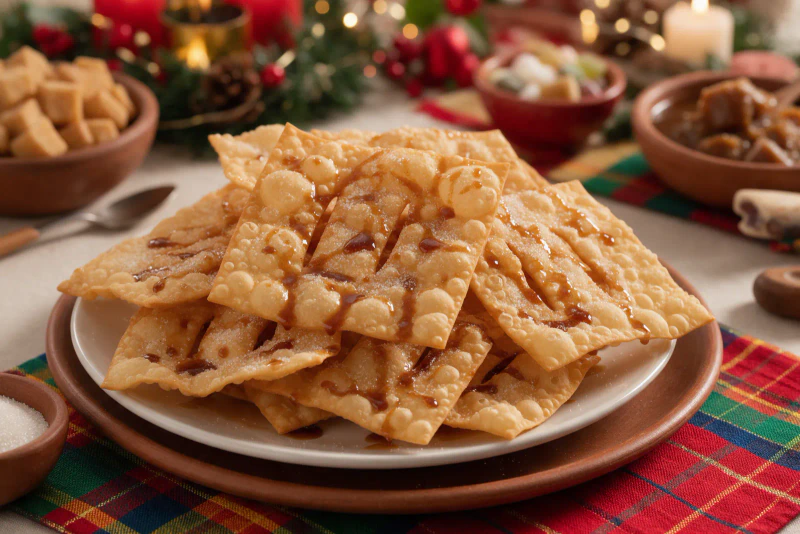
Colombian Hojuelas, Crisp Christmas Fried Dough
Colombian hojuelas are thin orange-scented fried dough, rolled to 2 mm (1/16 in) and fried at 350°F (175°C) so they blister and snap. One batch gives 75 pieces in 85 minutes, with panela syrup or powdered sugar and a party plan.
 Desserts
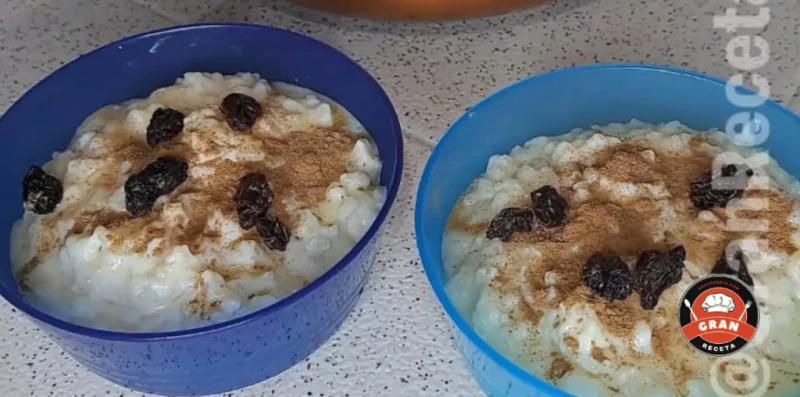
Colombian Rice Pudding, Creamy by Starch Not Cream
Colombian rice pudding with short-grain rice, a cinnamon stick and condensed milk, ready in 55 minutes for 8 bowls. The 6-to-1 liquid ratio, why the rice is never rinsed and why it thickens as it cools rather than in the pot.
Christmas Eve mains
Lechona is the party piece for about 20: pork and yellow peas roasted inside a sheet of pork skin until it crackles, an all-day oven job. Tamales are the low-stress choice because they are made weeks ahead and reheated: pork tamales are the easiest place to start, the tamal tolimense has rice in the dough and three meats, and the valluno tamales use a cooked masa. Banana leaves are sold frozen in Latin and Asian markets.
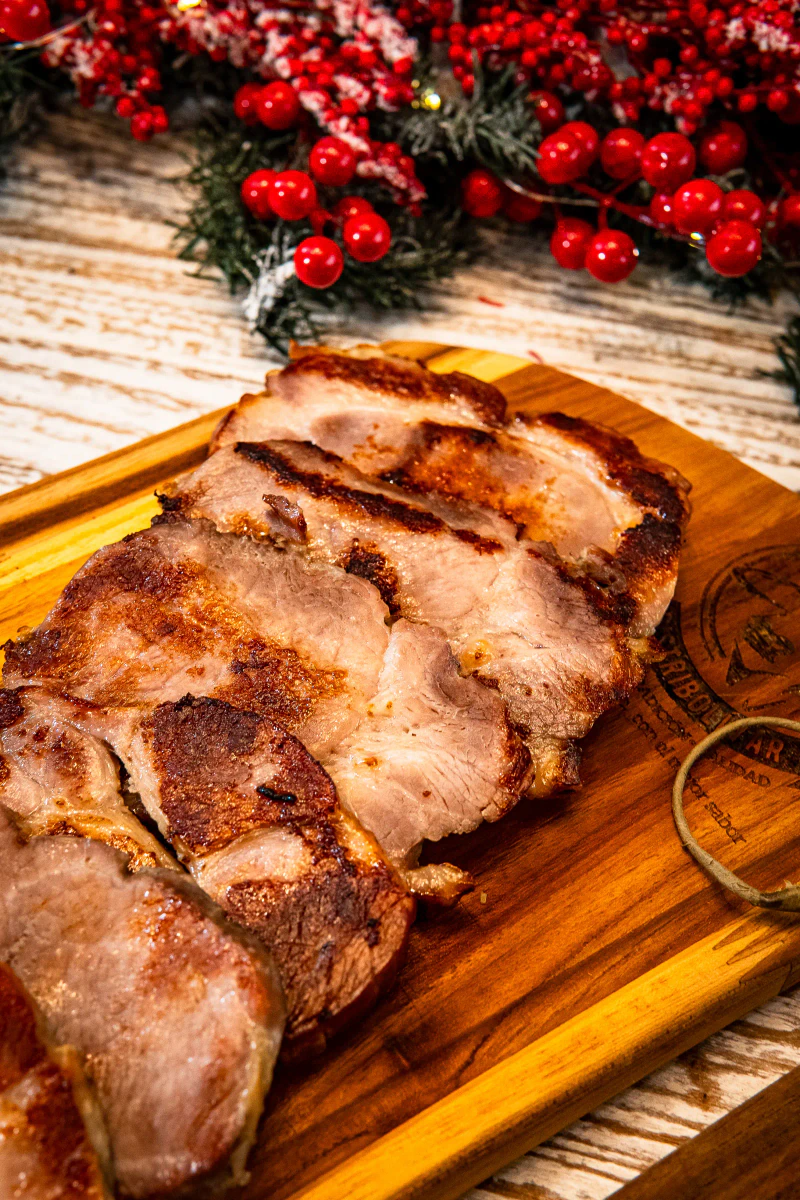
A roast pork leg is on many Christmas tables in the region; our pernil is the Venezuelan version, with a three-day plan. In the US, ask for fresh ham; in the UK, a skin-on leg of pork, not gammon. For a smaller dinner, Bogotá's ajiaco is the easiest main here, and dried guascas, the herb that defines it, can be found online or in Latin aisles.
 Lunch
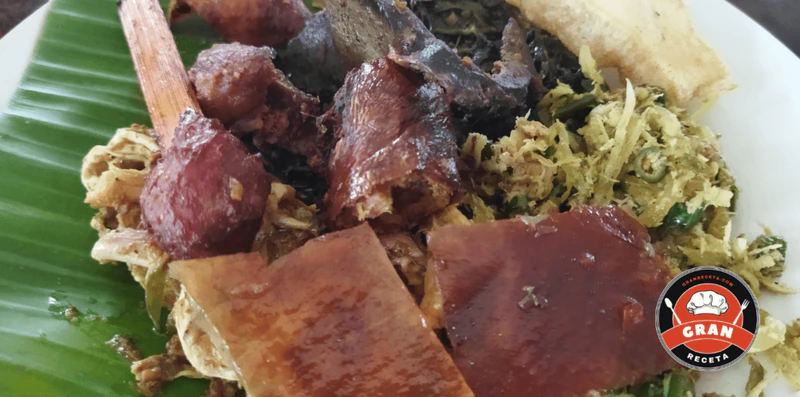
Colombian Lechona, Roast Pork With Crackling Skin
Lechona tolimense is pork skin stuffed with marinated pork and yellow split peas, roasted 3 hours at 320 °F and 40 minutes at 390 °F so the skin puffs. The two temperatures, what to order from a butcher and how to carve it.
 Breakfast
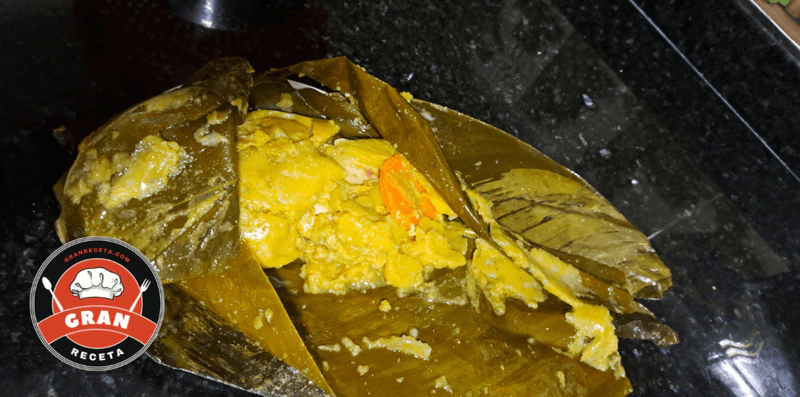
Colombian Pork Tamales in Banana Leaf
Colombian pork tamales built on leg and spare ribs, with the masa hydrated by the pork's own broth and checked with the float test. Why this tamale needs no added lard, and how much broth per cup of masarepa.
 Lunch
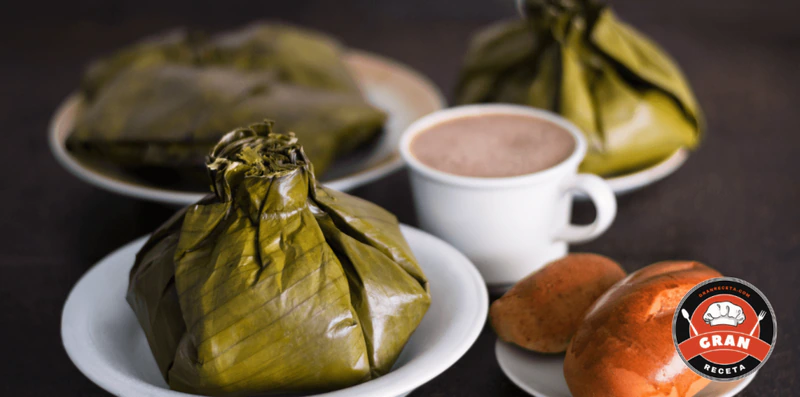
Colombian Tamal Tolimense, With Rice in the Dough
Tamal tolimense: cracked corn soaked three days, rice and split peas in the dough, chicken, pork ribs and belly. Boiled two and a half hours in banana leaf, why the soak cannot be rushed and what to buy in the US.
 Lunch
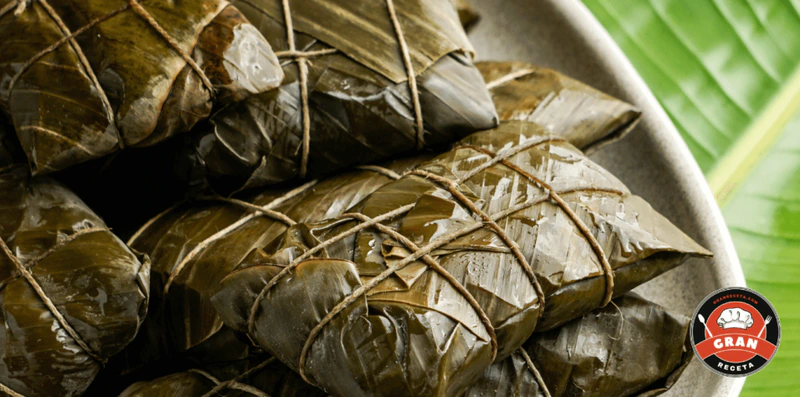
Colombian Valluno Tamales, Masa Cooked First
Tamal valluno from the Valle del Cauca, where the masa is cooked into a porridge before it ever meets the leaf. Then boiled 2 hours with chicken, pork, potato and peas, with US swaps and why these are not Mexican tamales.
 Dinner
Venezuelan Pernil, Christmas Pork Leg with a 3-Day Plan
Venezuelan pernil is a bone-in pork leg marinated 24 hours and roasted almost 6 hours to 175-195°F (80-90°C), for 8 people. A 3-day plan to Christmas Eve, US and UK cuts, crisp skin, scaling to 20 and leftovers.
 Soups
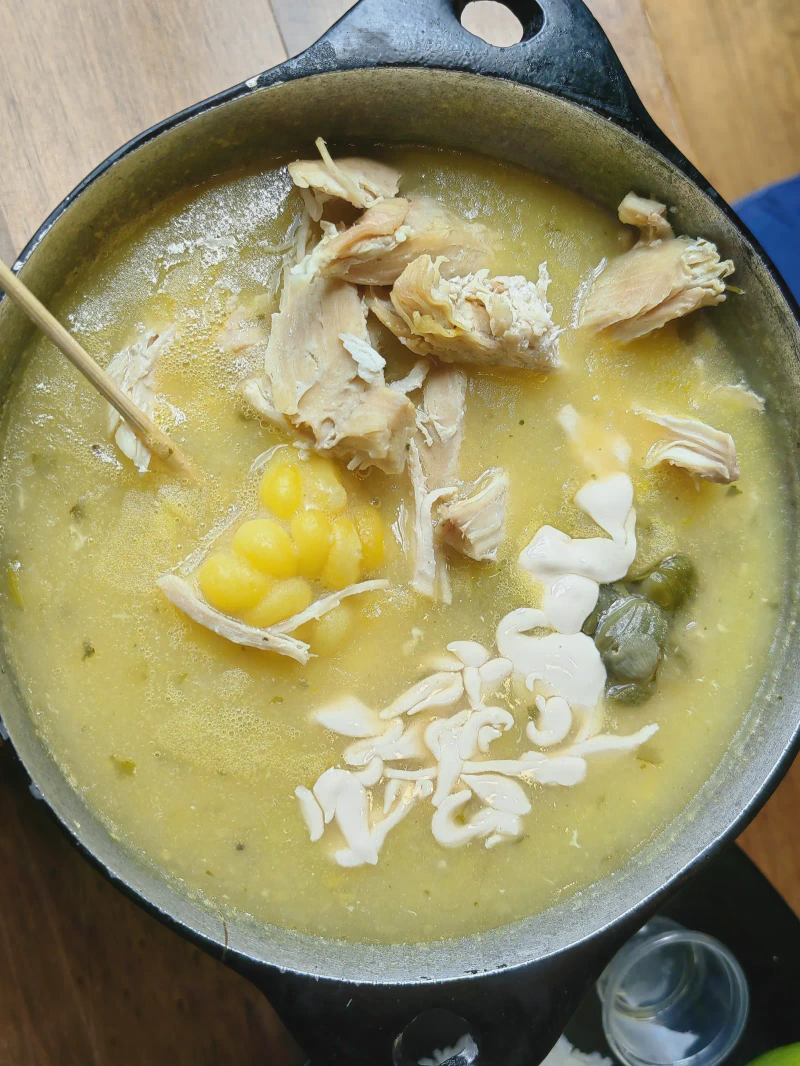
Colombian Ajiaco, the Bogotá Chicken and Potato Soup
Colombian ajiaco is Bogotá's thick chicken and potato soup with corn and guascas, ready in 90 minutes (40 hands-on) for 6 bowls. US and UK potato swaps, where to buy guascas, a make-ahead plan, costs and storage.
Sides that leave room for the pork
Lechona needs almost nothing next to it: a plain white-corn arepa paisa and a cold drink. Tamales come with arepas and hot chocolate. If you want something cool and fresh on the table, ensalada rusa, a Latin potato salad with beets, can be cooked the day before and mixed on the 24th.
 Breakfast
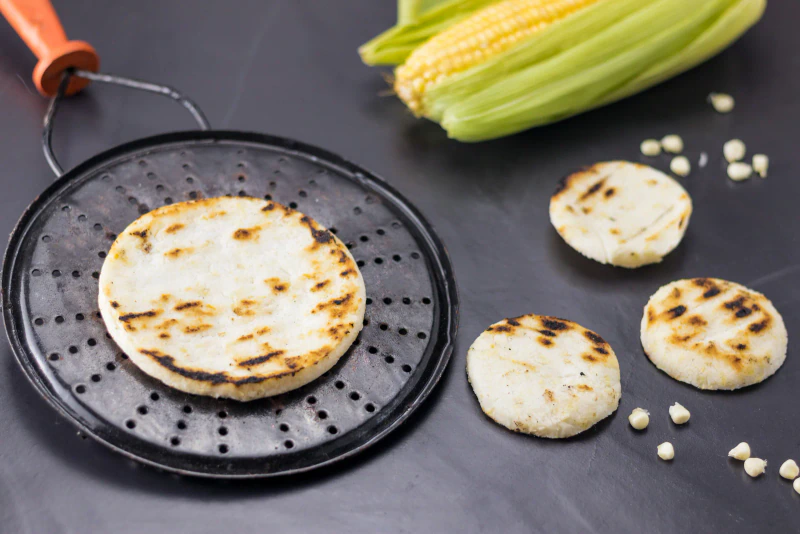
Arepa Paisa, Thin Colombian White Corn Arepas
Arepa paisa is the thin, plain white corn arepa from Medellín and Antioquia, griddled dry and eaten with butter and cheese. Makes 8 in 45 minutes, with the right flour, a no-crack dough, pressing between plastic and reheating.
 Salads
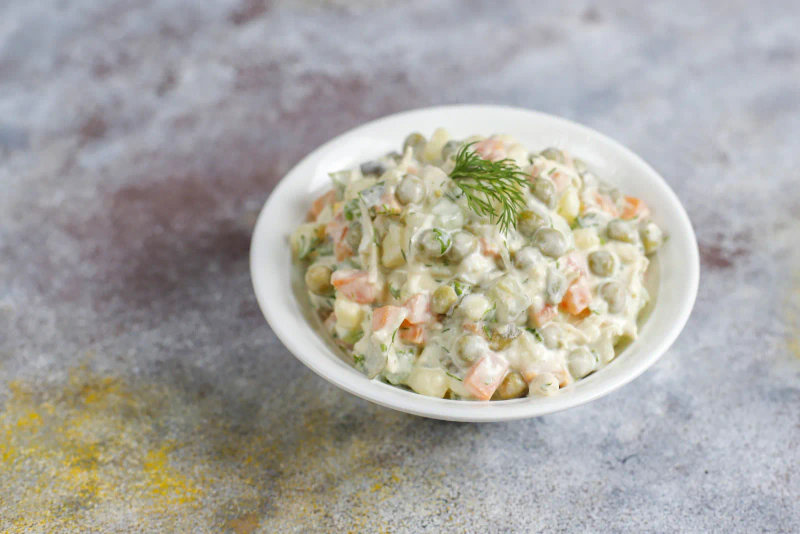
Ensalada Rusa, Latin American Potato Salad for a Crowd
Ensalada rusa, the Latin American potato salad with carrots, peas, egg, beet and store-bought mayo, ready in 2 hours for 10. When to dice the potatoes, the 8-minute doneness check, US and UK swaps, amounts for 20 and party safety.
Christmas desserts and sweets
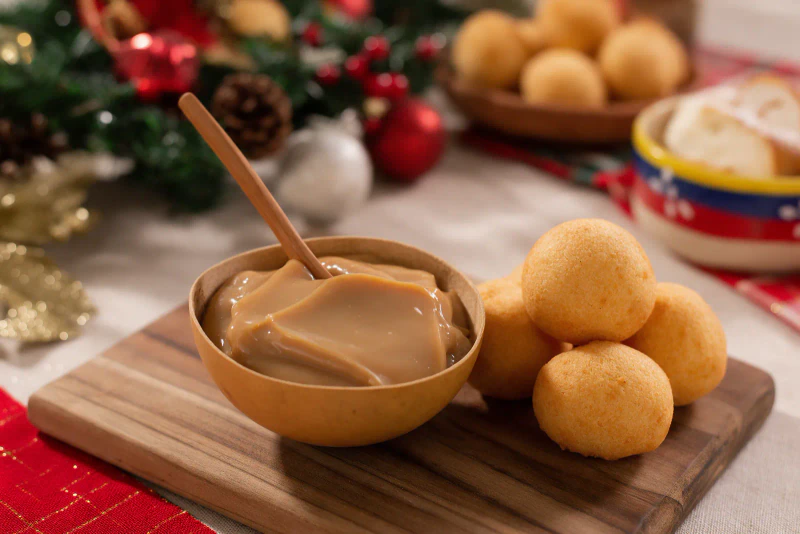
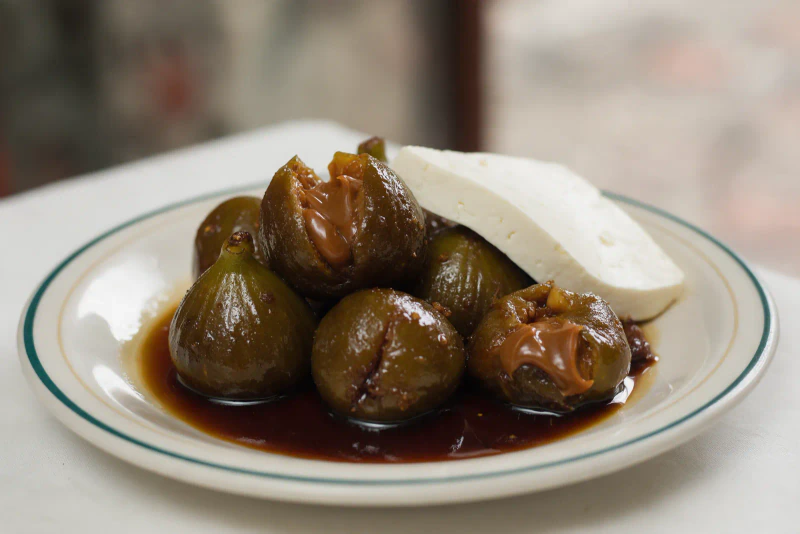
All three are made days ahead, which is the point in December. Manjar blanco is a thick milk sweet set with ground rice that keeps a week, so the Christmas Eve batch covers New Year's Eve too. Figs in syrup with dulce de leche are served with a slice of mild fresh cheese to cut the sugar. The natas dessert needs the most planning: it is built from the skin that forms on boiled milk, so use cream-top or non-homogenized milk, never ultra-pasteurized.
For a first attempt, start with natilla, then manjar blanco, and save the natas dessert for when you have three free evenings.
 Desserts
Colombian Manjar Blanco, the Rice-Set Christmas Milk Sweet
Colombian manjar blanco is milk and sugar reduced with soaked, ground rice until it sets firm enough to cut with a spoon. About 3 hours on the stove for 20 servings, the cold-plate test, US and UK swaps, a Christmas plan and costs.
 Desserts
Colombian Figs in Syrup with Dulce de Leche (Brevas)
Colombian figs in syrup are green figs boiled three times to strip the bitter latex, then simmered in panela syrup to 220°F (104°C). Makes 24 figs for 8 in 170 minutes, with US and UK fig swaps, a Christmas plan and storage.
 Desserts
Colombian Natas Dessert, the Milk-Skin Pudding for Christmas
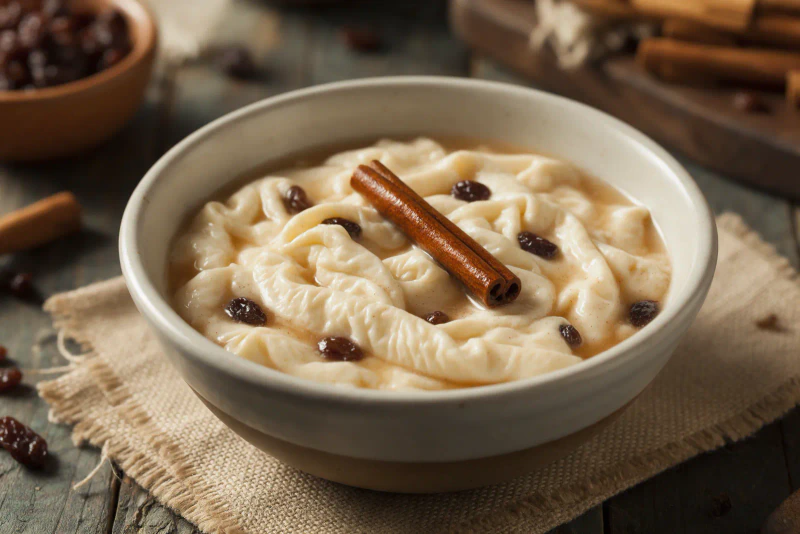
Colombian natas dessert, postre de natas, is milk skins from 6 liters (1.6 gal) of whole milk simmered in cinnamon syrup with yolks taken to 160°F (71°C). Which milk works, a 3-day plan, US costs and a cream shortcut.
 Desserts
Homemade Panettone with Instant Yeast, No Starter Needed
Homemade panettone made with instant yeast instead of a sourdough starter, baked in two small paper molds at 350°F (175°C) to 197°F (92°C) inside. How to knead to the windowpane, timing rises in a cool kitchen, hanging and storing.
December drinks
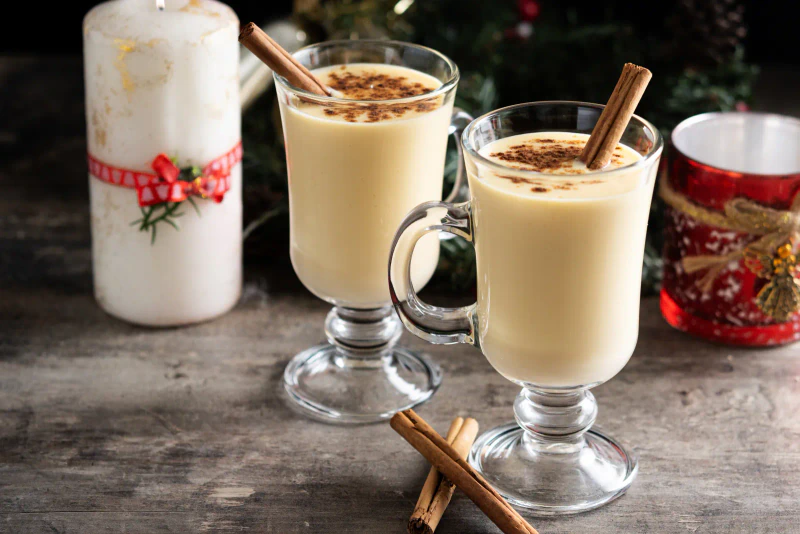
Sabajón is Colombia's eggnog, made with aguardiente, an anise spirit, and about 6% ABV; the same pot makes a milk-only bottle for kids. Colombian hot chocolate is served with cubes of fresh cheese melting in the cup, and Mexican table chocolate is the closest swap. Aguapanela, panela dissolved in water, is the cheap hot drink for a crowd, and cold with lime it suits lechona.
 Drinks
Colombian Sabajón, the Aguardiente Eggnog That Stays Thick
Colombian sabajón is a cold eggnog of whole milk, 6 yolks and cornstarch, boiled for 1 minute so it stays thick, then spiked with aguardiente. It makes two 750 ml bottles in 50 minutes, with a kid version, ABV and fridge life.
 Drinks
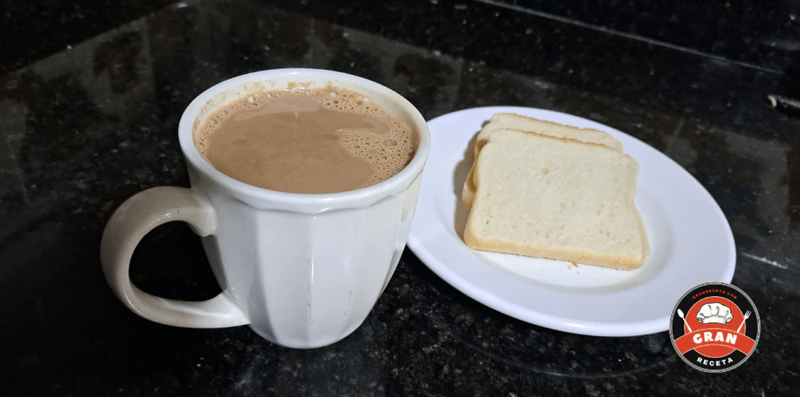
Colombian Hot Chocolate With Cheese in the Cup
Colombian hot chocolate made from sweetened table chocolate, frothed with a molinillo and served with a cube of fresh cheese melting in the cup. Why it must never boil, which cheese holds up and the calories of each version.
 Drinks
Aguapanela, the Colombian Cane Sugar Drink, Four Ways
Aguapanela is unrefined cane sugar dissolved in water, 5 oz per liter, ready in 12 minutes and drunk hot or cold. The four strengths it is made at, why panela goes into cold water and how it compares with juice and soda.
Christmas Day and leftovers
December 25 is for reheating. A calentado fries yesterday's rice and beans into a crisp-edged breakfast with a fried egg and an arepa, and leftover tamales reheat sealed in their leaves in boiling water. If you are feeding the family again on the 25th or on New Year's Day, a big pot of three-meat sancocho is what many Colombian households make.
 Breakfast
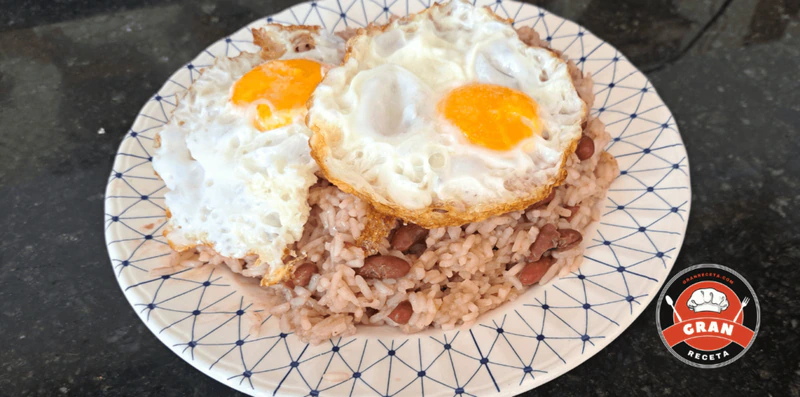
Colombian Calentado, Yesterday's Beans and Rice
Calentado paisa: leftover beans and rice fried with chorizo until a crust forms, topped with a fried egg and an arepa. The 2-hour rule, the 165 °F reheat and why Colombians cook extra beans on purpose.
 Soups
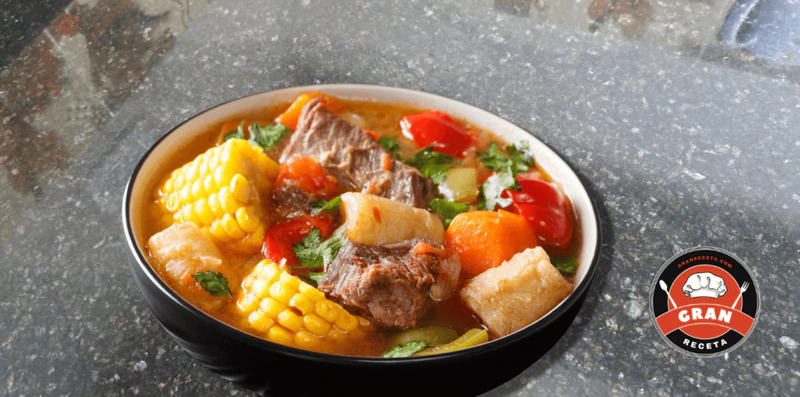
Sancocho Trifásico, Colombian Three-Meat Sancocho
Sancocho trifásico puts beef, pork and chicken in one pot, with the chicken going in three quarters of an hour after the other two. The five staggered entries, the cuts to buy outside Colombia and the 195°F that keeps the broth clear.
Frequently asked questions
What do Colombians eat for Christmas?
During the novena, December 16 to 24, natilla with buñuelos, hojuelas and hot chocolate. On Christmas Eve, tamales, lechona or roast pork, and in Bogotá often ajiaco. December desserts include manjar blanco, figs in syrup and natas dessert, with sabajón for toasts.
Is the Colombian Christmas dinner on the 24th or the 25th?
The main dinner is on the night of December 24, the last night of the novena. Christmas Day is mostly leftovers and a late breakfast.
What is the difference between natilla and buñuelos?
Natilla is a sweet, sliceable custard of milk, panela, cornstarch and cinnamon, served cold. Buñuelos are savory-salty fried balls of cheese and starch, best hot. They are eaten together because the contrast works: cold and sweet next to hot and salty.
Can I make natilla ahead, and does it freeze?
Make it the day before, or up to 2 days early, and unmold it the day you serve. It keeps 3 to 4 days in the fridge but does not freeze: the texture turns watery and grainy. See the natilla recipe.
Where do I buy Colombian Christmas ingredients in the US or UK?
Panela is sold as piloncillo in Latin aisles in the US; dark muscovado works in the UK. Cotija replaces costeño cheese for buñuelos. Banana leaves come frozen in Latin and Asian markets. For lechona, order the pork skin or a skin-on belly from a butcher a few days ahead.