Aguapanela is two ingredients, panela and water, and it’s the most widely drunk thing in rural Colombia: breakfast, a work-day thermos, a cold remedy and the base of desserts, all from the same pot. What changes between those is not the recipe but the concentration: 5 oz of panela per liter is the everyday drink, 9 oz with lime is what gets made when someone has a cold, 3 oz is the light one carried into the fields, and 14 oz reduced is melado, a syrup. Twelve minutes, 95 calories a cup, and one rule: the panela goes into cold water.
How do you make aguapanela? Break 5 oz of panela into pieces, put it in a pot with 4 cups of cold water and heat over medium, stirring, for 8 to 10 minutes until it boils and no grains are left. Strain and serve hot with cheese, or cool it, add lime and serve over ice. About 12 minutes for 4 cups.
What panela is, and what to buy
Panela is whole cane sugar: cane juice boiled down and set in blocks, with nothing extracted and nothing added. That’s the difference from brown sugar, which is refined white sugar with molasses stirred back in. The two behave similarly in water and taste noticeably different, because panela keeps the minerals and the aromatics of the juice.
In a US supermarket the easiest way to buy it is as Mexican piloncillo, sold as small hard cones in the Latin aisle; it’s the same product under another name. Colombian panela blocks are sold in Latin groceries and online, usually as two flat squares wrapped together. If you can only get brown sugar, use the same weight and accept a flatter drink.
How much panela per liter
This scale is the whole recipe. Aguapanela doesn’t change its ingredients depending on the use, it changes its strength, which is why one pot serves breakfast, a cold and a dessert.
At 5 oz per liter it’s sweet but drinkable by the glass; that’s breakfast and mid-afternoon. At 9 oz it turns thick and nearly syrupy, and that’s what’s made with lime when someone is sick, taken in small cups rather than glasses. Under 3 oz it’s barely colored water, which is how many workers carry it in a thermos all day. And at 14 oz, reduced, it’s melado, the syrup that sweetens natilla and homemade preserves.
The panela goes into cold water
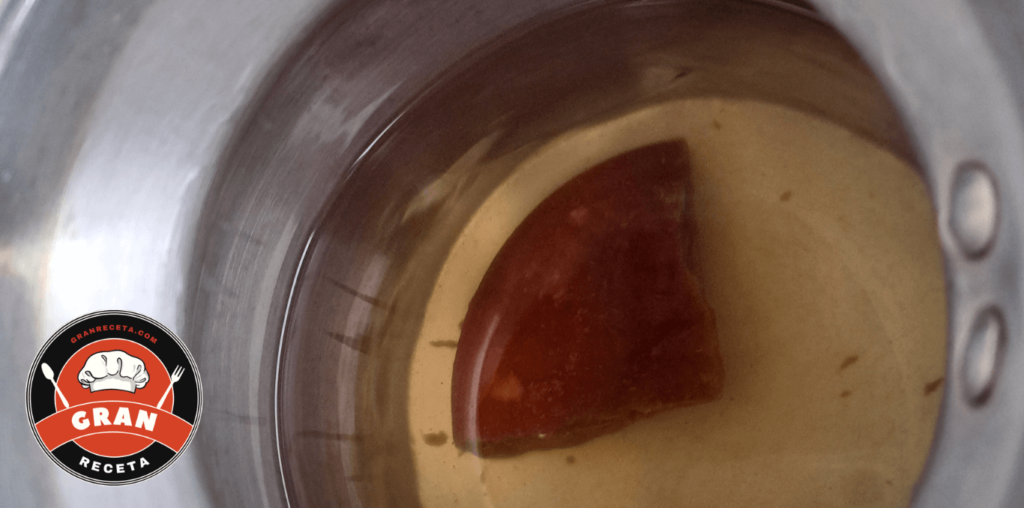
This is the detail that changes how long it takes. A block dropped into boiling water seals on the outside: the surface sugar melts into a hard skin and the water takes ages to reach the middle. Started in cold water, the panela dissolves as the water heats, and by the time it boils there’s hardly any block left.
Breaking it up helps just as much. A whole block needs 20 minutes; walnut-sized pieces, 8 to 10. If a grain survives at the bottom of the pot it won’t go on its own, so crush it against the side with a spoon.
The four ways it’s drunk
Hot with cheese. Breakfast in Boyacá, Santander and Cundinamarca: a very hot mug with a cube of fresh cheese in it or beside it, which softens and gets eaten at the end. Same principle as Colombian hot chocolate with cheese.
Cold with lime. The lowland version and the work drink. Made identically, cooled, a lime squeezed in per liter, served over ice. The lime cuts the sweetness and makes it far easier to drink in quantity.
With milk. Swapping the water for milk gives a denser children’s breakfast at 215 calories a cup instead of 95.
Canelazo. With cinnamon and a shot of aguardiente, the drink of cold highland nights, and the only one of the four with alcohol.
How it compares with other drinks
A cup is about 95 calories, essentially all sugar: per the USDA, the brown sugar used here as a stand-in for panela is 97 % sugar by weight. Put beside other drinks it lands in the same range as orange juice (112) or a cola (105). It isn’t a light drink or a sugar-free one just because it’s traditional.
It does have one practical edge over refined sugar: panela keeps minerals from the cane juice that white sugar loses in refining. The amounts are small and don’t turn the drink into a supplement, but they explain the color and much of the flavor.
Storage
Cold, in a covered jug in the fridge, it keeps 5 days. It’s sugar water, so what spoils it isn’t the panela but contamination: serve it with a used glass or leave it uncovered and it ferments, turning sour and fizzy. At that point, out it goes.
It also freezes into cubes, which is what I use for the cold lime version: it chills without watering the drink down. Melado, at 14 oz per liter, keeps a month in a sealed jar in the fridge.
What to drink it with
Hot, with 1½ oz of fresh cheese, it’s a complete breakfast, and with Colombian cheese arepas or pandebono it’s what neighborhood bakeries serve all morning. Cold, it belongs to the same family as lemonade with condensed milk and the cold oat drink. On the coast it’s drunk cold with lime alongside an egg arepa, and in December, hot, it goes with buñuelos and natilla. After a heavy lunch like sancocho, the cold version with lime does more good than any dessert.
Questions people ask
How much panela per liter of water? Five ounces for the everyday drink. Nine for the concentrated cold remedy, three for the light thermos version, fourteen reduced for syrup.
Why won’t my panela dissolve? Either it went into water that was already boiling and sealed on the outside, or it’s still in one block. Small pieces, cold water.
Is piloncillo the same as panela? Effectively yes: both are whole cane sugar boiled down and set solid. Piloncillo comes in cones and is easier to find in the US.
Does it help with a cold? It soothes rather than cures: it hydrates, calms the throat and supplies fast sugar. Hot with lime, it’s the household remedy, and that’s all it claims to be.
How many calories in a cup? About 95 per 8 oz, nearly all sugar, from the USDA database using brown sugar as the stand-in for panela. With milk, 215.
How long does it keep? Five days covered in the fridge. If it fizzes or tastes sour, it’s fermenting and should go.
Nutrition
Per 8-oz cup at 5 oz of panela per liter, from the USDA database using brown sugar as the reference: about 95 kcal, 24 g carbohydrate, 24 g sugar, 0 g fat, 0 g protein, 0 g fiber and 5 mg sodium.
It’s sugar in water, and that’s worth saying plainly: the difference from white sugar is the minerals panela retains and the flavor, not the calories. With cheese, the cup rises to about 190 kcal and becomes an actual breakfast.
In Venezuela we call it papelón con limón and drink it cold almost always, with plenty of lime and ice; here I found the hot version with cheese, which struck me as very strange at first and is now what I want when it rains in Bogotá. It’s the cheapest drink there is and the one I’ve been offered most often in someone’s house: if there’s panela and water, there’s something to offer. Josnaisis.