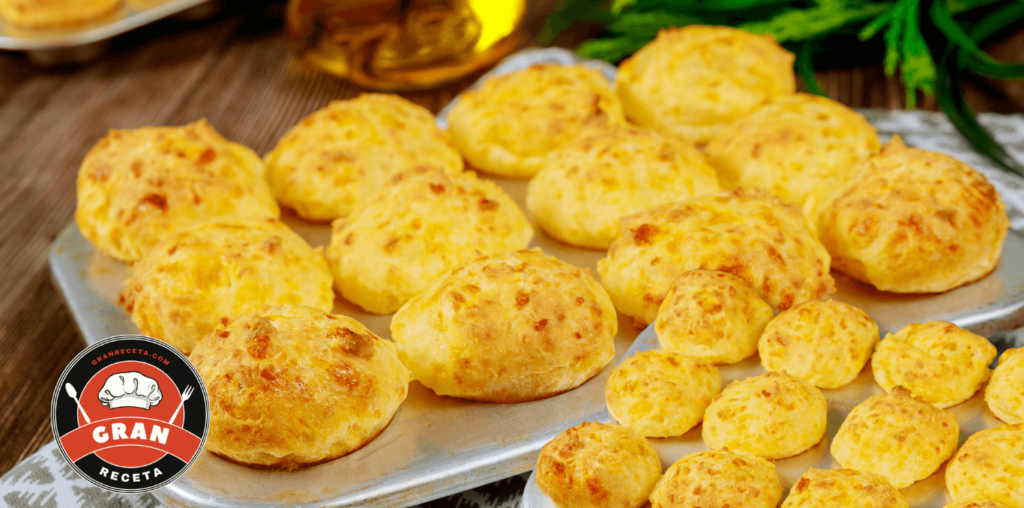
If you’ve wanted to bake Colombian cheese bread and couldn’t find the sour cassava starch pandebono needs, this is the recipe that solves it: pandeyuca runs on ordinary tapioca starch from any supermarket, with a teaspoon of baking powder doing the lifting. The trade is a different bread, not a lesser one: crisp rings rather than a stretchy ball, 1¼ oz each, 130 calories, 16 of them out of the oven in 78 minutes.
How do you make pandeyuca? Sift 10 oz of plain tapioca starch with baking powder and salt, work in 10 oz of grated cheese, 2 eggs and 3½ tbsp of butter, and chill the dough 30 minutes. Shape 16 rings of about 1¼ oz and bake 13 minutes at 445 °F. About 78 minutes for 16 pieces.
What to buy, and the bag that’s actually easy
In a Colombian shop there are two near-identical bags: sweet cassava starch and sour cassava starch. The sour one spent a month fermenting in tanks and drying in the sun, and that process gives it the ability to expand in the oven unaided, which is what makes pandebono rise. The sweet one is the same starch dried without fermenting: it binds, gives structure and crisps, but doesn’t expand.
Which is good news here, because sweet cassava starch is just plain tapioca starch (also sold as tapioca flour), available in nearly any US supermarket. The lift comes from a teaspoon of baking powder instead.
Use sour starch by mistake and the ring rises higher than it should and takes on a chewy crumb that doesn’t belong.
The cheese, 10 oz to 10 oz of starch
The pandeyuca ratio is one part cheese to one of starch, against pandebono’s two to one. Less cheese means less moisture and less fat in the dough, and that’s where the dry, snappy texture comes from.
In Colombia the traditional cheese is fresh cuajada, with queso campesino and queso costeño also common. In the US, queso fresco grated or a dry feta both work. The drier the cheese, the crisper the pandeyuca; with a wet cheese, skip the milk entirely.
The 30 minutes in the fridge
This is the step that gets skipped and the one that shows. Soft butter makes the dough workable but also slack, and a ring shaped with room-temperature butter spreads the moment it hits the oven: instead of a ring with height you get a flat disc.
Half an hour in the fridge hardens that fat. The ring holds its shape long enough for the baking powder to work and the structure to set. If your kitchen is hot, make it 45 minutes.
The oven, 445 °F and 13 minutes
Very hot oven, short bake. Baking powder releases most of its gas in the first minutes, so the oven has to be at 445 °F when the tray goes in; if it’s still climbing, the gas escapes before the dough sets and the rings stay low.
At 480 °F the surface browns in five minutes and the inside stays raw and starchy. Below 390 °F the dough dries without browning: pale and hard rather than crisp.
Thirteen minutes is for 1¼-oz rings. Larger ones need 15 or 16, though a big pandeyuca loses part of the point, which is the ratio of crust to crumb.
Pandeyuca, pandebono and almojábana
All three are cheese breads sold at the same bakery counter, so the confusion is constant. The short version: pandeyuca is sweet starch with baking powder, shaped as a ring; pandebono is sour starch, twice the cheese, shaped as a ball; almojábana is corn flour with curd cheese, bigger and fluffy.
Step by step
The dough, mixed rather than kneaded
You combine it, you don’t knead it. Cassava starch has no gluten, so there’s nothing to develop: the more you work it, the more it compacts and the harder the piece. A minute with your hands, until the dough is even, is enough.
The milk goes in only if needed. A wet cheese brings plenty of water; a dry one wants two or three tablespoons. The test is folding a piece: if it cracks, it needs liquid.
Who this recipe is for
- If all you have is sour starch → make pandebono instead, which is its recipe; here it gives a tall, chewy ring
- If your cheese is wet → skip the milk and press it dry between two plates first
- If it’s your first time → bake two as a test; 13 minutes tells you if your oven wants more or less heat
- If you want them crisper → thinner rings, about 1 oz, and 11 minutes
- If you want them on hand → freeze the shaped raw rings and bake from frozen, 17 minutes at 445 °F
What goes wrong
Using sour starch. It rises too much and turns chewy. Pandeyuca is the sweet starch one.
Skipping the fridge. The pieces spread and come out flat. Thirty minutes.
A cool oven. The baking powder loses its gas before the dough sets. Preheat 20 minutes at 445 °F.
Over-kneading. The dough compacts and the pandeyuca turns hard. Combine and stop.
Over-baking. At 16 or 17 minutes they dry out completely and become crackers. Thirteen minutes, then out.
What to serve it with
Straight from the oven, two or three per person, with Colombian hot chocolate or aguapanela: that’s breakfast in Valle del Cauca and the coffee region. On a table of Colombian breads they sit with pandebono and cheese arepas. And two 130-calorie rings go well with a cup of rice pudding in the afternoon, salty and dry against the sweet.
Storage
Pandeyuca is a hot-from-the-oven food: at 30 minutes it loses the snap and by two hours it’s hard. What does work is freezing the shaped raw rings, first on a tray and then bagged; bake them straight from the freezer, 17 minutes at 445 °F instead of 13, and they come out like fresh.
Baked ones keep 2 days in a sealed container at room temperature and revive with 3 minutes at 390 °F. The fridge hardens them faster, so leave them out.
Questions people ask
What’s the difference between pandeyuca and pandebono? The starch. Pandeyuca uses sweet, unfermented starch plus baking powder; pandebono uses sour starch that rises on its own, and twice the cheese. One is crisp, the other stretchy.
Is tapioca starch the same as sweet cassava starch? Yes. Tapioca starch, tapioca flour and sweet cassava starch are the same unfermented product, which is exactly what this recipe wants.
Why does it need baking powder? Because unfermented starch doesn’t expand by itself. The chemical leavener does what fermentation does in pandebono.
Can I make it without cheese? No. The cheese supplies the fat, the salt and much of the structure; without it you have a starch paste that won’t bind.
Why did mine come out flat? The fridge or the oven. Without the 30-minute chill the butter is soft and the piece spreads; below 425 °F the gas escapes before the dough sets.
Is it gluten free? Yes, if the starch is. There’s no wheat in it, but check the label, since many starches are packed in facilities that handle wheat.
Nutrition
Per piece of about 1¼ oz, from the USDA database: about 130 kcal, 14 g carbohydrate, 6 g fat of which 3 g saturated, 5 g protein, 0 g fiber, 0 g sugar and 220 mg sodium.
There’s no sugar in it: pandeyuca is savory, and the faint sweetness comes from the cheese’s lactose. The fat is split between the cheese, which per USDA carries 23.8 g per 100 g, and the 3½ tablespoons of butter.
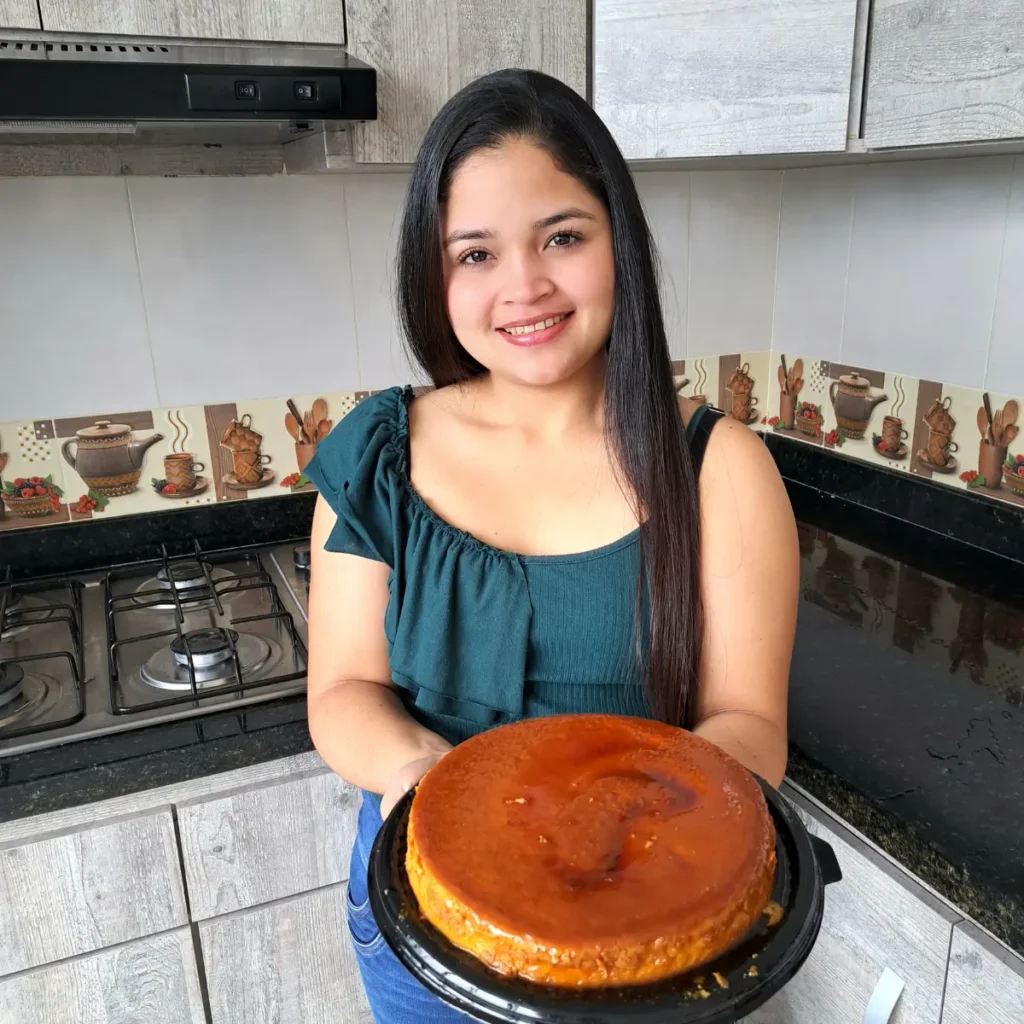
Pandeyuca was the Colombian bread that took me longest to understand, precisely because of the starch: I bought the sour kind three times thinking it was all the same and produced tall, chewy rings nobody could name. Now I keep both bags in the pantry with the labels written in marker, and in my house pandeyuca is the afternoon one and pandebono the breakfast one. Josnaisis.