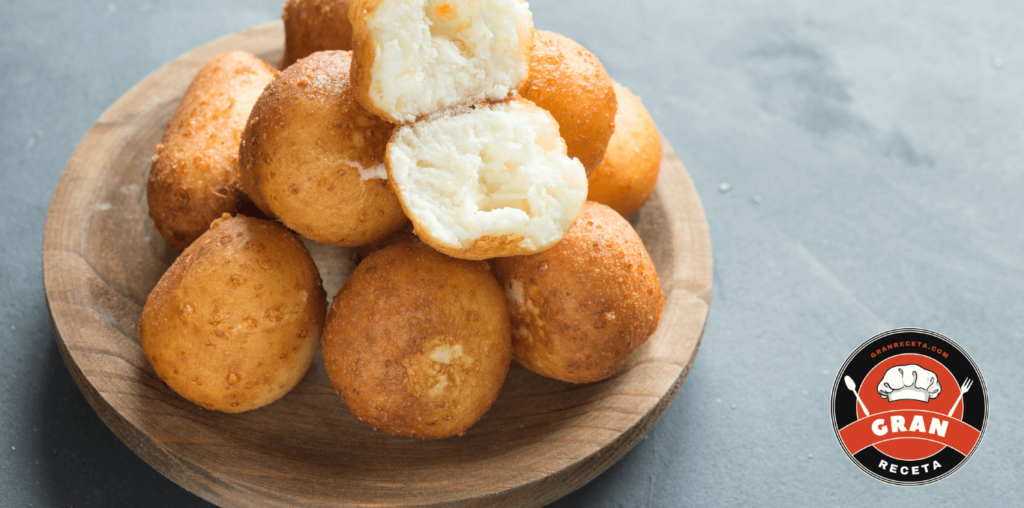
Colombian buñuelos (boon-WEH-los) are not the flat, sugar-dusted discs sold as buñuelos in Mexico. They’re golf-ball-sized cheese fritters, salty on the outside and airy inside, made without a gram of wheat from salty white cheese, cornstarch and tapioca starch, and fried at 300-330°F (150-165°C), about 40 degrees cooler than most frying. That lower temperature is the whole trick: it lets the inside puff before the crust sets. They’re the Christmas food of Colombia, on every table from December 7 through New Year alongside natilla, the cinnamon custard. Here’s the recipe in grams and cups, the oil test that needs no thermometer, which US cheese stands in for queso costeño, and why they burst.
What Colombian buñuelos are, and when they’re eaten
How do you make Colombian buñuelos? Mix 2 cups of finely grated cotija or queso costeño with ¾ cup cornstarch, ¼ cup tapioca starch, 2 tablespoons sugar and a pinch of baking powder, knead in an egg and a tablespoon of butter, and add milk a spoonful at a time only if the dough cracks. Roll 20 walnut-sized balls and fry 5 at a time at 300-330°F for 8 minutes, covered for the first 3, until they puff and turn golden. 57 minutes for 20.
The Spanish Wikipedia describes the Colombian buñuelo as ground fresh cheese, eggs and cornstarch with a little cassava starch, fried in plenty of oil into balls, and places it on the Christmas table with natilla, tamales and hot chocolate. The season opens on December 7, the Día de las Velitas (Day of the Little Candles), the eve of the Immaculate Conception, when families in cities like Cali set candles along the sidewalk and bring out natilla and buñuelos, per the Spanish Wikipedia’s entry on the holiday. If you’ve seen them in Encanto, they’re these.
The cheese, and what to use in a US supermarket
Cheese is 45 % of the dough by weight and supplies the salt, the fat and the flavor. The traditional one is queso costeño, the salty, firm white cheese of Colombia’s Caribbean coast, which the English Wikipedia describes as fresh, soft and salty, with saltier and firmer varieties. Latin groceries in the US sometimes carry it; more often you’ll be substituting, and the substitute decides how much milk the dough needs.
Cotija (200 g / 2 cups). The Mexican cheese is dry and very salty, and it’s the closest thing to costeño on a US shelf: the dough takes 3 or 4 tablespoons of milk and no added salt. Buy a block and grate it fine; pre-crumbled cotija is too coarse.
Feta plus queso fresco, half and half (100 g each). My fallback when there’s neither: feta brings the salt, queso fresco the texture. It takes only 1 or 2 tablespoons of milk and tastes a touch tangier.
Queso fresco alone, or mozzarella. They work halfway: queso fresco is bland and needs ¼ teaspoon of salt; mozzarella leaves the inside chewy. With either, almost no milk.
The starches, and why cassava flour won’t do
The dough is ¾ cup (90 g) cornstarch to ¼ cup (30 g) tapioca starch, 3 to 1. Tapioca starch (sold as tapioca flour, cassava starch or “almidón de yuca” in the Latin aisle, and by Bob’s Red Mill in the baking aisle) is what gives the elastic, airy crumb; cornstarch gives the structure that absorbs the cheese’s moisture. Cassava flour is a different product, the whole ground root with its fiber, and makes a dense fritter. If you can’t find tapioca starch, use 120 g (1 cup) of cornstarch in total: denser, but they still puff. No wheat anywhere, so the recipe is naturally gluten-free.
How long they take, and in how many batches
57 minutes for 20 buñuelos, about 20 of them hands-on and 32 in four batches at the stove. They can’t all go in at once: more than 5 in the pot drops the oil temperature and they come out heavy.
Three timings matter: the 10-minute rest of the dough, which hydrates the starches and prevents cracks; the 8 minutes per batch, covered for the first 3 so the steam puffs them; and the minute or two between batches for the oil to climb back to 320°F.
What oil temperature, and why they burst
This is where the recipe is won or lost. A buñuelo has to expand from the inside before its crust hardens, and that only happens with oil at 300-330°F (150-165°C). At normal frying temperature, 350-360°F, the surface seals in seconds, the steam inside has nowhere to go, and the fritter cracks or grows a “tail”.
The thermometer-free test is the test ball: a hazelnut-sized piece of dough sinks and floats back up on its own in 4 to 7 seconds. If it pops up instantly, the oil is too hot; if it sits on the bottom past 10 seconds, it’s too cold. With a thermometer, 320°F (160°C) is the midpoint I bring the oil back to between batches.
How to make Colombian buñuelos, step by step
The six timed steps are in the recipe card above. These are the two that decide whether they puff or split.
A firm dough with no cracks
Knead the cheese, starches, sugar and baking powder with the egg and butter for 3 minutes until the dough is firm and doesn’t stick to your hands. Milk goes in a tablespoon at a time only if a squeezed ball cracks; dry cheeses take 3 or 4 spoonfuls, moist ones almost none. Rest it 10 minutes under a cover. When you roll the balls, work each one between your palms until the surface is smooth: every crack in the raw ball is a split in the fried one.
Oil at 320°F, covered for the first 3 minutes
At least 3 inches of oil, so the fritters float and turn on their own. Five go in, the lid goes on for 3 minutes and the trapped steam inflates them from within. Then uncovered, turned every minute, about 5 minutes more until evenly golden. Onto paper towels, and eaten within 20 minutes; after that the crisp goes.
Who this recipe is for
- If it’s your first time → roll them at 20 g instead of 23 and fry a single test ball before the first batch.
- If you can’t find tapioca starch → 1 cup (120 g) of cornstarch total; a little denser, but they puff.
- If you can’t find cotija or costeño → half feta, half queso fresco, finely grated.
- If you have an air fryer → 12 minutes at 350°F (180°C), brushed with oil and turned halfway. They brown unevenly and come out drier; I don’t think it’s worth it, but it works.
- If you’re making them for a party of 40 → double the dough, not the batch size: still 5 at a time, with two pots if you have two burners.
Mistakes that ruin buñuelos
They split or grow a tail. Oil above 340°F, or cracks in the raw ball. Lower the heat, wait 2 minutes, and roll the next ones smoother.
Raw and gummy inside. Oil too hot: they browned in 2 minutes and never cooked through. 320°F and 8 minutes.
Heavy and greasy. Oil too cold, or too many in the pot. Back to 320°F and no more than 5 per batch.
They don’t puff. No lid for the first minutes, or a dough that’s too wet. Cover for 3 minutes, and milk only if the dough cracks.
They taste flat. A mild cheese with no added salt. With queso fresco or mozzarella, ¼ teaspoon of salt.
The dough cracks when you roll. It needs milk or rest. One more tablespoon and 10 minutes under a cover.
Storing, freezing and reheating
Buñuelos are an eat-now food. Fried, they keep 2 days in a sealed container at room temperature or in the fridge, and come back in a 350°F (180°C) oven for 5 minutes or an air fryer at 350°F for 3; the microwave turns them gummy. The raw dough dries fast: 2 hours refrigerated under a cover at most, then knead in a tablespoon of milk. Freezing fried buñuelos doesn’t work, the tapioca starch turns leathery. What does freeze is the raw balls, spread on a tray and then bagged, up to 1 month, fried from frozen with 2 extra minutes per batch.
Variations
Filled with arequipe. Fried and still warm, piped with a fine tip full of dulce de leche. It’s the December street-stall version.
With panela. Grated panela (unrefined cane sugar, in the Latin aisle) in place of the sugar gives a slightly darker dough and a deeper sweetness. Same 25 g.
Cassava buñuelos. Inland, some are made with boiled, mashed cassava instead of the starches, with little or no cheese; denser, and they don’t puff the same way.
Venezuelan buñuelos. The ones I grew up with: boiled cassava, no cheese, served with a papelón syrup on Christmas Eve. Same name, a different fritter.
What to serve with Colombian buñuelos
The pairing is Colombian natilla: 20 salty buñuelos next to a sweet panela-and-cinnamon custard is the December 7 table, with thick hot chocolate or hot aguapanela for the novena evenings. Outside Christmas they go with coffee mid-afternoon, or as the fried starter before a plate of Colombian cheese arepas on a Sunday morning, and on the coast they share a fried platter with the Colombian egg arepa. To finish a full Colombian Christmas spread, a Colombian rice pudding or a stovetop flan. If the fryer is already out but you want the baked version of the same cheese-and-starch dough, the 13-minute pandeyuca rings go in the oven while the buñuelos drain. Filled ones are piped with Colombian dulce de leche, which is what December street stalls sell.
Frequently asked questions
Why do my buñuelos burst? Oil that’s too hot, above 340°F, or cracks in the raw ball. At 300-330°F the inside expands before the crust sets, and every ball has to be smooth before it goes in.
What temperature do you fry buñuelos at? 300-330°F (150-165°C), with 320°F as the midpoint. Without a thermometer, a test ball sinks and floats back up in 4 to 7 seconds.
What can I use instead of queso costeño? Cotija is nearly identical. Otherwise, half feta and half queso fresco. Queso fresco alone needs ¼ teaspoon of salt and almost no milk.
Can I make buñuelos without tapioca starch? Yes, with 1 cup (120 g) of cornstarch in total. A little denser and less springy, but they puff.
Can I freeze buñuelos? Not fried: they turn leathery. Raw balls freeze up to 1 month and fry from frozen with 2 extra minutes.
Are buñuelos gluten-free? Yes. Cornstarch and tapioca starch, no wheat. Check the baking powder label if you’re strict about it.
Nutrition
Per buñuelo (23 g of raw dough, about 28 g fried), calculated from USDA FoodData Central (SR Legacy) using feta as the stand-in for queso costeño and counting 5 g of oil absorbed per fritter, which is what mine weigh after frying compared with before:
- Calories: 108 kcal
- Protein: 2 g
- Carbohydrates: 7 g
- Fat: 8 g, of which 3 g saturated
- Fiber: 0 g
- Sugars: 1 g
- Sodium: 152 mg
The absorbed oil is more than half the fat: at 320°F and 5 at a time it stays around 5 g; in cooler oil, it climbs.
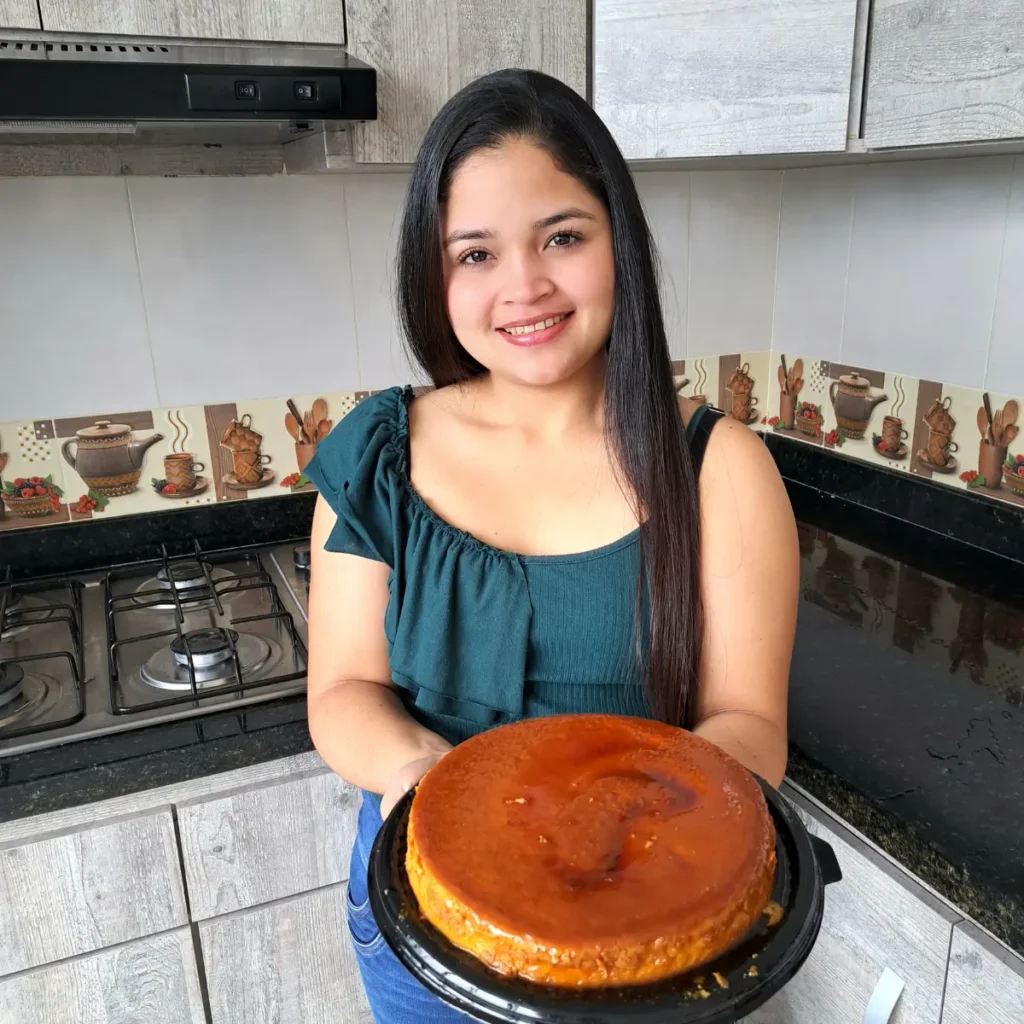
In Venezuela our Christmas buñuelos were cassava, dense and drenched in papelón syrup, and my grandmother made them on the 24th. The Colombian ones, puffed and salty, seemed at first like a different food wearing the same name. Now I make both: cassava on the 24th, cheese on the 7th, when the candles go up along the street. Josnaisis.