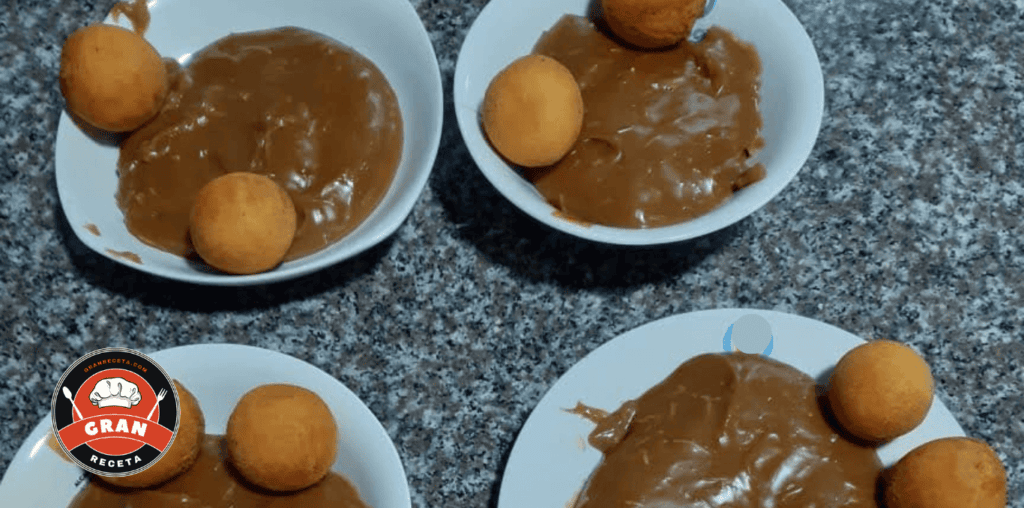
Colombian natilla (nah-TEE-yah) is set with 120 g of cornstarch per quart of milk and not a single egg. It’s a Christmas custard, ¾ cup plus a tablespoon of starch to 4 cups of milk, sweetened with panela, the unrefined cane sugar block, and scented with cinnamon, firm enough to unmold and cut into squares. It’s what sits next to the buñuelos on every Colombian table from December 7 through New Year, and it takes 15 minutes at the stove plus 4 hours in the fridge. Below, the cornstarch scale for the texture you want, what to buy in a US supermarket in place of panela, the lump-free technique, and what to do when it won’t set.
What Colombian natilla is, and why it has no eggs
How do you make Colombian natilla? Whisk ¾ cup plus 1 tablespoon of cornstarch into 1 cup of cold milk. Heat the other 3 cups with 7 oz of grated panela and 2 cinnamon sticks until the panela dissolves, pull the sticks, pour in the slurry in a thin stream while stirring, and cook 8-12 minutes until a spoon leaves a trail on the bottom. Pour into a dish and chill 4 hours until it slices. 270 minutes in total, 15 of them work, for 10 servings.
The word is shared with Spanish natillas, and that’s about all. Per the Spanish Wikipedia, the Colombian natilla is thickened with cornstarch and sweetened with panela, is typical of Antioquia and the coffee region, and is served at Christmas and New Year with buñuelos, tamales and hot chocolate. Spanish natillas are an egg-yolk custard, a yellow, spoonable cream eaten year-round. The Colombian one sets firm, unmolds and slices like a soft fudge, and its caramel color comes from the panela, not from any egg. If you’ve eaten Mexican or Filipino maja blanca, or a British blancmange, you’re in the right family: milk set with starch.
So the most-asked question, “does natilla have eggs?”, has a short answer: the Colombian one, no. A recipe that adds them is a Spanish natilla or a hybrid.
How much cornstarch per quart of milk
Every texture of natilla is one ratio: cornstarch per quart of milk. With ¾ cup plus 1 tablespoon (120 g) you get the firm, sliceable natilla of this recipe; with ½ cup plus 2 tablespoons (90 g), a soft one served in glasses; under ⅓ cup (80 g) it never sets, even overnight; over 1 cup (140 g) it turns gummy and tastes of starch.
Cornstarch packs down a lot in a measuring cup, so a scale is more reliable than cups here. The panela doesn’t change the texture: 7 oz (200 g) per quart is a medium sweetness, and dropping to 5 oz (150 g) gives a paler, less sweet natilla with the same firmness.
Panela, piloncillo and what to use instead
Panela is what holds this dessert together in flavor: unrefined cane sugar boiled down and molded into blocks, with molasses notes and a caramel color that white sugar doesn’t give. In a US store it’s easiest to find under its Mexican name.
Piloncillo cones in the Latin aisle are panela; grate them or break them up so they dissolve in 10 minutes rather than 25. Dark brown sugar plus a tablespoon of molasses gets you most of the color and depth. White sugar makes a pale, flat natilla. The other ingredients are pantry staples: cornstarch is cornstarch, and the cinnamon should be sticks, not ground, which turns the texture sandy. In Colombia panela is regulated as its own food product (Resolución 779 de 2006 sets the sanitary rules for the sugarcane mills), and it costs least in the mill towns of Santander and Boyacá and most in the cities of the south-west, though for one natilla the difference is pennies.
How long it takes
15 minutes of work and 4½ hours of waiting. The cooking is short, 8-12 minutes of stirring, and the rest is resting: 30 minutes in the dish at room temperature and 4 hours in the fridge, where the cornstarch finishes setting. At 2 hours it still won’t cut clean.
That makes natilla a day-ahead dessert: made on the 23rd for the 24th, or the afternoon before a party. The 10 minutes heating the milk with the panela also steep the cinnamon, which gives more aroma in hot milk than in boiling milk.
How to make Colombian natilla, step by step
The five timed steps are in the recipe card above. These are the two that decide whether it comes out smooth or lumpy.
Cold milk, thin stream
Lumps in natilla have one cause: cornstarch that hits hot milk before it’s dissolved. Whisk it into the 1 cup of cold milk until the liquid is uniform, whisk again right before using because it settles, and pour it into the hot milk in a thin, steady stream while your other hand stirs. Never all at once.
The spoon that doesn’t stop
From the moment the slurry goes in until the heat goes off, the wooden spoon keeps moving: the second it stops, cornstarch settles and sticks to the bottom. The set point comes at 8-12 minutes: slow bubbles, and a spoon drawn across the bottom leaves a trail that stays 2-3 seconds before closing. If the trail vanishes instantly, cook longer; if the spoon drags, it’s done and needs to go into the dish now, because it keeps thickening in the pot.
Who this recipe is for
- If it’s your first time → grated piloncillo, which dissolves faster, and a rectangular dish rather than molds; it unmolds more forgivingly.
- If you want it spoonable → ½ cup plus 2 tablespoons (90 g) of cornstarch per quart, chilled in glasses.
- If you want the Antioquian grandmother version → with shredded coconut and no vanilla.
- If you can’t find panela or piloncillo → 1 cup packed dark brown sugar plus 1 tablespoon of molasses.
- If you’re making it for 20 → double everything in a 5-quart pot; cooking adds only 5 minutes, but the 4-hour chill doesn’t shrink.
- If you’re dairy-free → full-fat coconut milk sets with the same 120 g of cornstarch; almond milk sets too but comes out translucent and less creamy.
Mistakes that ruin natilla
Lumps. Cornstarch into hot milk, or dumped in at once. If it’s already happened, push the mixture through a fine sieve before it thickens and keep cooking; large lumps won’t come back.
It won’t set. Too little cornstarch (under 90 g per quart) or too little cooking (pulled before the spoon left a trail). It can’t be fixed cold: return it to the pot, dissolve 30 g (¼ cup) more cornstarch in ½ cup of cold milk, stream it in and cook 5 minutes more.
Tastes of starch, gummy. Too much cornstarch, over 140 g per quart. Next time, 120.
Stuck to the bottom. The spoon stopped or the heat was high. Medium-low and constant stirring.
Weeping in the fridge. Covered while hot. Cool 30 minutes uncovered, then press the plastic onto the surface rather than stretching it over the dish.
Grains of panela. A big block that didn’t dissolve. Grate it, and don’t add the slurry until the milk has no crystals left.
Storage and make-ahead
In the fridge, 3 to 4 days, per the USDA FSIS general rule for leftovers, with plastic pressed onto the surface and cut as you serve; from day three it releases a little water. On the table, 2 hours at most: it’s milk. Don’t freeze it: cornstarch gels break when thawed and the natilla turns watery and grainy. Make it up to 2 days ahead and unmold the day you serve.
Variations
With coconut. ½ cup unsweetened shredded coconut stirred in with the butter. The version you see most in Antioquia.
With dulce de leche. A thin layer of dulce de leche in the bottom of the dish before the natilla goes in; it ends up on top when you unmold.
With cheese. 100 g (3.5 oz) crumbled queso fresco folded in before pouring, the way some highland households do it: sweet and salty in one bite.
With coconut milk. On the Caribbean coast part of the milk is swapped for coconut milk. Same cornstarch, more tropical.
Spoonable. 90 g of cornstarch per quart, served in glasses with cinnamon. Same recipe, different texture.
What to serve with natilla
With Colombian buñuelos, always: 20 salty cheese fritters and one sweet natilla are the December 7 table and the nine evenings of the novena, with thick hot chocolate or hot aguapanela. For anyone who wants something far less sweet on the same table, a cold bowl of mazamorra arrives unsweetened and gets its panela at the table, while Colombian dulce de leche goes the other way entirely. On Christmas Eve the natilla closes a dinner of Colombian tamales and lechona. If you like the panela-and-milk pairing, the Colombian rice pudding uses it the same way, and the stovetop flan is the egg custard the natilla is so often confused with, and Venezuelan quesillo is what a Venezuelan family sets out on the same December night.
Frequently asked questions
Does Colombian natilla have eggs? No. It’s set with cornstarch alone, 120 g (¾ cup + 1 tbsp) per quart of milk, and sweetened with panela. The egg-yolk version is Spanish natillas, a spoonable cream.
How much cornstarch per quart of milk? ¾ cup plus 1 tablespoon (120 g) for a natilla that slices; ½ cup plus 2 tablespoons (90 g) for one you spoon. Under ⅓ cup it won’t set; over 1 cup it tastes of starch.
Why didn’t my natilla set? Too little cornstarch or too little cooking. It has to cook until the spoon leaves a 2-3 second trail on the bottom, then chill 4 hours. If it’s already cold, return it to the pot with ¼ cup more cornstarch dissolved in cold milk.
What can I use instead of panela? Piloncillo is the same product under its Mexican name. Otherwise, dark brown sugar plus a tablespoon of molasses. White sugar works but gives a pale, flat natilla.
How long does natilla keep? 3 to 4 days in the fridge under plastic pressed onto the surface. Don’t freeze it; the cornstarch breaks and it weeps.
Is natilla gluten-free? Yes. Cornstarch, milk, panela and cinnamon; no flour anywhere.
Nutrition
Per serving, one tenth of the dish, about 130 g (4.6 oz), without coconut, calculated from USDA FoodData Central (SR Legacy); panela is counted as brown sugar, the closest entry in the database:
- Calories: 195 kcal
- Protein: 3 g
- Carbohydrates: 36 g
- Fat: 5 g, of which 3 g saturated
- Fiber: 0 g
- Sugars: 25 g
- Sodium: 60 mg
The coconut adds about 26 kcal and 2.6 g of fat per square. It’s a sugar dessert, not a fat one: two thirds of the calories are the panela and the cornstarch.
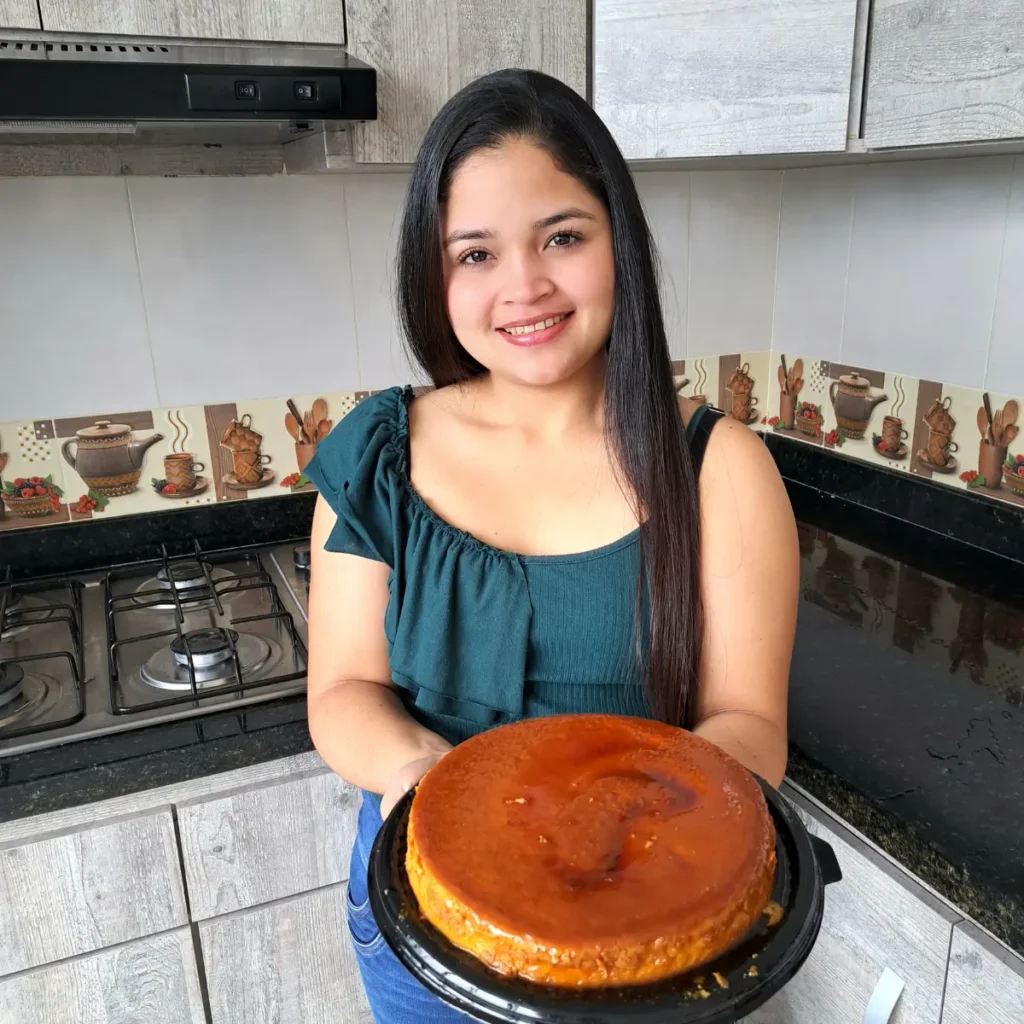
We don’t make natilla in Venezuela; our Christmas sweets are quesillo, bienmesabe and dulce de leche cortada, and every one of them has eggs or curdled milk in it. The first natilla I ate in Colombia, at a novena in Medellín, struck me as plain: milk, panela, done. It took a couple of Decembers to see that the plainness is the point, because the buñuelo next to it brings the salt and the fat. Josnaisis.