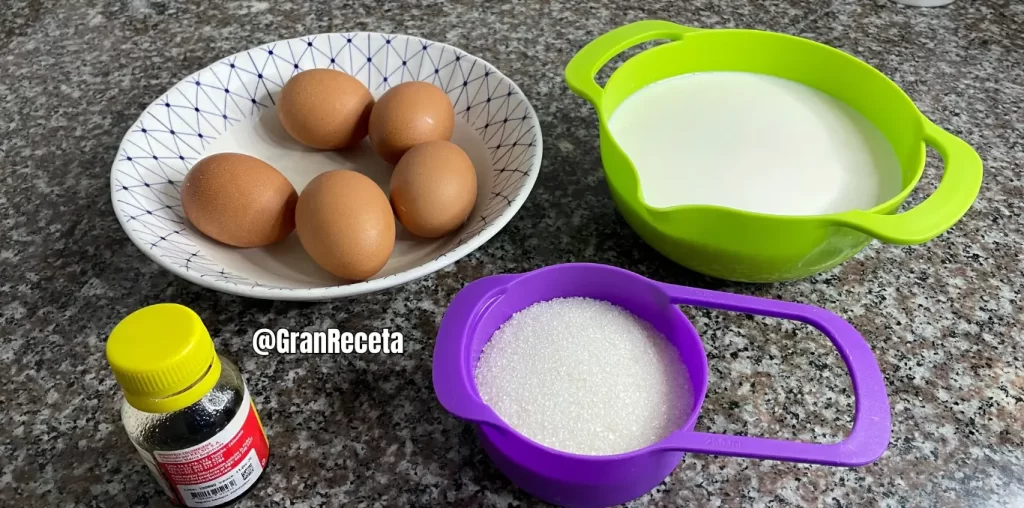
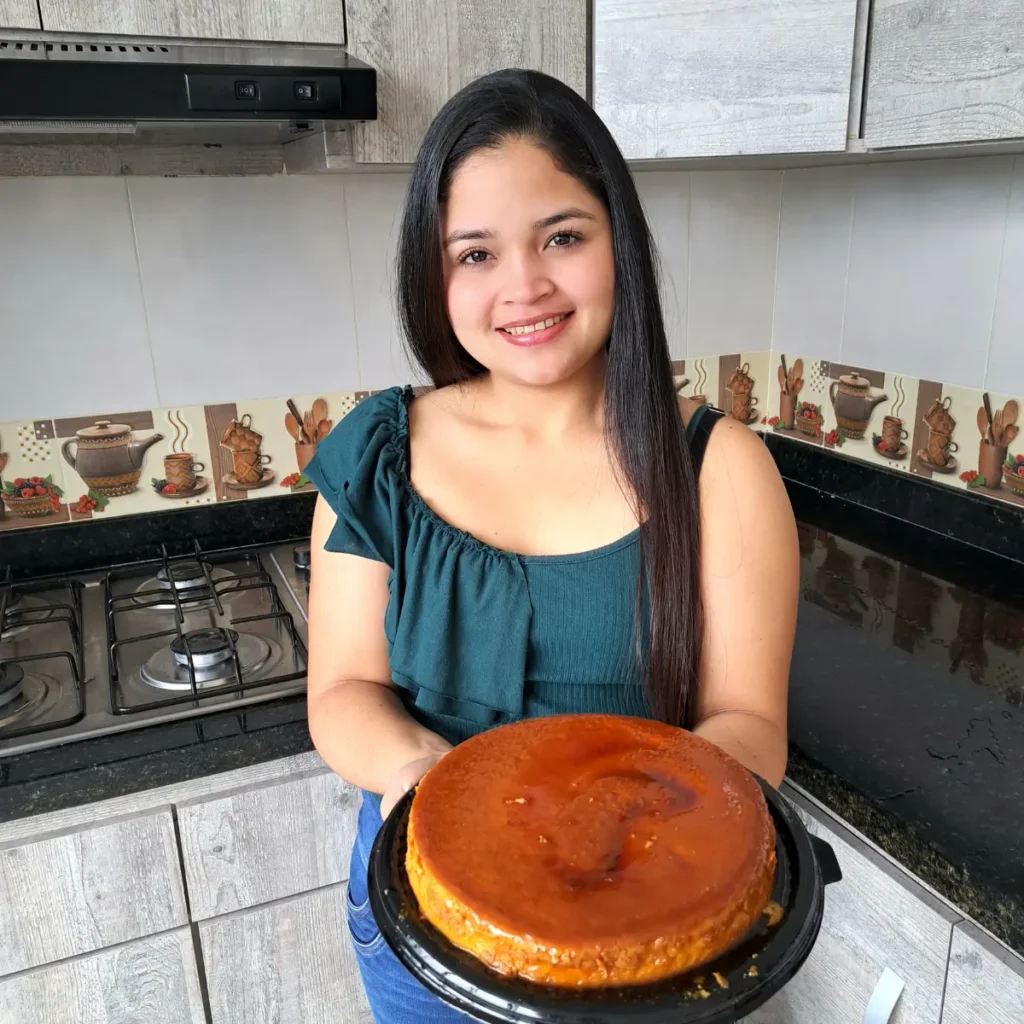
Custard sets at 158 °F, and everything about making flan without an oven follows from that number. A water bath on the stove isn’t a workaround: it’s the system that keeps the custard below 176 °F, the point where egg proteins contract, squeeze out their water and leave holes behind. With the water shivering and an hour and a half over medium-low heat, a pot produces the same smooth, firm flan an oven does, for a third of an hour of work and an afternoon of chilling. Eight servings of 210 calories.
How do you make flan without an oven? Make a caramel with ½ cup of sugar in the mold, whisk 5 eggs with 1 cup of sugar without beating in air, add 2 cups of milk and strain it over the caramel. Cover with foil, set in a pot on a towel with hot water halfway up, and cook 90 minutes over medium-low heat. Then 4 hours in the fridge. About 350 minutes start to finish, for eight servings.
Why a water bath on the stove works
Egg white starts to set around 144 °F and yolk a little after; by 158 °F the flan is set and creamy. The trouble starts past 176 °F, where the proteins contract so much they expel the water they were holding, which is exactly what you see as holes in the custard and a puddle on the plate.
Water boils at 212 °F, well above that threshold. What the bath does is put a cushion of water between the burner and the custard: the mold never touches the heat source and the custard warms slowly and evenly. On the stove it works as well as in an oven, except that heat arrives mainly from below, which is why it takes half an hour longer.
The towel in the bottom of the pot does two jobs: it insulates the mold from hot metal and stops it rattling as the water moves, which is another source of bubbles.
Holes, and where they come from
There are two causes and both are controllable. The first is heat, as above. The second is air: beating the eggs with an electric mixer works bubbles into the custard and those bubbles set in place. So whisk by hand, slowly, just until combined, and strain the mixture before it goes into the mold.
The strainer does something else too: it removes the chalaza, the white cord that anchors the yolk, which otherwise gives the flan a more pronounced eggy smell.
If you want the opposite effect, a custard with holes on purpose, that’s a different recipe: Venezuelan quesillo, where the holes are the mark of a job well done.
How long it takes, and why 4 hours in the fridge
Only about 20 minutes of the whole process are hands-on. The four hours in the fridge aren’t about chilling: they do two specific things, letting the flan finish setting, since it firms as it cools, and turning the caramel at the bottom into sauce.
That last part surprises people. The caramel goes into the mold and hardens like glass; over the hours in the fridge it draws moisture from the custard and becomes the sauce that runs down when you flip it. Unmold at two hours and the flan cracks while the caramel stays glued to the pan.
The caramel, no spoon
The ½ cup of sugar with the 2 tablespoons of water goes over medium heat and doesn’t get touched. Stirring with a spoon is what makes it crystallize: undissolved sugar crystals cling to the spoon and seed the whole pan, turning it grainy and white.
If it colors unevenly, swirl the pan. The target is dark amber, like strong honey; pour it into the mold immediately, because it keeps cooking off the heat and goes from amber to burnt in seconds. Pale caramel leaves the flan cloying; black caramel makes the whole thing bitter.
Stovetop, oven and quesillo
Stovetop and oven flan are one recipe with two appliances. What changes is time: the pot needs 90 minutes because heat comes mostly through the base, while an oven surrounds the mold and 60 minutes is enough.
Venezuelan quesillo is a different dessert: sweetened with condensed milk and built around the holes this recipe avoids.
Step by step
The mold and the depth
A mold 8 to 9 inches across and not too deep is ideal: you want the custard about 2 inches high. In a narrow, deep mold the center takes much longer and the edges overcook; if that’s what you have, add 20 minutes and check with a skewer.
Seal the foil tightly, because water condensing on the pot lid drips onto the flan and pits the surface.
Who this recipe is for
- If you do have an oven → 350 °F, water bath, 60 minutes, everything else the same
- If you want it firmer → one extra egg; it unmolds more cleanly and travels better
- If you want it creamier → swap ½ cup of the milk for heavy cream
- If your mold has no lid → a double layer of foil, crimped tight at the rim
- If you’re serving 16 → two molds rather than one big one; in a deep mold the center never sets in time
What goes wrong
Letting the water boil. It passes 176 °F, the egg curdles and holes appear. The water should shiver.
Using an electric mixer. It beats in air that becomes bubbles. Hand whisk, just until combined.
Skipping the strainer. The chalaza stays in and the flan smells eggier. Fine strainer, every time.
Stirring the caramel. It crystallizes and turns grainy. Swirl the pan only.
Unmolding early. It cracks and the caramel stays behind. Four hours in the fridge, minimum.
What to serve it with
On its own, cold, with its caramel, in 3-oz slices. For the same caramel baked into a cake, there is the caramel pineapple upside-down cake. On a dessert table it sits with Colombian rice pudding and Venezuelan quesillo, the three somebody always asks for. After a big lunch like bandeja paisa or a bowl of sancocho, it’s the dessert that lands best, being cold and not too sweet. With black coffee it’s Sunday afternoon in my house.
Storage
Covered in the fridge it keeps up to 4 days, and like any egg-and-milk custard it should be chilled within a couple of hours of coming off the heat. It’s better on day two, once the caramel has worked its way through the base.
It doesn’t freeze: thawed, the egg releases the water it was holding and the texture turns grainy and weepy. If it has to travel, carry it in its mold and flip it at the destination. If there is no oven and no stove to spare, a no-bake passion fruit dessert fills the same slot on the table and sets in 3 hours in the fridge.
Questions people ask
Why does my flan have holes? Too much heat or too much air. A hard boil takes the custard past 176 °F; an electric mixer beats in bubbles. Shivering water, hand whisk.
How long on the stove? Ninety minutes over medium-low with water halfway up the mold. In an oven, 60 minutes at 350 °F.
Why does the caramel stay in the pan? Because it was unmolded too soon. The caramel needs the full 4 hours in the fridge to absorb moisture and liquefy.
Can I make it with condensed milk? You can, but then it’s a quesillo: different texture, different sweetness. This is the classic egg, milk and sugar flan.
How many calories? About 210 a serving, from the USDA database for the eggs, milk and sugar. It’s one of the lighter desserts on this site.
How do I know it’s done? A skewer in the center comes out clean. A slight wobble in the middle is normal; it finishes setting in the fridge.
Nutrition
Per serving, one eighth of the mold (about 3 oz), from the USDA database: about 210 kcal, 34 g carbohydrate, 5 g fat of which 2 g saturated, 6 g protein, 0 g fiber, 32 g sugar and 75 mg sodium.
The 1½ cups of sugar across caramel and custard account for nearly all the carbohydrate; the fat comes from the eggs and the whole milk, which per USDA carries 3.25 g per 100 ml, and is low for a dessert. That’s why flan is what I make when lunch was already heavy.
Flan was the first dessert I made on my own, at twelve, in my mother’s kitchen and without an oven, because we didn’t have one. It came out full of holes, of course: the water was at a rolling boil because I assumed that meant it would cook faster. It took me years to understand that flan is a dessert of patience and low heat, and that the only thing to watch is that the water never quite boils. Josnaisis.