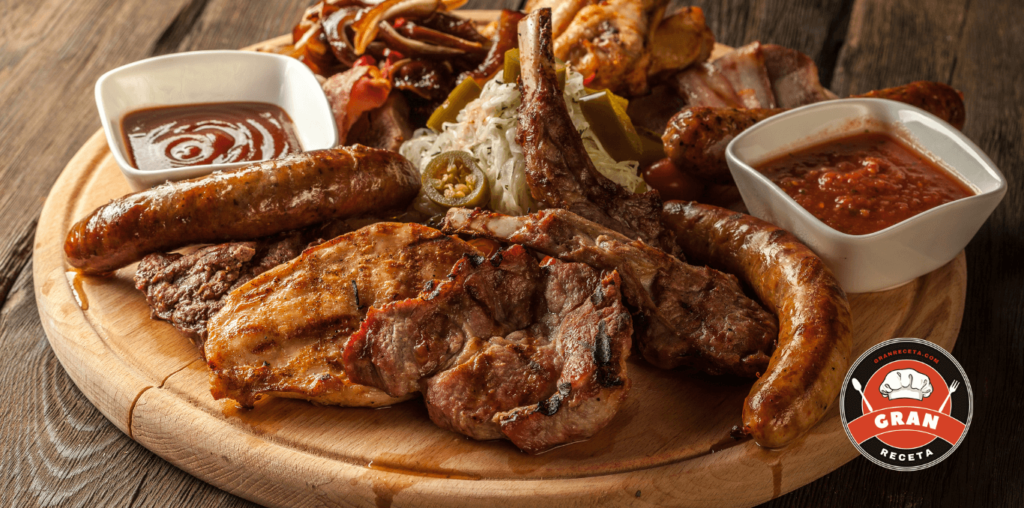
A fritanga is what Colombians put on the table when a lot of people are standing around it: a metal tray of fried pork ribs, beef, chorizo, blood sausage, baby potatoes and cassava, eaten with fingers and ají. The whole technique is the order the pieces go into the oil, and both ends of that order are fixed. A platter for eight, 80 minutes.
How do you make a fritanga? Marinate the ribs and beef for half an hour and boil the cassava for 20 minutes. Fry everything in batches at 340°F in this order: ribs 17 minutes, beef 12, potatoes 12, chorizo 8, cassava 6 and blood sausage 5. Drain on a rack and pile it onto a platter with ají and avocado. 8 servings, 80 minutes.
What to buy, piece by piece
Almost all of this is in a regular supermarket. Spare ribs cut into short pieces, flank or brisket, fresh chorizo, black pudding, baby potatoes and cassava, which sells frozen in most Latin and Asian groceries.
Two notes on substitutions. Papa criolla is a small yellow Andean potato with a waxy, almost buttery flesh; baby Yukon Golds are the closest thing and behave the same in oil. And the chorizo must be the fresh, raw kind — Colombian or Mexican — not cured Spanish chorizo, which is already dry and will only harden.
Morcilla in Colombia is a blood sausage with rice in it, closer to British black pudding than to Spanish morcilla de Burgos, and either works here.
Why the order is fixed at both ends
Each piece picks up what the last one left behind, and that single fact sets the running order. The ribs open, because pork fat is the flavour base of the whole tray; frying them at the end would waste it. The blood sausage closes, because its filling crumbles and stains the oil, and after it the oil will not brown anything cleanly.
In between, the order runs from the pieces that need the most time to the ones that need the least: beef and potatoes at 12 minutes, chorizo at 8, cassava at 6. That also means everything reaches the table at roughly the same temperature, since what went in first is what holds up best on the tray.
How long each piece needs
Seventeen minutes for the ribs, 12 for the beef and the potatoes, 8 for the chorizo, 6 for the cassava and 5 for the blood sausage. Nothing goes in together.
The potatoes go in whole with their skins. The skin holds them while the inside cooks, and at 12 minutes it wrinkles and splits, which is the signal they are done. Peeled, they fall apart in the oil.
The chorizo goes in whole and unpricked. Pricked, it dumps its fat into the oil in the first few seconds and comes out dry.
Why the cassava is boiled first
This is the piece that most home fritangas get wrong. Raw cassava has ungelatinised starch and needs around 25 minutes of wet heat to soften; in oil at 340°F the surface browns in 6 minutes and the centre stays hard.
So it is boiled for 20 minutes in salted water until soft but still whole, drained thoroughly, and only then fried, where its only job is to brown. Wet cassava also makes the oil spit, so if you boil it ahead, let it air-dry for 10 minutes first.
Temperature and batches
At 340°F the surface browns at the same rate the inside cooks. Below 300°F the piece soaks up oil before it browns and turns greasy; above 365°F it browns before it is cooked through.
The real difficulty at home is not hitting the temperature but holding it. Each batch of cold pieces pulls the oil down 20 to 30°F, so a full pot ends up frying at 300°F. Hence four pieces at a time and a pause between batches.
Drain on a rack, not flat on kitchen paper: sitting on paper, the underside steams itself soft and loses the crust it just gained.
Where the 80 minutes go
The marinade and the cassava overlap, so what you are really committing to is 40 minutes of frying in batches, plus 5 minutes to drain and plate.
Make it ahead
The marinating and the cassava boiling can both be done the day before, which turns this into a 45-minute job on the day. Fried pieces hold 20 minutes in a 250°F oven on a rack without going soft, so you can fry the ribs early and still serve everything hot together. What does not work is reheating a fritanga the next day: the crust is gone and no oven brings it back.
Who this recipe is for
- You are feeding a standing crowd — it is designed to be eaten off a shared tray
- You like a mixed grill — this is the fried Colombian cousin of one
- You can get fresh chorizo and black pudding — those two carry most of the flavour
- You have a deep pot and a thermometer — both matter more than skill here
- You are counting calories — this is not that dish, and the nutrition section says so plainly
What goes wrong
Frying the cassava raw. Browned outside, hard inside: it needs 20 minutes of boiling first.
Crowding the pot. The oil falls to 300°F and everything comes out greasy.
Pricking the chorizo. It loses its fat at once and comes out dry.
Frying the blood sausage early. It colours the oil and ruins everything after it.
Draining on flat paper. The underside softens in its own steam.
Variations
Paisa style. With 2-inch chicharrón and no beef, closer to a bandeja paisa.
Coastal style. With butifarra from Soledad and fried cassava in place of the potatoes.
Santander style. With dried, air-cured beef instead of the chorizo.
Roadside style. All of the above plus chunchullo, which needs 25 minutes of boiling first.
What to serve with it
The platter goes in the middle of the table with homemade ají, a griddled arepa and sliced avocado, and it is eaten with fingers or toothpicks. A serving is about 8 oz across the pieces, and that is plenty.
To drink, cold aguapanela with lime or beer. For a full fried table, Colombian patacones and stuffed plantains share the pot, and Colombian cheese arepas take the place of bread. For dessert, cold mazamorra cuts the fat better than anything else.
Frequently asked questions
What order do the pieces go in? Ribs, beef, potatoes, chorizo, cassava, and blood sausage last because it colours the oil.
Why is my cassava hard? It went into the oil raw. Boil it 20 minutes first and fry it only 6.
Can I use an air fryer? For the potatoes and cassava yes, at 400°F. The ribs come out fine but without the fried crust.
How much oil do I need? At least 1½ inches deep, so the pieces float instead of resting on the bottom.
Can I reuse the oil? Up to the blood sausage, strained. After that it is stained and carries flavour.
Nutrition
Per serving, one eighth of the platter across all the pieces, calculated from each ingredient according to the USDA SR Legacy database:
- Calories: 845 kcal
- Protein: 40 g
- Carbohydrates: 32 g
- Fat: 62 g, 19 g of it saturated
- Fibre: 2 g
- Sodium: 1,130 mg
There is no polite way to put this: it is the heaviest dish on this site, and better to know that going in. The chorizo and blood sausage together account for more than half the sodium, and the absorbed oil, about 3 oz across the whole platter, adds roughly 100 calories a person. Roast the ribs and potatoes at 400°F instead of frying them and a serving lands near 690 calories with 45 g of fat.
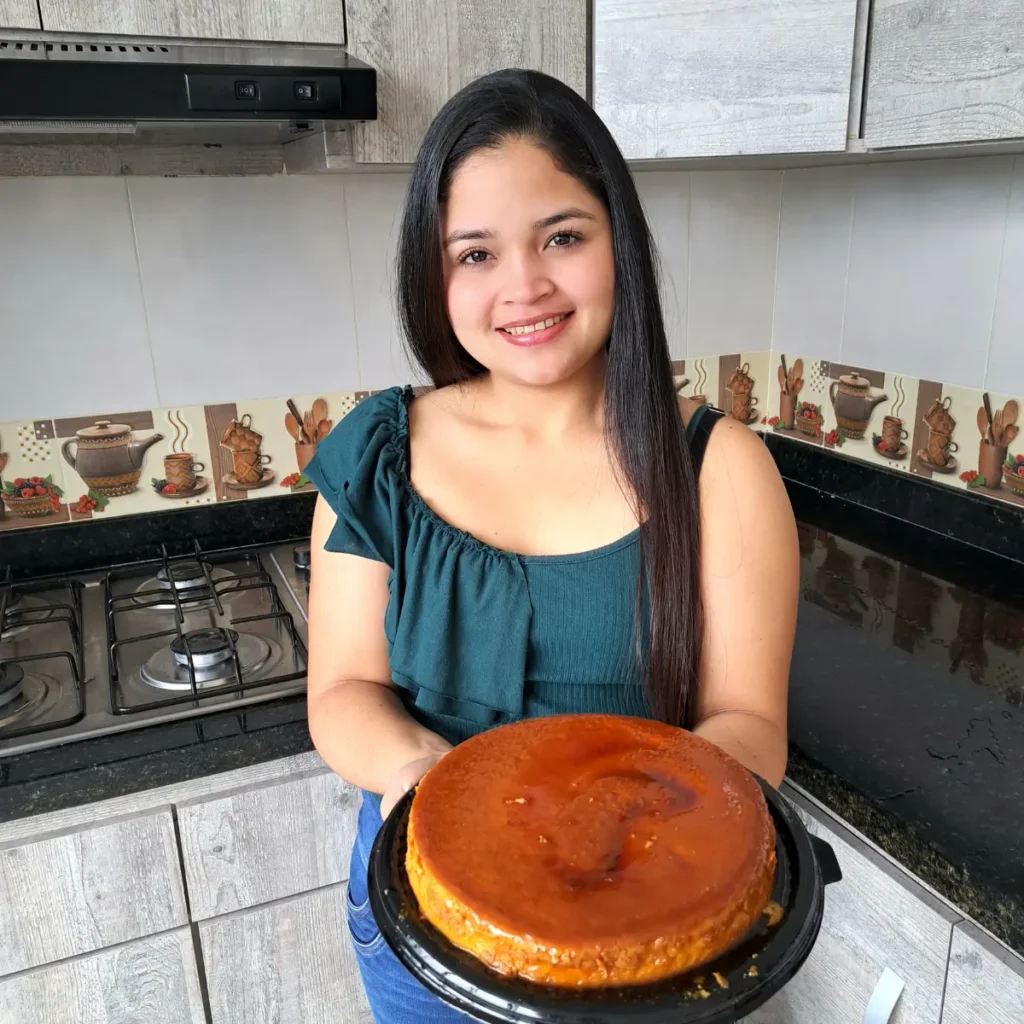
The fritanga I remember is not from a restaurant but from a roadside stop, on a metal tray shared by six people standing around it. What surprised me that first time was that every piece was crisp on its own, and it took me a while to understand that this only happens if you fry in batches instead of all at once. Josnaisis.