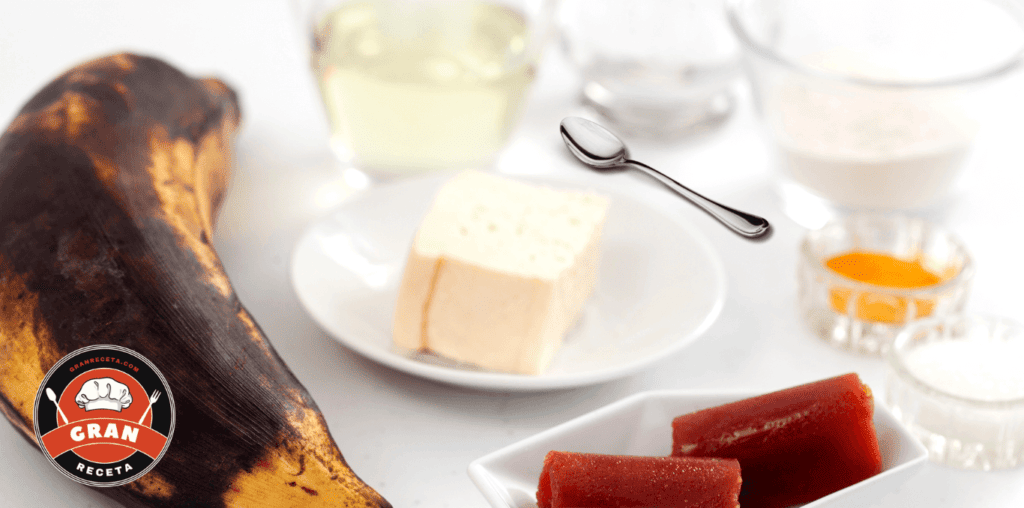

Most people throw plantains away at exactly the point this recipe wants them, 2 days past what looks edible. Skin almost black, soft to the touch, the stage supermarket shoppers read as spoiled is the stage where a plantain carries 17.51 g of sugar per 100 g, more than a ripe banana. Aborrajados are what Colombia’s Valle del Cauca does with that fruit: fried, flattened, stuffed with cheese, battered and fried again, sweet outside and salty in the middle. Eight of them for 4 people in 35 minutes.
How do you make aborrajados? Fry slices of very ripe plantain 2 minutes a side, flatten them, sandwich cheese between two slices and seal. Chill 5 minutes, dip in a flour, egg and milk batter and fry again at 347 °F, 90 seconds a side. 35 minutes for 4 servings.
How ripe is ripe enough
This is the part worth getting right, because everything else follows from it. A plantain with a yellow skin and a few spots is not ready; the one you want has a skin that is mostly black and gives under light pressure, and it will smell faintly sweet.
Supermarket plantains are usually sold green, which means planning. In a paper bag at room temperature they take 5 to 7 days from green to black, faster next to an apple or a banana. There is no shortcut: an underripe plantain has almost no sugar to caramelize, and the fritter comes out pale and tasting of very little.
Frying something this sweet
Sugar scorches at a lower temperature than starch, which is why aborrajados fry cooler than most fritters. At 365 °F and above, the outside darkens before the cheese in the center has melted, and you end up with a black shell around a cold filling.
The working point is 347 °F, about 90 seconds a side. Fry three or four at a time: each cold piece pulls the oil down, and a crowded pan drops below 320 °F, where batter starts absorbing oil instead of setting.
Which cheese, and why leaks happen
Three things keep the cheese where it belongs. Seal the edges so none of it shows, chill the assembled fritters for 5 minutes, and pick a cheese that melts without going liquid.
Oaxaca cheese, sold as a ball in the Latin aisle, is the closest thing in a US market to Colombian queso doble crema: it stretches and stays creamy. Halloumi is the safe option, since it softens without melting and cannot run. What fails reliably is pre-shredded cheese from a bag, which splits into oil and fouls the pan.
Two fries and a chill
The two fries do different jobs. The first cooks the plantain and softens it enough to flatten; the second only sets the batter and melts the cheese, which is why it is so short. Let the second one run long and the fruit inside collapses and the fritter loses its shape on the plate.
The batter gets mixed while the fritters chill, so there is no waiting around. Total hands-on time is about 8 minutes out of 35.
Who this recipe is for
- If your plantains are yellow and firm → give them 5 to 7 days in a paper bag; there is no way to rush this
- If cheese leaks out → seal the edges more carefully and extend the chill to 15 minutes
- If you cannot find Oaxaca cheese → low-moisture mozzarella melts well but hunts for gaps; halloumi is the safest
- If you want to prep ahead → assembled and unbattered they keep 1 day refrigerated, or 1 month frozen
- If you would rather not deep fry → bake the first stage 20 minutes at 400 °F, though the plantain comes out drier
Make ahead, storage and reheating
Assembled but unbattered, aborrajados keep 1 day in the fridge and 1 month in the freezer, laid flat on a tray until solid. From frozen they go straight into the batter and fry 2 minutes a side.
Once fried they do not keep well: the plantain firms up and the cheese sets into rubber. If you must, reheat in a 400 °F oven for 5 minutes, never the microwave. Better to fry only what will be eaten and keep the rest assembled.
What goes wrong
Underripe plantain. No sugar means no caramelization; the fritter is pale and bland.
Oil above 365 °F. The sugar scorches before the cheese melts.
Skipping the chill. The cheese liquefies before the crust seals and ends up in the pan.
Flattening too far. Below ⅜ inch the slice tears as you fill it and the seal fails.
Serving them late. The cheese firms as it cools; these are eaten standing up, straight from the pan.
Variations
With guava paste. A small piece of guava paste beside the cheese, the sweet-salty version most common in Cali.
With shredded beef. Savory filling instead of cheese, which takes them closer to an empanada.
No batter. Just two slices sealed around the cheese and fried, lighter and faster at about 380 calories a serving.
Baked. Twenty minutes at 400 °F plus 3 minutes under the broiler; less crisp but considerably less fat.
What to serve with them
In the Valle these are a starter or a snack, 2 per person, eaten on their own with a fresh chili sauce or a pink sauce of mayonnaise and ketchup. On a tray of fried things they sit beside Colombian empanadas and Colombian patacones, which bring the savory side against the sweetness.
On a bigger scale, the same frying pot turns into a fritanga platter, where the Colombian chorizo goes in fourth. As part of a lunch they work ahead of Colombian arroz atollado or Colombian sancocho, the usual fried-then-spoon order. To drink, cold Colombian aguapanela with lime.
Frequently asked questions
How ripe should the plantains be? Skins mostly black and soft to the touch. At that point they carry 17.51 g of sugar per 100 g; a green one has 2.29.
Why does my cheese leak out? Incomplete sealing, or skipping the chill. Five minutes in the fridge is enough; with a very soft cheese, 15.
Can I make them without batter? Yes, and it is a common version: two slices sealed around the cheese, fried directly, about 380 calories a serving.
Can they be frozen? Assembled and unbattered, up to 1 month. Batter them frozen and fry 2 minutes a side.
What cheese should I use? Oaxaca cheese is the closest to Colombian doble crema. Halloumi is the most leak-proof since it softens rather than melting.
Nutrition
Per serving of 2 aborrajados, calculated with the USDA database for the plantain, cheese, batter and absorbed oil:
- Calories: 520 kcal
- Protein: 17 g
- Carbohydrates: 53 g
- Fat: 29 g, of which 10 g saturated
- Fiber: 2 g
- Sodium: 320 mg
- Sugars: 23 g, nearly all from the fruit
The plantain supplies the carbohydrate and the sugar; the cheese supplies most of the saturated fat, at 22.14 g of fat per 100 g according to the USDA. These are a snack rather than a meal: two of them carry about as many calories as a light lunch, which is why in the Valle they arrive in small numbers at the start of a meal.
The first time I made these, six of the eight leaked and I was left with a pan full of burnt cheese threads. A friend from Cali told me the problem was not my sealing but my hurry: the cheese has to go into the oil cold. Now I assemble them, put them in the fridge and drink a coffee before the batter comes out. Josnaisis.