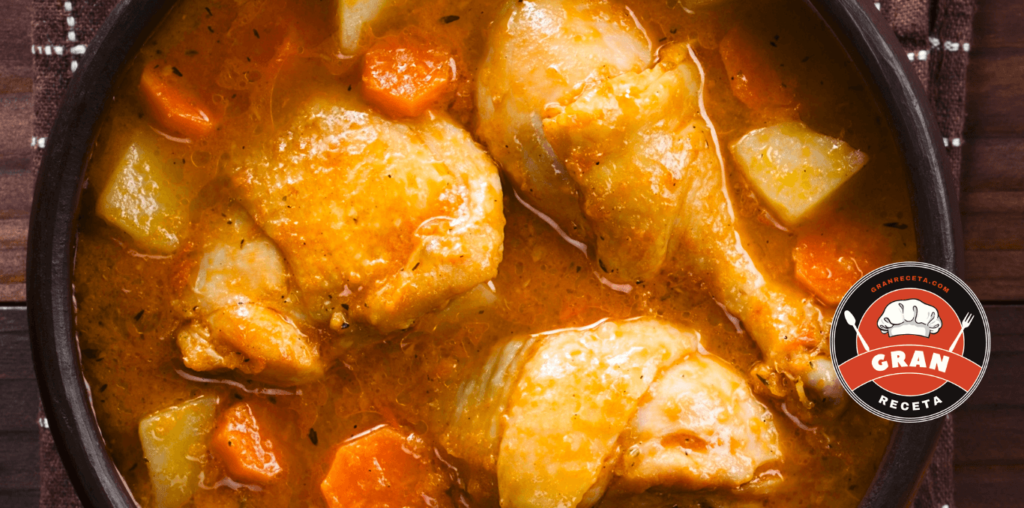
A stewing hen needs 90 to 120 minutes in the pot and a supermarket chicken 35 to 45, and that gap is the whole story of sancocho: the hen gives a rich, gelatinous broth with a yellow sheen of fat, the chicken a clear, lighter one. Sancocho de gallina (sahn-KOH-cho deh gah-YEE-nah) is Colombia’s big Sunday soup, and this is the Valle del Cauca version: hen, green plantain, corn, yuca, arracacha and culantro for 8 bowls. Below, how to choose between hen and chicken, which US ingredient stands in for each Colombian root, the timing of every stage, and what to do when the broth comes out thin or cloudy.
What sancocho is, and where this one comes from
How do you make Colombian sancocho de gallina? Season hen pieces with salt, cumin and garlic, brown them on a tomato-and-onion sofrito, and simmer 75 minutes in 3 quarts of water with green plantain and corn. Add yuca, arracacha and potato for 30 minutes more, then culantro for the last 5. Serve with white rice, avocado and a fresh ají. 140 minutes for 8 servings.
Sancocho is a whole family of one-pot soups across Colombia, the thing you cook when there are twelve people coming and one big pot: meat or fish simmered for a long time with starchy roots, plantain and corn. The Spanish Wikipedia lists the sancocho de gallina as the emblematic dish of the Valle del Cauca, alongside Antioquia’s three-meat trifásico, the Caribbean coast’s fish sancochos and Bogotá’s puchero. What marks the Valle version is the bird, a free-range hen rather than a young chicken, and the herb, culantro, the long, saw-edged leaf (Eryngium foetidum) that is not cilantro and goes in during the last minutes.
Whether potato belongs in it is argued inside the Valle itself: some kitchens leave it out, some put it in. I put it in, the way I learned in Cali, along with arracacha, the sweet Andean root that gives the broth its rounded edge.
Hen or chicken, and what changes in the pot
A stewing hen is an adult bird: more connective tissue and more fat than a 6-week supermarket chicken, which is why its broth carries gelatin and a depth the chicken can’t give. The trade is time, and finding one.
In the US, hens show up at Latin and Asian markets and some farm stands, usually labeled “stewing hen” or “gallina”, often frozen, and for roughly twice the price of chicken; the Bureau of Labor Statistics doesn’t track them, but it put a whole fresh chicken at $2.01 per pound in August 2026, so the 4.4 lb of bird in this recipe run about $9 with chicken. If you go with chicken, keep it whole and bone-in, never breast alone, and stop the long stage at 40 minutes; at 45 the meat falls apart.
The roots and herbs, and what to buy in a US supermarket
Everything in the pot has a US counterpart except the hen and the arracacha, and the arracacha is optional.
Green plantain, 3 (600 g / 1.3 lb). Buy them fully green and hard; a yellowing plantain turns sweet and soft in the pot. Break them into pieces with your hands or a wooden knife rather than steel, which darkens the broth. They go in with the hen and take 70-75 minutes to soften.
Yuca (cassava), 500 g (1.1 lb). Fresh yuca has a waxed brown skin and white, crisp flesh; frozen peeled chunks from the Latin freezer aisle are a fair swap and go in straight from the bag. It’s done when the chunks split open, 30 minutes.
Russet potatoes, 500 g. Standing in for Colombian papa pastusa: floury, they fray at the edges and thicken the broth. Waxy potatoes leave it thinner.
Arracacha, 300 g (10 oz). A sweet, carrot-scented Andean root almost never sold outside the Andes. Parsnip comes closest; skipping it costs you a little sweetness and nothing else.
Culantro, 4 leaves. Sold as culantro, recao or ngò gai at Latin and Asian markets, with long serrated leaves. It’s the flavor of the Valle sancocho. Without it, double the cilantro and call it a chicken sancocho.
How long it takes
140 minutes with a hen, about 45 of them hands-on. The long stage is the hen alone with the plantain and corn, 75 minutes at a gentle simmer; the roots are peeled during that stage and go in afterward, each with its own time. With a whole chicken the long stage is 40 minutes and the pot is done in 105.
Three timings matter: 75 minutes for hen, plantain and corn (green plantain takes almost as long as the hen), 30 minutes for yuca, arracacha and potato, and 5 minutes for the culantro at the end. If your hen is over 2 kg or clearly old, give it 15 more minutes before the roots go in, not after.
How to make sancocho de gallina, step by step
The five timed steps are in the recipe card above. These are the two that decide the broth.
Sofrito and browning before the water
The seasoned hen browns 6 minutes on a sofrito of tomato, onion and garlic before any water goes in. That browning and the collapsed tomato are the base of the broth’s flavor and color; a hen dropped straight into water gives a flatter soup. Then the 3 liters, the whole scallions and the cilantro stems. It’s the same sear-and-keep-the-broth logic that makes Colombian chicken rice work, where the poaching stock becomes the rice’s liquid.
Medium heat, water trembling, 75 minutes
Sancocho simmers covered with the water barely moving. At a hard boil the fat emulsifies and the broth turns cloudy and grainy, and the plantain falls apart before the hen is done. At 75 minutes a thigh gives when pierced; if it doesn’t, 15 more minutes before the roots.
Who this recipe is for
- If you have under 2 hours → a whole bone-in chicken: 40 minutes for the long stage, 105 total.
- If it’s your first time → don’t turn up the heat to finish sooner; it’s the number one cause of thin, cloudy sancocho. Medium heat and patience.
- If you have an Instant Pot → hen 35 minutes on high pressure with the plantain and corn, natural release, then the roots on sauté, uncovered, 30 minutes. Chicken, 15 minutes.
- If you can’t find arracacha or culantro → skip the arracacha and double the cilantro. A good hen soup, not the Valle one.
- If you’re cooking for 16 → double everything in a 16-quart pot; the hen needs 15 more minutes, the roots the same.
Mistakes that make a sancocho thin or cloudy
Thin broth. High heat, or too little plantain and arracacha, which are the thickeners. Crush 4 pieces of cooked potato against the side of the pot and cook 10 minutes uncovered.
Cloudy broth. A hard boil, or cold water added midway. Medium heat always, and hot water to top up.
The hen is still tough at 2 hours. An old or very large bird. Give it 20 more minutes; never bone it raw to speed things up, the bones are the broth.
The chicken fell apart. It went past 45 minutes. With chicken, the long stage is 40.
The yuca stayed hard. It went in late, or it was old yuca with dark threads inside. The full 30 minutes, and fresh yuca that snaps white when you break it.
The broth is bitter. Culantro cooked too long, or plantain cut with a steel knife. Culantro for 5 minutes only, and plantain broken by hand.
Make ahead, storage and freezing
The numbers are the USDA Food Safety and Inspection Service’s for leftovers: out of the fridge, 2 hours at most; in the fridge, 3 to 4 days at 40°F (4°C) or below; reheat to 165°F (74°C). A 6-quart pot cools slowly: divide leftovers into containers under 3 inches deep before refrigerating.
The roots keep drinking broth in the fridge: when reheating, add ½ cup of hot water per 2 cups of soup and warm over low heat without stirring, so the yuca doesn’t break. Freezing: the broth with the hen, 2 to 6 months (FSIS); yuca and potato turn mealy when thawed and plantain turns gummy, so freeze broth and meat and cook fresh roots when you reheat, 30 minutes. Make ahead: the hen and broth can be cooked a day ahead; on the day, the soup is 40 minutes from the roots to the bowl, and the broth is better for the rest.
Variations
Sancocho de pollo. The weekday version: a whole bone-in chicken, 40 minutes for the long stage, the same roots. Clearer broth.
Sancocho trifásico. Antioquia’s three-meat version, beef, pork and chicken cooked in staggered times. It has its own recipe in Spanish on this blog.
Coastal fish sancocho. On the Caribbean coast, with bocachico or sábalo and sometimes coconut milk, per the Spanish Wikipedia; ñame (yam) instead of arracacha, and 40 minutes rather than 75, since fish won’t take more.
Strict Valle style, no potato. Hen, green plantain, yuca and corn only, with the culantro. A thinner, cleaner broth.
What to serve with sancocho de gallina
Three things go on the table: plain white rice to spoon into the bowl (on the Caribbean coast, coconut rice takes its place); sliced avocado, half a fruit (about 3.5 oz) a person; and a fresh ají of tomato, onion, cilantro and lime. In the Valle the broth is drunk first from a cup and the meat and roots follow on a plate with the rice. To start, patacones with hogao; to drink, cold aguapanela with lime.
For Colombia’s other great Sunday soup, Colombian ajiaco is Bogotá’s answer: chicken as well, but with three potatoes and guascas, and no plantain or yuca. And for the platter that feeds a family the same way without a spoon, the bandeja paisa. The third of the big pots is Colombian mondongo, which swaps the hen for beef tripe and needs 60 minutes under pressure before anything else goes in. When the pot has to feed the same crowd with rice in it, the Valle answer is Colombian arroz atollado, and for a weekday version of chicken with its own sauce, Colombian stewed chicken takes 60 minutes. In Boyacá the same idea is built on native tubers, in cocido boyacense.
Frequently asked questions
What’s the difference between sancocho de gallina and sancocho de pollo? Time and broth. A stewing hen needs 90-120 minutes and gives a rich, gelatinous broth; a supermarket chicken is done in 35-45 and gives a clear one. Hen meat holds through the long simmer; chicken doesn’t.
Where do I buy a stewing hen in the US? Latin and Asian markets, usually frozen and labeled “stewing hen” or “gallina”, and some farm stands; expect roughly twice the price of chicken. If you can’t find one, a whole bone-in chicken works with 40 minutes instead of 75.
What is culantro, and can I use cilantro? Culantro is Eryngium foetidum, a long, serrated leaf with a stronger, earthier flavor than cilantro, sold as culantro or recao. Cilantro alone works if you double it, but the soup loses its Valle signature.
Can I use frozen yuca? Yes. Frozen peeled chunks go in straight from the bag and need the same 30 minutes. They’re done when they split open.
How long does sancocho keep? 3 to 4 days refrigerated at 40°F (4°C) or below per the USDA FSIS, if it went into the fridge within 2 hours. Add hot water when reheating; the roots absorb the broth.
Can I freeze it? The broth and hen, yes, 2 to 6 months. Yuca, potato and plantain change texture when thawed; cook them fresh when you reheat.
Nutrition
Per serving, about 750 g (26 oz) without rice or avocado, calculated from USDA FoodData Central (SR Legacy) with the quantities above, counting 1.1 kg of skinless meat per 2 kg hen (my own estimate) and the 3 teaspoons of salt; arracacha, which isn’t in the database, is counted as potato:
- Calories: 560 kcal
- Protein: 35 g
- Carbohydrates: 79 g
- Fat: 12 g, of which 3 g saturated
- Fiber: 7 g
- Sugars: 8 g
- Sodium: 1,010 mg
With the skin left on and the broth unskimmed, a bowl gains about 200 kcal and the fat rises to 35 g. Nearly all the sodium is the salt (870 mg of the 1,010); with 2 teaspoons instead of 3 it drops to about 720 mg.
In Venezuela our sancocho de gallina has ocumo and auyama in it, and the herb we call culantro is the same leaf Colombians call cimarrón. The first time I was served one in Cali, the broth came first in a cup and I sat there wondering where the rest was, until the plate arrived with the hen, the yuca and the rice. That’s how I serve it at home now. Josnaisis.