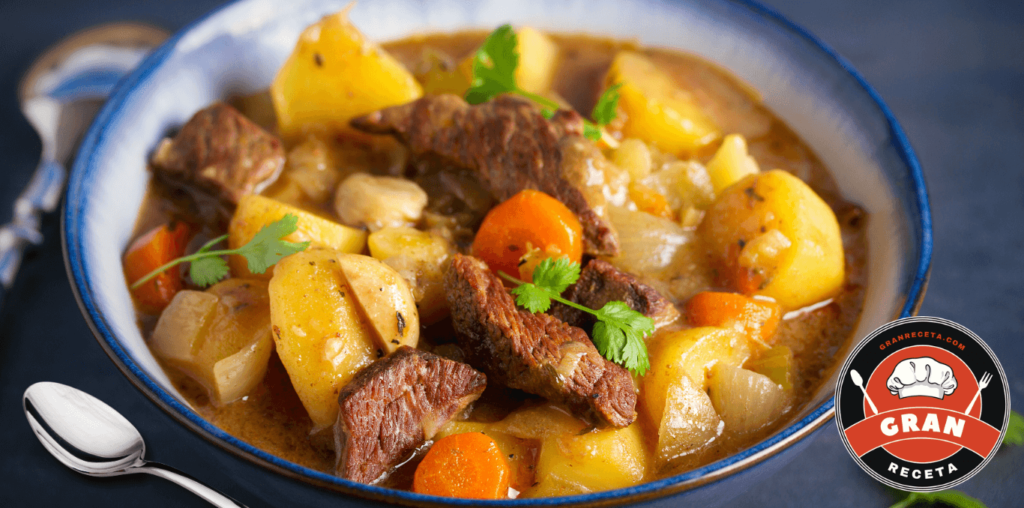
Three tubers make this stew, and two of them you may have met under other names: ibia is oca, sold as yam in New Zealand supermarkets, and chugua is ulluco, the glossy pink tuber Peruvian menus call olluco. The third, cubio, is mashua, and it tastes faintly of radish. Together with hen, pork ribs, potato and corn they make cocido boyacense, from Colombia’s cold highlands. Six bowls at 465 calories, and the tubers are only in the pot for 15 minutes.
How do you make cocido boyacense? Brown hen and pork ribs and simmer them 60 minutes into a broth. Add corn and potato for 20 minutes, then the cubios, ibias and chuguas staggered across the final 15. Serve in a deep bowl with a spoonful of hogao on top. 120 minutes for 6 servings.
The three tubers, and where to find them
These are Andean crops that were feeding the highlands long before potatoes went global, and outside Boyacá, Cundinamarca and Nariño they are hard to find even within Colombia. Abroad, the trick is knowing their other names.
Ibia is oca (Oxalis tuberosa), the small pink or yellow tuber sold as yam throughout New Zealand and grown by specialty growers in the UK. It is the only one of the three whose flavor you control: left in the sun for a few hours, its starch converts and it turns sweet; cooked straight from the ground it stays neutral.
Chugua is ulluco (Ullucus tuberosus), called melloco in Ecuador and olluco in Peru, glossy and brightly colored, contributing texture more than flavor: it stays slightly gelatinous and does not fall apart the way potato does.
Cubio is mashua (Tropaeolum tuberosum), long and yellow with purple streaks, and mildly peppery, closer to radish or turnip than to potato. A white turnip is the honest substitute, because it repeats the bite.
The order, which is where it goes wrong
Everything in this pot runs on its own clock, and there is nearly an hour between the first item and the last. The hen wants a full hour, the ribs three quarters of it, the corn and potato around twenty minutes each, and the three native tubers between fifteen minutes and eight.
So they go in backwards, longest first. The common failure is adding all three native tubers along with the potato: by the time the potato is ready, the chuguas have had 20 minutes too many and have dissolved into the broth. The last quarter of an hour is run almost with a timer.
Why the broth thickens on its own
For the first 60 minutes the hen and the ribs release collagen and fat, and that is all the body the broth has until the potato arrives. A floury potato breaks at its edges and the released starch turns a thin broth into something with substance, no flour required.
It is also why the broth is not served separately here. Unlike puchero santafereño, everything arrives in the same deep bowl, because the broth is part of the dish rather than a first course.
The hogao goes on top, not in
It is cooked separately, in 14 minutes, and a spoonful goes over each bowl. Stirred into the pot, its acidity spreads through the broth and flattens the flavor of the tubers, which is exactly what you came for.
Served on top it also does something else: each person mixes their own and decides how much. In Boyacá households the hogao reaches the table in a small jug and gets passed around.
Where the two hours go
An hour of broth, then potato and corn, then the native tubers at the end. Active work is about 25 minutes: browning the meats at the start and making the hogao while the pot simmers.
It also splits well. The broth with the meats keeps 2 days refrigerated and improves, so you can cook it on Sunday and finish the stew on Tuesday in half an hour with fresh vegetables.
Cocido, puchero and sancocho
All three are big highland pots of meat and tubers, and what separates them is the vegetable, not the meat. Sancocho is known by its plantain and cassava, puchero by its range of meats and its separately served broth, and cocido by three tubers that barely leave Boyacá.
That also shapes the broth. The cocido’s is thicker because potato and tubers shed starch, while the puchero’s is served clear, in a cup, with its own hogao alongside.
Who this recipe is for
- If you cannot find cubios → white turnip in the same quantity, which repeats the mild bite
- If you cannot find oca or ulluco → small waxy potatoes and new potatoes; the stew works, minus the sweetness and the texture
- If you want the oca sweet → leave it in the sun 3 or 4 hours before cooking, spread out in a single layer
- If you are cooking for 12 → double everything but use two pots, since an overfull pot is slow to return to a simmer and the timings drift
- If there are leftovers → they keep 3 days; the native tubers soften but do not collapse the way potato does
What goes wrong
All the tubers at once. The chuguas dissolve while the potato is still firm.
A hard boil. The potato breaks up and the broth turns cloudy; keep it at a medium simmer.
Hogao stirred into the pot. It covers the flavor of the tubers, which is the point of the dish.
Peeling the native tubers. The skin is thin and holds their shape through the 15 minutes; washing is enough.
Serving the broth separately. That is a different dish; here everything goes in one bowl.
Variations
With fava beans. 3.5 oz of fresh favas in the last 12 minutes, common in the Márquez province.
With beef. 10 oz of flank added to the first broth, which makes it darker and deeper.
Without pork. Hen only, cleaner tasting and about 90 calories lighter a serving.
With arracacha. 7 oz alongside the potato, adding an earthy sweetness different from the oca’s.
What to serve with it
This is a one-bowl meal, served in a deep 2-cup bowl with everything in it, the hogao on top and sliced avocado alongside. A Colombian cheese arepa completes the table, and the drink is Colombian hot chocolate or aguapanela, which is what gets drunk in the cold highlands.
For the region’s other big pots, cuchuco de trigo thickens with cracked wheat, Colombian puchero puts four meats in one broth and serves it in two courses, Colombian sancocho swaps the Andean tubers for plantain and cassava, and Colombian mondongo is the tripe version that needs an hour under pressure.
Frequently asked questions
What are cubios, ibias and chuguas? Three Andean tubers: mashua, oca and ulluco. Mashua is peppery, oca turns sweet if sunned, ulluco is gelatinous.
Can I substitute them? Cubio with white turnip. Oca and ulluco have no exact equivalent; waxy and new potatoes come closest in texture, not flavor.
Do they need peeling? No. The skin is thin and helps them hold their shape; wash them well instead.
Why is oca sometimes sweet and sometimes not? Because sun exposure converts part of its starch to sugar. Unsunned, it stays neutral.
Can it be frozen? The broth with the meats, yes, up to 3 months. Add the tubers fresh when you reheat.
Nutrition
Per bowl, a sixth of the pot, calculated with the USDA database for the hen, pork ribs, potato and corn:
- Calories: 465 kcal
- Protein: 27 g
- Carbohydrates: 42 g
- Fat: 21 g, of which 6 g saturated
- Fiber: 5 g
- Sodium: 620 mg
The figures for the native tubers are an estimate based on potato, which according to the USDA carries 77 calories in every 100 g, since cubio, ibia and chugua appear in no public food database. Most of the fat comes from the pork ribs: made with hen alone, the bowl drops to about 375 calories.
The first time I saw cubios in a market in Tunja I asked whether they were a strange kind of potato, and the woman selling them laughed at me. She explained they were three different things, that the ibia had to go in the sun, and sold me all three with instructions. That cocido was the first thing I cooked in Colombia with no written recipe, just what she told me in five minutes. Josnaisis.