Colombia and Puerto Rico fry the same green plantain twice and end up with two different things, and the difference is one step of about three seconds. In the islands the flattened plantain gets dipped in garlic salt water between the fries; on the mainland it goes straight back into the oil. Four servings at 405 calories, 30 minutes.
How do you make tostones? Cut 4 green plantains into 1¼-inch rounds and fry them 10 minutes at 330°F. Press them hot to ¼ inch, dip each one for 3 seconds in water with salt and crushed garlic, and fry again at 355°F for 3 minutes a side. Drain upright and serve with mojo. 30 minutes for 4 servings.
Tostón or patacón, and what actually changes
The name follows the map. It is a tostón in Puerto Rico, Cuba and the Dominican Republic, a patacón in Colombia, Venezuela, Ecuador and Panama, and in all of them it is a green plantain fried, flattened and fried again.
The real technical difference is not the name: the islands dip the flattened plantain in salted water between the fries and the mainland does not. Everything else — thickness, diameter, what goes on top — varies by country but not by method.
If you want the mainland version, with hogao on top and no dip at all, that is Colombian patacones and it is a different recipe on this site.
The dip, and why it is not optional here
Salt sprinkled on a fried surface stays on the surface. Salt dissolved in water travels into the plantain in the seconds it spends in the bowl, which is why a tostón tastes seasoned all the way through and a salted-afterwards patacón tastes seasoned on top.
The second thing the dip does is physical. The water clinging to the surface turns to steam the instant the plantain hits 355°F oil, and that steam lifts the outer layer into the blistered, bubbled crust that is the signature of a good tostón.
Garlic is the Puerto Rican habit and plain salt water the Dominican one; both work, and an adobo brine with oregano and cumin browns faster because of the sugars in it. What does not help is vinegar water, which softens the surface without adding anything.
Three seconds, not thirty
It is a dip. In, out, shake. At about 3 seconds the salt has gone past the surface and the plantain has picked up just enough water to blister.
At half a minute it is waterlogged: the oil spits violently when it goes back in, the temperature crashes, and what comes out is greasy rather than crisp. At two minutes the round falls apart in the pan.
Use a rack between the bowl and the pan, and let the excess drip for a second or two. Oil and standing water are a bad combination in any kitchen, and this is the step where people get splashed.
How thick to press
Thickness decides texture more than the oil does. At ¼ inch — the Puerto Rican press — the tostón is crisp all the way through. At ⅜ inch, which is the Colombian patacón, there is a soft, almost creamy middle. The Panamanian version at ⅝ inch is a plate rather than a side, built to hold shredded beef on top.
Press while hot. The starch gelatinised during the first fry is pliable at temperature and brittle once it cools, so a cooled round cracks at the edges no matter how gently you push.
A tostonera does this well, but the flat bottom of a heavy pan or a plate works identically. What matters is one firm movement instead of several small presses, which open the edges.
Why the plantain must be green
A green plantain carries 2.3 g of sugar per 100 g; a ripe one carries 17.5 g, according to the USDA. Sugar caramelises from around 320°F, so a plantain with any ripeness browns and turns bitter before the inside is cooked.
There is a structural reason too. The starch in a green plantain holds the round together under the press; as it ripens into sugar, the flesh softens and the round collapses instead of flattening.
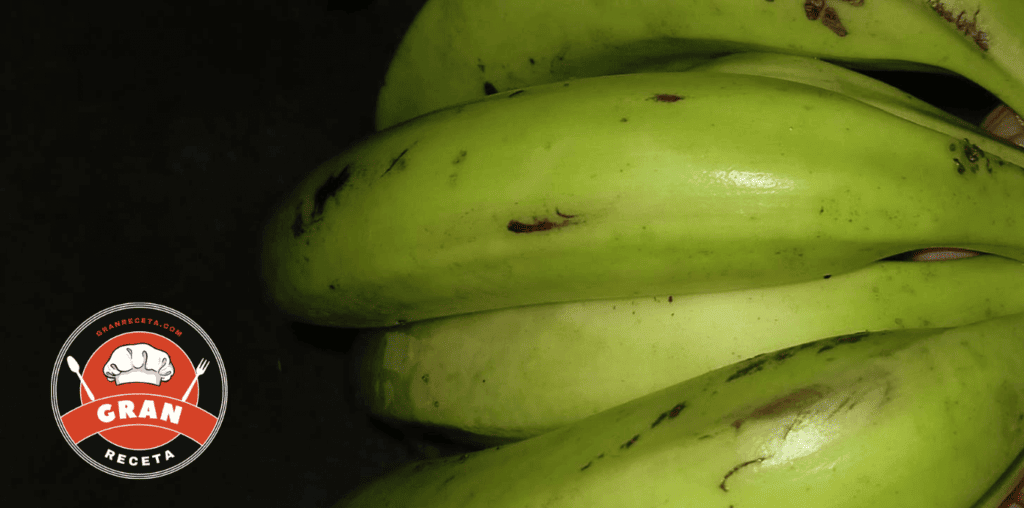
Buy them hard and dark green, with no yellow at the tips. If all you can find are yellowing ones, they make a different and also good thing — sweet fried tajadas — but not tostones.
What goes wrong
No dip at all. They are seasoned only on the surface, and the crust does not blister.
Soaking instead of dipping. Waterlogged plantains spit in the oil and come out greasy.
Pressing them cold. The starch has set and the edges crack apart.
Rounds under 1 inch. They break under the press before they flatten.
Draining flat on paper. The underside steams itself soft within a minute.
Variations
Dominican style. Plain salt water, no garlic, pressed slightly thicker at ⅓ inch.
With adobo. Oregano and cumin in the brine, which browns them faster.
Tostones rellenos. Pressed in a cup shape and filled with 1 oz of shrimp or shredded beef.
Mofongo, sort of. Fried rounds mashed in a mortar with garlic and pork cracklings.
What to serve them with
Mojo de ajo — garlic, oil and lime — is the island default, and ketchup with mayonnaise is what most Dominican households actually put on the table. Two tostones a person, about 200 kcal, is a side; four make a snack in their own right.
They sit beside anything fried or grilled: a fritanga platter, Colombian beef skewers or Colombian fried calamari. With a spoon dish, they replace bread next to colombian seafood stew or viudo de pescado. And if you want the mainland cousin with a tomato and onion sauce on top, that is Colombian patacones.
Frequently asked questions
What is the difference between a tostón and a patacón? The dip. Islands dip the flattened plantain in salted water between fries; the mainland does not. Thickness differs too.
Can I skip the garlic water? You can, and you get a Colombian patacón: crisp, but seasoned only on the outside.
How long in the dip? About 3 seconds. Past half a minute the plantain takes on water and spits in the oil.
Can I freeze them? Yes, after the first fry and the press, before the dip. Fry from frozen with 1 extra minute, dipping as they go in.
Why did mine fall apart? Either the plantain was too ripe or the round was pressed after it cooled.
Nutrition
Per serving of one plantain with the oil it absorbs, calculated from each ingredient according to the USDA SR Legacy database:
- Calories: 405 kcal
- Protein: 2 g
- Carbohydrates: 66 g
- Fat: 15 g, 2 g of it saturated
- Fibre: 4 g
- Sodium: 300 mg
The plantain itself accounts for about 275 calories; the rest is oil absorbed across the two fries, roughly 9% of its weight. The brine adds around 100 mg of sodium per serving compared with salting at the end, which is the trade you make for seasoning that reaches past the surface. Draining upright rather than flat saves about 20 calories a serving.
In Venezuela we called them tostones and ate them with a slab of queso de mano on top; in Colombia I learned to call them patacones and to eat them with hogao. It was years before someone in San Juan showed me the bowl of garlic water beside the stove, and that was the first time I understood why theirs tasted seasoned and mine tasted salted. Josnaisis.