New video every week on YouTube →
Guava Roll, Colombian Guava Paste You Can Roll

Guava Roll, Colombian Guava Paste You Can Roll

Guava paste cooked to 223 °F so it sets firm enough to roll instead of setting into a block. Why the skin stays and the seeds go, which guava to buy in the US and the 90 minutes of drying before it rolls.

A guava roll and a block of guava paste are the same recipe stopped 7 degrees apart. At 223 °F the paste sets just enough to roll up without cracking; by 230 °F it crystallizes and the sheet snaps when you fold it, and what you have is a bocadillo, cut into cubes. With 2.2 lb of guava, 3 cups of sugar and 90 minutes of drying you get 12 servings of a sheet that rolls.

How do you make a guava roll? Simmer quartered guavas for 20 minutes, push them through a sieve to remove the seeds, then reduce with sugar and lime to 223 °F. Spread in a ⅕-inch layer, dry 90 minutes and roll, dusting with sugar. 185 minutes for 12 servings.

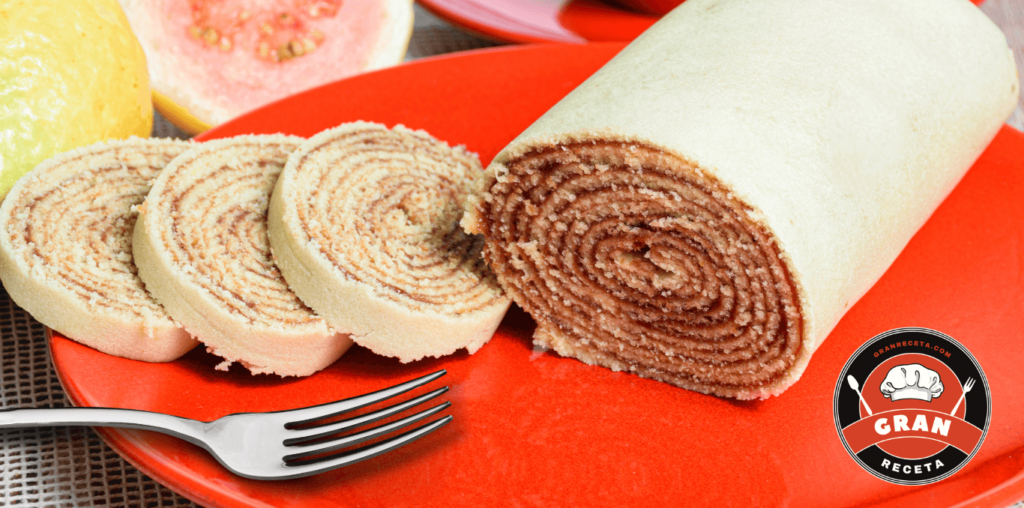
Colombian guava roll sliced into rounds

The set point, which is the only critical step

The exact set point for a paste you can rollScale of temperature for guava paste: at 212 degrees Fahrenheit it is still a syrup that will not set; at 219 it reaches a jam set and spreads; at 223 degrees, the point of this recipe, it sets firm enough to roll without cracking; at 230 it crystallizes and the sheet snaps when folded. Guava has plenty of pectin of its own, so the only thing being controlled is how much water has evaporated, which the thermometer measures.210°F220°F228°F236°F212 °Fstill a syrup219 °Fjam set, spreadable223 °F (this recipe)sets firm enough to roll230 °Fcrystallizes and cracks
Guava brings its own pectin, so the only variable is water, and temperature measures it. At 223 °F the sheet sets and rolls; seven degrees more and it cracks.

Guava carries plenty of its own pectin, most of it in the skin, so nothing needs adding to make this gel. The only variable is how much water is left, and the thermometer measures exactly that: 219 °F gives a jam set that spreads, 223 °F gives a sheet that rolls, 230 °F crystallizes.

Without a thermometer, use the track test. Draw a spoon across the base of the pan and the paste takes about 2 seconds to close over. Instantly means it needs longer; not at all means it has gone too far.

As a practical marker, that point arrives around 35 minutes into the reduction with the sugar, stirring almost constantly so nothing catches on the base.

Why the skin stays and the seeds go

The skin holds most of the fruit’s pectin, so the guavas are quartered and cooked whole, unpeeled. Peel them and you will need commercial pectin to get the same set.

The seeds are the opposite. They are hard, they never soften no matter how long they cook, and you feel them in every bite, so the cooked pulp goes through a fine sieve with a ladle pressing it down: about 5 minutes of work. It is the step most often skipped and the most obvious in the result.

Which guava to buy in the US

Which guava to buy outside ColombiaMatrix of guava products for making a guava roll. Fresh guava is the whole fruit with skin and seeds, cooked and then pushed through a sieve, giving the best flavor but only in season. Frozen guava pulp is a seedless unsweetened purée, thawed and reduced straight away, and is the reliable year-round option. Canned guava halves come in syrup, need draining, rinsing and less added sugar, and give a workable but sweeter result. A block of guava paste is already cooked and set, so it is the finished product rather than an ingredient. Guava nectar is water, sugar and some fruit, and will never set.What you getPrep neededWorth it?Fresh guavawhole fruit, skinand seedscook, then pushthrough a sievebest flavor, butseasonalFrozen guava pulpseedless purée,unsweetenedthaw and reducestraight awaythe reliableyear-round optionCanned guava halvesin syrupdrain, rinse andcut the sugarworkable, sweeterresultGuava paste blockalready cookedand setnoneit is the finishedproduct, not thisGuava nectarwater, sugar andsome fruitnone usableno, it will neverset
Frozen pulp is the practical choice most of the year, and it is already seedless, which removes the slowest step. What never works is nectar, which is mostly water and sugar.

Fresh guava appears seasonally in Latin and Caribbean markets and in Florida and California produce sections, usually pear guava, which is what this recipe is built on. When it is not around, frozen guava pulp is sold in 14 oz packets in the same markets, already seedless and unsweetened, which removes the slowest step entirely.

Two things to avoid. Canned guava in syrup works but carries its own sugar, so cut the recipe’s sugar by a third. Guava nectar never sets, and a block of guava paste is the finished product rather than an ingredient.

Drying and rolling

Three hours, half of it unattended dryingTimeline of the guava roll for twelve servings: from minute zero to ten the fruit is washed and quartered; from ten to thirty it simmers until soft; from thirty to forty-five the pulp is pushed through a sieve to remove the seeds; from forty-five to eighty it reduces with sugar to 223 degrees Fahrenheit; from eighty to one hundred and seventy the paste is spread a fifth of an inch thick and left to dry; and from one hundred and seventy to one hundred and eighty-five it is rolled and sliced.0306090120150180minutosWash and quarter the fruit10 minSimmer until soft20 minSieve out the seeds15 minReduce with sugar to 223 °F35 minSpread ⅕ in and dry90 minRoll and slice15 minhands onon the heatdrying
Of the 185 minutes, 90 are unattended drying and 35 are stirring at the stove. Sieving looks like a formality and is what decides whether there are seeds in the roll.

The paste is spread hot onto parchment in a ⅕-inch layer, because thicker will not dry through and thinner tears as it rolls. Ninety minutes at room temperature is enough: it is ready when the surface no longer sticks to a finger but the sheet still bends.

Roll it up using the parchment itself, tightening gradually and dusting with sugar so it does not stick to itself. If it dried too long and cracks as you roll, 30 seconds in a barely warm oven brings the flexibility back.

Roll, block and jam

Guava roll, guava paste block and guava jamComparison of three guava preparations. The guava roll is a flexible sheet that rolls up, set at 223 degrees Fahrenheit, made with about a cup and a third of sugar per pound of fruit, keeps two weeks rolled in paper, is eaten sliced with cheese and runs about 250 calories a serving. A bocadillo or goiabada block is firm and cut into cubes, set at 226 to 230 degrees, made with a cup and three quarters of sugar or more, keeps for months wrapped, is eaten in cubes with cheese and runs about 190 calories. Guava jam stays spreadable and never sets, cooked to 219 degrees with about a cup of sugar per pound, keeps in a jar in the fridge, is spread on bread and runs about 110 calories.Guava rollBocadillo / goiabadaGuava jamTextureflexible sheetthat rollsfirm block, cutinto cubesspreadable, neversetsSet point223 °F226-230 °F219 °FSugar per lb1⅓ cups1¾ cups or more1 cupKeeps2 weeks rolledin papermonths, wrappedin a jar, chilledEatensliced, withcheesein cubes, withcheesespread on breadPer serving250 kcalabout 190 kcalabout 110 kcal
Same fruit, three amounts of evaporated water. Seven degrees separate a sheet you can roll from a block you can only cut, which is what a bocadillo or a goiabada is.

All three are the same fruit with different amounts of water cooked out. Bocadillo in Colombia and goiabada in Brazil use more sugar and go to 226-230 °F, which is why they come as blocks; jam stops at 219 °F.

The roll sits in between, and that is what makes it the most delicate of the three: firm enough to hold itself, soft enough to bend.

Who this recipe is for

  • If you have no thermometer → use the track test: 2 seconds to close over
  • If it crystallized → cut it into cubes and serve it as guava paste; the sheet cannot be recovered
  • If you use canned guava in syrup → cut the sugar by a third, since the syrup brings its own
  • If you want less sugar → 2½ cups per 2.2 lb of fruit works, but it keeps 1 week rather than 2
  • If it is still tacky → another 30 minutes of drying before rolling

What goes wrong

Sieving badly. The seeds stay in and never soften.

Peeling the guava. The pectin in the skin goes with it and the paste will not set on its own.

Going past 226 °F. It crystallizes and the sheet snaps when folded.

Spreading it too thick. Over ⅕ inch the middle stays wet and the roll collapses.

Storing it in a sealed jar. It sweats and softens; keep it rolled in paper.

Variations

With cheese inside. A 3.5 oz strip of firm white cheese before rolling, the guava-and-cheese pairing in roll form.

With cinnamon. One stick during the reduction, removed before spreading.

Less sugar. 2½ cups per 2.2 lb of fruit, sharper and shorter-keeping.

With sour guava. More acidic and deeper in color, with ¼ cup more sugar to balance it.

What to serve it with

Sliced ¾ inch thick with fresh white cheese alongside, which is how guava paste is eaten across Latin America: bocadillo con queso in Colombia, Romeu e Julieta in Brazil, guava and cream cheese in a Cuban pastelito. It also travels well, keeping 2 weeks without refrigeration.

On a dessert table it works next to Colombian dulce de leche and Colombian natilla, and for another fruit dessert there is the caramel pineapple upside-down cake. To drink, Colombian hot chocolate or coffee.

Frequently asked questions

Why will my paste not set? It did not reach 223 °F, or the fruit was peeled and lost the pectin in its skin.

Which guava is best? Pear guava, the most widely sold. Sour guava works and gives deeper color, but needs ¼ cup more sugar.

Can I skip the sieving? Not really: the seeds are hard, never soften and end up inside the roll. Frozen pulp skips the step for you.

How long does it keep? Two weeks rolled in paper at room temperature. In a sealed jar it sweats and softens.

Can it be frozen? Yes, up to 3 months wrapped in paper and a bag. It thaws at room temperature without losing texture.

Nutrition

Per serving of about 3 oz, a twelfth of the roll, calculated with the USDA database for the guava and sugar:

  • Calories: 250 kcal
  • Protein: 2 g
  • Carbohydrates: 62 g
  • Fat: 0 g
  • Fiber: 4 g
  • Sodium: 5 mg
  • Sugars: 57 g

Guava is one of the highest-fiber fruits there is: according to the USDA it carries 5.4 g per 100 g, which is why a serving still holds 4 g despite all the added sugar. It is also the highest in vitamin C in the USDA’s fruit list at 228.3 mg per 100 g, though much of that degrades over 35 minutes of cooking.

At home guava paste got made whenever the tree gave more fruit than anyone could eat, which in Venezuela is most of the year. My grandmother used no thermometer and no track test: she knew it was ready when the smell changed and the spoon got heavy. I use the thermometer because I do not have her wrist, but I recognize the smell too. Josnaisis.

Guava Roll, Colombian Guava Paste You Can Roll

Guava Roll, Colombian Guava Paste You Can Roll

By Josnaisis Ramirez · Gran Receta

Rate
✓ Thanks!

Prep

2 h 20 min

Cook

45 min

Servings

12

people

Total

3 h 5 min

Difficulty

Medium

Cuisine

Colombian · Venezuelan

Calories

250 kcal

Ingredients

For 12 servings · Check off what you have

Instructions

1

Wash the guavas, quarter them without peeling and simmer with the ¾ cup of water for 20 minutes, until soft. The skin carries most of the pectin, so it stays in.

2

Push the cooked fruit through a fine sieve, pressing with a ladle. Guava seeds are hard and never soften; if they get into the purée they stay in the finished roll.

3

Return the sieved purée to the pan with the sugar and lime and cook over medium heat, stirring almost constantly, about 35 minutes, until it reaches 223 °F.

4

Check the set without a thermometer: the paste pulls away from the base as the spoon passes and the track takes 2 seconds to close. If it closes instantly, it needs longer.

5

Spread the hot paste on parchment in an even ⅕-inch layer and leave it to dry 90 minutes at room temperature, until the surface no longer sticks to a finger.

6

Dust with sugar, roll it up using the parchment, tightening gradually, and slice into ¾-inch rounds. Store it rolled in paper, not in a jar.

Nutrition

Approximate values per serving · 12 servings total

250

kcal

2g

Protein

62g

Carbs

0g

Fat

4g

Fiber

0g

Sat. fat

5mg

Sodium

57g

Sugar

Tip: Seven degrees separate a roll from a block. At 223 °F the sheet sets just enough to roll; by 230 °F it crystallizes and snaps when folded, at which point it can only be cut into cubes. And sieving is not optional: guava seeds are hard, never soften, and show up in every bite if they get through.
#guava roll#guava paste#bocadillo#colombian desserts#goiabada
Josnaisis Ramirez
Josnaisis Ramirez · Cook & author

Mom of Dylan and home-cooking enthusiast. I share the Venezuelan and Colombian recipes that shaped my life. My story →

Link copied! Now you can share it