New video every week on YouTube →
Colombian Egg Soup, with Ribbons Instead of Lumps

Colombian Egg Soup, with Ribbons Instead of Lumps

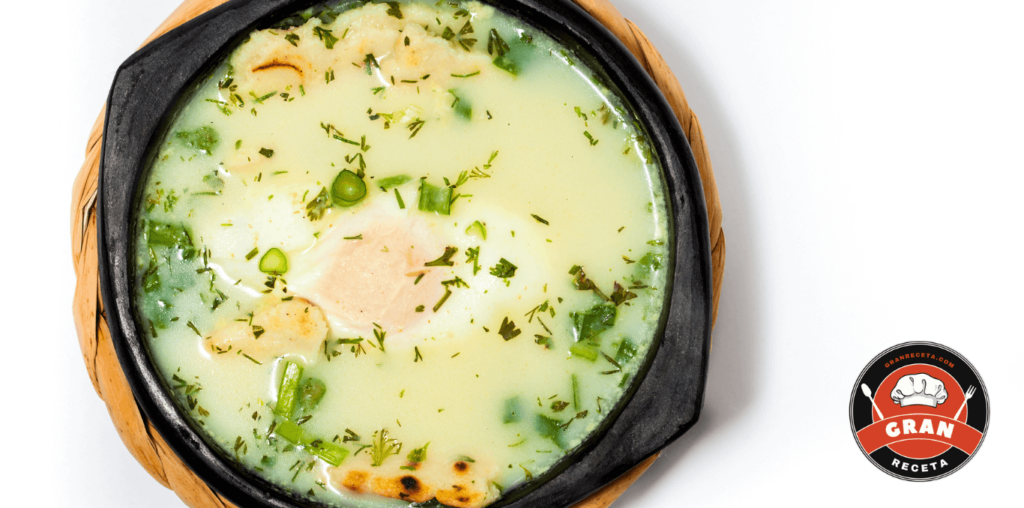
Colombian egg soup with potato, scallion and cilantro, and beaten egg poured in a thin stream at 180°F exactly. That is the temperature where it sets into ribbons rather than curds, and it is the only minute that matters.

The difference between egg soup with fine ribbons and egg soup with lumps is about 25 degrees. Egg proteins set between 144°F and 183°F, so at 180°F the beaten egg stretches into threads, and at a boil it breaks into curds that cloud everything. Four bowls at 210 calories, ready in a little over half an hour, with one minute that actually matters.

How do you make Colombian egg soup? Cook scallions and garlic for six minutes, add the stock and 1 lb of potato and simmer twenty more. Bring the heat down until the broth stops bubbling, around 180°F, and pour in 4 beaten eggs in a thin stream while stirring in circles. They set in 1 minute. 35 minutes for 4 servings.

Colombian egg soup with potato and cilantro in a deep bowl

The temperature is the whole dish

The broth temperature when the egg goes inBroth temperature scale at the moment the beaten egg is poured in. At 158 Fahrenheit the egg does not set and clouds the broth. At 180 Fahrenheit, the point this recipe uses, it sets into fine ribbons you can see on the spoon. At 203 Fahrenheit it forms thick curds and the broth turns cloudy. At 212 Fahrenheit, a full boil, the egg breaks into lumps. Egg proteins set between 144 and 183 Fahrenheit depending on the protein, so the window is narrow.158°F180°F203°F212°F158°Ftoo cool: the egg clouds the broth180°F (this recipe)fine ribbons you can see203°Fthick curds, cloudy broth212°Fthe egg breaks into lumps
Egg proteins set between 144°F and 183°F, and the broth’s temperature decides which side you land on: ribbons or lumps. At 180°F the broth steams without bubbling, and that is the whole trick.

An egg does not set all at once: its proteins set in sequence, from around 144°F for the first ones to 183°F for the albumen. That gives a narrow and very usable window.

At 180°F the broth steams but does not bubble. Egg poured in a thin stream meets a moving liquid, stretches and sets into long ribbons before it can gather. At 203°F it sets too fast and forms curds; at 212°F it breaks into lumps and releases particles that cloud the soup.

Without a thermometer the cue is visual: drop the heat and wait until the bubbles disappear and the broth only steams. That takes about 2 minutes, and it decides the result.

The 2 gestures that go with it

Temperature is not the only thing. The first gesture is pouring slowly, in as thin a stream as you can manage, because a thick pour sets in a block on the outside before it can spread.

The second is stirring the broth in circles as you pour. That current stretches the strands and keeps them apart, exactly as in a Chinese egg drop soup. Leave the broth still and the egg gathers where it lands.

After pouring, stop stirring. The egg has set, and every extra turn breaks the ribbons into smaller and smaller pieces.

Four ways to add the egg

Four ways to get the egg into the soupComparison of four ways of adding egg to the soup. Beaten and poured in a thin stream at 180 Fahrenheit, it sets in 1 minute into soft ribbons, which is this recipe. Whole and poached onto the broth at 158 Fahrenheit, it takes 4 minutes and leaves a runny yolk with set white, which suits anyone who wants the yolk whole. Scrambled separately and added takes 3 minutes and gives firm pieces, useful when the broth has already boiled. Whole into hot milk at 158 Fahrenheit for 4 minutes is changua, the highland breakfast, with a runny yolk in a milky broth.Beaten, in ribbonsWhole, poachedScrambled apartWith milk, changuaHow it goes inbeaten, in athin streamwhole, onto thebrothcooked apart,then addedwhole, into hotmilkTemperature180°F158°Fnot applicable158°FMinutes1434Texturesoft ribbonsrunny yolk, setwhitefirm piecesrunny yolk,milky brothWhen to use itthis recipeif you want theyolk wholeif the broth hasalready boiledhighlandbreakfast
All four work and give different dishes. If the broth has already boiled and you will not wait for it to drop, scrambling the egg separately is the honest way out: ribbons are impossible at 212°F.

Beaten into ribbons is this recipe and gives the most even soup. A whole egg poached onto the broth at 158°F leaves a runny yolk and makes something closer to Colombian changua, which also has milk in it.

If the broth has already boiled and you do not want to wait for it to come down, the honest answer is to scramble the egg separately and add it: firm pieces rather than ribbons, but far better than pouring beaten egg into boiling liquid and getting lumps.

The broth is the dish

Which broth to build it onMatrix of broths for egg soup. Homemade chicken stock, made from a carcass over two hours at a bare simmer, brings body and gelatin and is the best option, with whatever sodium the cook adds. The water the potatoes boiled in brings a little starch and slight body with very low sodium. A bouillon cube is dehydrated and salt-heavy, gives a flat flavour and adds around 900 milligrams of sodium. Water plus the sofrito itself gives a clean soup that tastes of scallion and garlic with only the salt you add. Beef stock, from bones over three hours, overpowers the delicate flavour of the egg.What it isWhat it does for the soupSodiumHomemade chicken stockcarcass, 2 hat a bare simmerbody and gelatin,the best optionwhatever youaddPotato cooking waterthe water thepotatoes boiled ina little starch,slight bodyvery lowBouillon cubedehydrated,salt-heavyflat flavour, a lotof salt~900 mg percubeWater plus sofritowater and thesofrito itselfclean, tastes ofscallion and garliconly what youaddBeef stockbones, 3 hoursoverpowers theeggwhatever youadd
With one egg and one potato per bowl, the broth is the dish. Without homemade stock, water with a properly built sofrito beats a cube and skips the 900 mg of sodium that comes with it.

With one egg and one potato per person, what holds this soup up is the broth. Homemade chicken stock, from a carcass simmered two hours, brings gelatin and body that no shortcut reproduces.

If you have none, water with a properly built sofrito beats a bouillon cube. The scallion and garlic give real flavour and save you the roughly 900 mg of sodium a cube adds, which shows in a four-bowl pot.

Potato cooking water works too and adds a little starch, which thickens slightly. What does not work is beef stock: it overpowers the egg, which is a delicate thing.

Where the 35 minutes go

Where the 35 minutes go, for 4 bowlsTimeline for egg soup for four bowls: from minute 0 to 6 the sofrito of scallion and garlic cooks; from 6 to 26 the stock and potato simmer until the potato is tender; from 26 to 28 the heat comes down until the broth stops bubbling, around 180 Fahrenheit; at minute 28 the beaten egg goes in as a thin stream while the broth is stirred in circles, setting in 1 minute; and from 29 to 35 cilantro goes in and it is served. The whole dish hangs on minute 28.0102030minutosSofrito of scallion6 minStock and potato20 minDrop to 180°F2 minBeaten egg in a stream1 minCilantro, then serve6 minhands onsimmeringresting
Thirty-four minutes of soup and one minute of egg. The decisive step is the two minutes before it, spent bringing the broth down from a boil to 180°F.

Six minutes of sofrito, twenty of potato, a couple to bring the temperature down and one of egg. It is a pantry soup: potato, eggs, scallion and cilantro, things that are usually in the house.

Make it ahead

It does not reheat well — the egg ribbons toughen and shrink and the potato falls apart — so make what you will eat. What you can do is build the base ahead: the broth with the potato keeps 3 days in the fridge and reheats in 10 minutes, and you add fresh beaten egg at the last moment.

What goes wrong

Pouring the egg at 212°F. It breaks into lumps and clouds the soup.

Adding it all at once. It sets in a block instead of spreading into ribbons.

Not stirring the broth. The egg gathers where it lands.

Stirring after pouring. It shreds the ribbons you just made.

Reheating it. The egg toughens and the potato disintegrates.

Variations

With milk. A cup added at the end, which brings it close to Bogotá’s changua.

With noodles. Two ounces of angel hair in the last 4 minutes.

With rice. A cup of yesterday’s white rice, which turns it into a one-bowl meal.

With tomato. One grated tomato in the sofrito, the Santander habit.

What to serve with it

On its own, in a deep 10-oz bowl, with griddled Colombian cheese arepas alongside and ají if you like. At 210 calories a bowl it takes bread or an arepa without guilt.

Among quick Colombian soups it sits beside Colombian changua, which solves breakfast in 15 minutes with milk, and Colombian chicken giblet soup, which is the version with meat in it. When the day calls for something bigger, Colombian ajiaco is the Sunday soup from the same kitchen.

Frequently asked questions

Why did my egg turn lumpy? The broth was boiling. It should steam without bubbling, about 180°F.

Beaten or whole? Beaten, for ribbons. Whole and poached at 158°F gives a runny yolk, which is a different dish.

Can I reheat it? Not well. Keep the broth and potato instead, and add fresh egg when you reheat.

Is a bouillon cube fine? It works, but it brings around 900 mg of sodium and a flat taste. Water with a good sofrito is better.

Is this the same as changua? No. Changua is made with milk and a whole egg; this one uses stock and beaten egg in ribbons.

Nutrition

Per bowl, a quarter of the pot, calculated from each ingredient according to the USDA SR Legacy database:

  • Calories: 210 kcal
  • Protein: 9 g
  • Carbohydrates: 21 g
  • Fat: 9 g, 2 g of it saturated
  • Fibre: 2 g
  • Sodium: 550 mg

This is one of the cheapest and lightest soups on the site: one egg and about 4 oz of potato a bowl. The sodium comes almost entirely from the stock, so unsalted homemade stock brings it down to around 250 mg. With 6 eggs instead of 4, a bowl goes to 250 calories and 13 g of protein.

This is the soup you make when there is nothing, which is why I have eaten it on both sides of the border: in Venezuela with more cilantro, in Colombia with more scallion. The first time I got real ribbons was the day I turned the heat off before adding the egg, out of fear of overcooking it. Josnaisis.

Colombian Egg Soup, with Ribbons Instead of Lumps

Colombian Egg Soup, with Ribbons Instead of Lumps

By Josnaisis Ramirez · Gran Receta

Rate
✓ Thanks!

Prep

10 min

Cook

25 min

Servings

4

people

Total

35 min

Difficulty

Easy

Cuisine

Colombian · Venezuelan

Calories

210 kcal

Ingredients

For 4 servings · Check off what you have

Instructions

1

Cook the chopped scallions and garlic in the oil for 6 minutes over medium heat with the annatto. This sofrito is most of the flavour, because everything else here is mild.

2

Add the stock and the potato cubes and simmer 20 minutes, until the potato is tender but still holding. For a thicker soup, crush 3 or 4 cubes against the pot.

3

Lower the heat and wait 2 minutes until the broth stops bubbling and only steams — about 180°F (82°C). This is the step that decides the soup.

4

Beat the eggs in a bowl and pour them in a thin stream while stirring the broth in circles with a spoon. They set in 1 minute, into fine ribbons you can see on the spoon.

5

Turn off the heat, check the salt and pepper, and stir in chopped cilantro off the heat.

6

Serve straight away, in a deep 10-oz bowl. Egg soup does not wait: reheated, the ribbons turn tough.

Nutrition

Approximate values per serving · 4 servings total

210

kcal

9g

Protein

21g

Carbs

9g

Fat

2g

Fiber

2g

Sat. fat

550mg

Sodium

2g

Sugar

Tip: Everything depends on the broth's temperature when the egg goes in. Egg proteins set between 144°F and 183°F, so at 180°F, with the broth steaming and not bubbling, beaten egg stretches into fine ribbons. If the broth is boiling, that same egg breaks into thick curds and clouds the soup, and there is no fixing it afterwards.
#egg soup#colombian soup#quick soup#pantry cooking#potato
Josnaisis Ramirez
Josnaisis Ramirez · Cook & author

Mom of Dylan and home-cooking enthusiast. I share the Venezuelan and Colombian recipes that shaped my life. My story →

Link copied! Now you can share it