
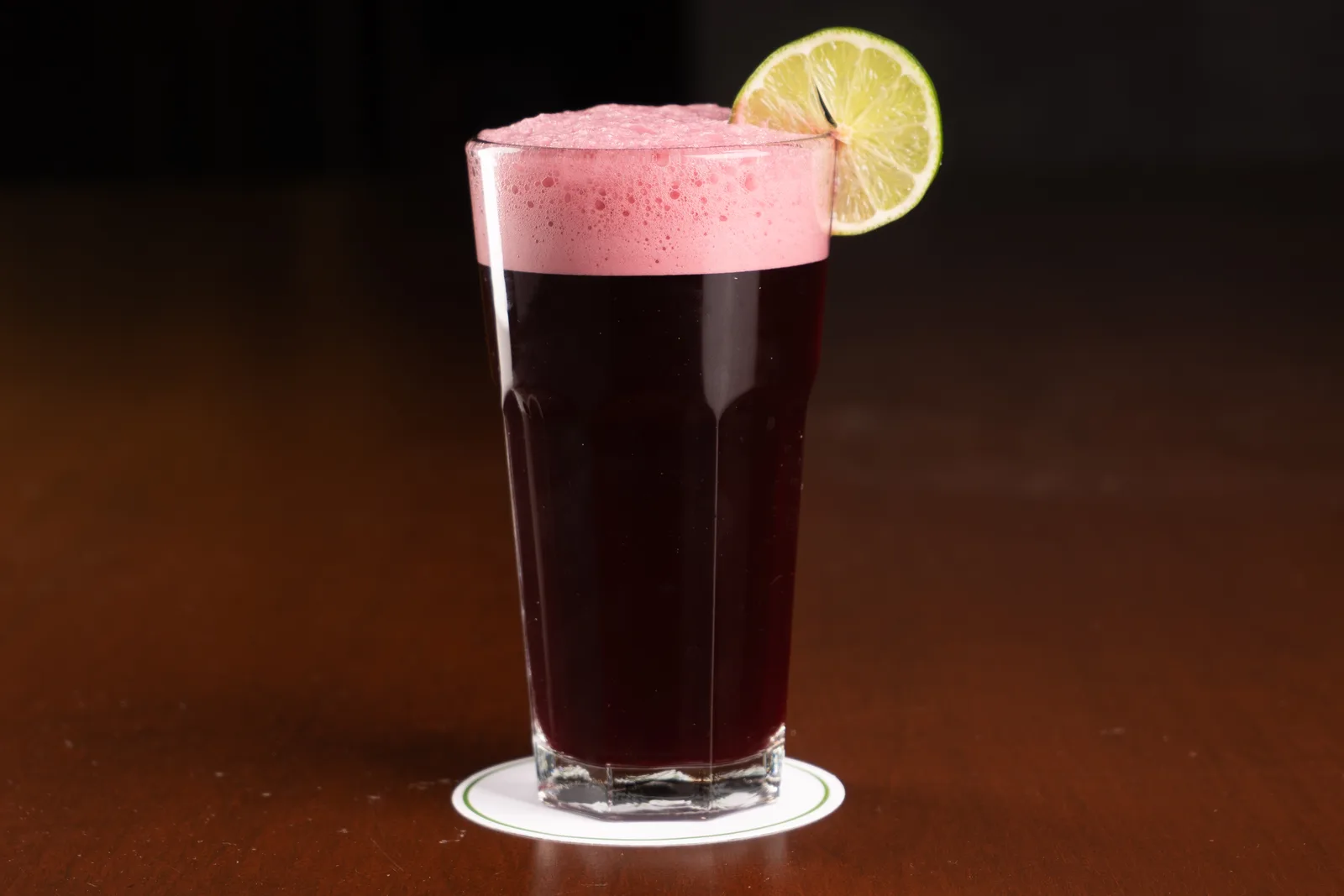

Chicha morada (CHEE-chah moh-RAH-dah) is Peru’s purple corn drink: 15 ounces of dried purple corn simmered for 45 minutes in about 4 quarts of water with pineapple peel, apple, cinnamon and cloves, then strained, sweetened and sharpened with lime. Despite the word chicha, it isn’t fermented and has no alcohol. It’s served ice cold, it’s the color of blackberry juice, and it tastes something like a spiced fruit punch with an earthy edge. Below is the recipe for 12 glasses, where to buy purple corn in the US and UK, why the lime goes in at the end, how long it keeps and how to scale it for a party.
What chicha morada is, and what it tastes like
How do you make chicha morada? Simmer 425 g (15 oz) of dried purple corn, kernels and broken cobs, in 4 liters (about 4¼ quarts) of water with the peel and core of a pineapple, an apple, 2 cinnamon sticks and 6 cloves for 45 minutes. Strain, stir in 200 g (1 cup) of sugar while warm and, once cold, add 100 ml (scant ½ cup) of lime juice. 75 minutes for 12 servings, plus chilling time.
It’s a water-based drink. The corn isn’t eaten or blended: it gives up its color and some flavor to the water and is then thrown away. The result is sweet and tart, with cinnamon and clove up front and a faintly earthy, grainy finish that sets it apart from a plain fruit juice. Diced pineapple and apple go into each glass.
Total time 75 minutes: 15 to prep the fruit and strip the corn, 10 to come to a boil, 45 of simmering and 5 to strain. It then needs to chill thoroughly, so make it in the morning or the day before. Easy: there’s no doneness point you can overshoot.
Is chicha morada alcoholic? No. Peru’s other famous chicha, chicha de jora, is made from sprouted corn fermented for several days, and that one does contain alcohol. Two other drinks on this site share the name and have nothing else in common with this one: Venezuelan rice chicha, creamy and made with milk, and Venezuelan chicha andina, a pineapple-peel brew fermented for 48 hours. If you like the spice profile, Colombia’s champús also uses pineapple, cinnamon and cloves, with hominy-style corn and lulo, and is eaten with a spoon.
It’s caffeine-free, not spicy, contains none of the major allergens and is popular with kids. The recipe as written adds about 17 g of sugar per glass.
Ingredients for 3 liters (about 3 quarts)
This makes about 3 liters, 12 glasses of 250 ml (about 1 cup). You’ll need a pot of at least 6 quarts, because the corn and pineapple peel take up a lot of room, plus a large strainer and a pitcher.
Purple corn, where to buy it and what instant mixes change
Peruvian purple corn (maíz morado) is sold dried, on the cob, usually in 15 oz (425 g) bags. It’s the one ingredient you can’t swap. Yellow or white corn won’t color the water. The cob gives off even more color than the kernels, which is why the cobs are broken up and simmered too.
- In the US. Look in Latin American supermarkets with a Peruvian or South American section, usually near the dried beans, or order online, where it’s widely available because the dried cobs ship well. Search for “maíz morado” or “purple corn”. You want a clear bag of whole cobs with near-black kernels.
- In the UK. It isn’t a supermarket item. Try Latin American grocers and online shops that stock Andean or Peruvian products.
- Instant chicha morada powder. It dissolves in water in 2 minutes but tastes mainly of sugar and coloring, without the fruit, spice or corn depth. Doses vary by brand, so follow the packet, and taste before adding sugar, because most are already sweetened.
- Bottled concentrate. Made from corn and fruit and already balanced for sweetness and acidity; you just dilute it as the label says. Closer to homemade than powder, with less spice.
- If you can’t get purple corn. Nothing else makes chicha morada. For a cold, tart, deep red drink in the meantime, agua de Jamaica takes 30 minutes with dried hibiscus flowers, though it tastes floral and far more sour.
The bag of imported corn is the only real cost; the fruit is cheap because you use the pineapple’s peel and core, which would otherwise go in the bin. To stretch it further, do the second boil described below.
Pineapple, apple, quince and spices
- Pineapple. The peel and core go into the pot for aroma and acidity; the flesh is for eating or garnishing. Scrub it well before peeling, since the peel is simmered whole.
- Apple. Green and tart, like Granny Smith. One quartered with its skin goes into the pot; the other is diced to serve.
- Quince. Optional. It adds a floral note you notice at the end. It turns up in the fall at farmers’ markets and greengrocers; if you can’t find one, use another apple.
- Cinnamon and cloves. 2 sticks and 6 cloves give a clear but not overpowering spice. More cloves turn bitter and slightly numbing; if you want it spicier, add cinnamon rather than cloves.
- Sugar. Granulated or light brown. At 200 g (1 cup) it tastes like a soft drink; at 150 g (¾ cup) it’s fresher and tarter.
- Lime. Regular Persian limes work. Lemon also works if that’s what you have.
How to make chicha morada, step by step
The full method is in the recipe card. Three things decide how it turns out: how long it simmers, how much liquid you end up with, and when the sugar and lime go in.
How long to boil purple corn
45 minutes at a gentle, uncovered simmer, counted from when it comes to a boil. A hard boil evaporates too much water and leaves you with less, overly concentrated chicha; too low a simmer doesn’t pull out the color. It’s done when many kernels have split and the liquid, lifted in a ladle, looks almost black-purple and you can’t see the bottom of the ladle. If it’s still see-through at 45 minutes, give it another 10 to 15.
Measure after straining. From 4 liters you’ll usually get about 3 (roughly 3 quarts). If you have less, top up with cold water before sweetening so the sugar and lime amounts still fit.
Why the lime and sugar go in last
- Lime, cold, at the very end. Boiled lime juice loses its fresh aroma and leaves a flat sourness. Acid usually shifts the color from dark purple to a brighter garnet, but the shade varies from one batch of corn to another, so let taste, not color, tell you when it’s sharp enough. Add it in two goes and taste.
- Sugar, after straining. Sweetening at the end lets you judge the amount once the flavor is complete, and an unsweetened base keeps longer and is slower to ferment. If you’re serving it the same day, dissolve the sugar while it’s still warm; if you’re storing the base, sweeten each pitcher as you serve it.
Pale, flat or sour chicha, and how to fix it
- Pale color, watery taste. Too little corn for the water, too short a simmer, or the cobs left out. Stick to 15 oz (425 g) per 4 liters and always add the cobs.
- Tastes only sweet. It needs lime. 100 ml (scant ½ cup) balances 200 g (1 cup) of sugar in 3 liters; if you sweetened more, add more lime too.
- Bitter or oddly numbing. Too many cloves, or spices simmered well over an hour. Stay at 6 cloves.
- Cloudy, with sediment. Strained in a hurry or the fruit was mashed too hard. Strain again through a fine sieve or a clean cloth.
- Bubbles, a winey smell or a sour taste after a few days. It has started to ferment. That happens faster once it’s sweetened, with diced fruit left in, or out of the fridge. Throw it out.
Chicha morada for a party, and other versions
- For 20 to 24 glasses. Double the recipe: 850 g (30 oz, 2 bags) of corn and 8 liters (about 8½ quarts) of water in a 12-quart stockpot, or split between two 6-quart pots. Make it the day before, keep the base unsweetened, and sweeten and add lime in the pitcher or drinks dispenser on the day. Put the diced fruit in a separate bowl so guests add their own; left in the pitcher, it goes soft within a few hours.
- With a second boil. The strained corn still has color in it. Return it to the pot with the pineapple peel and 2 liters (about 2 quarts) of fresh water and simmer another 30 to 45 minutes. You get a lighter, milder batch; mix it with the first, or use it for a second pitcher with a little less sugar.
- Ice that doesn’t dilute it. Freeze some sweetened chicha in ice cube trays and use those instead of plain ice.
- Less sweet. Drop to 150 g (¾ cup) of sugar and add a little more diced fruit.
- Mazamorra morada. Peru’s purple corn pudding starts from the same base: unsweetened chicha thickened with sweet potato flour or potato starch and cooked with dried fruit. If you plan to make it, set aside 1 liter (about 1 quart) of base before you sweeten.
What to serve it with: it goes well with Peruvian food built on lime and chile, such as Peruvian ceviche, lomo saltado or ají de gallina.
How long chicha morada keeps
- Base without sugar or lime: 3 days in the fridge, in covered pitchers or bottles.
- Finished chicha, with sugar and lime: drink within 1 or 2 days, without the diced fruit in it.
- Out of the fridge: no more than 2 hours at room temperature; at a party on a hot day, keep the pitcher on ice.
- Freezer: the base freezes in plastic bottles if you leave headroom, since liquid expands as it freezes. Thaw it in the fridge and sweeten when serving.
If you see bubbles rising on their own, it smells of alcohol or tastes sour without extra lime, it has fermented. Don’t drink it.
Frequently asked questions
Can I use regular corn? No. Only Peruvian purple corn gives the color and flavor. Fresh sweet corn or dried yellow corn won’t turn the water purple.
How many times can you boil purple corn? Twice works well. The second boil, with 2 liters (about 2 quarts) of water for 30 to 45 minutes, gives a lighter, milder drink that’s best mixed with the first batch.
Can I make it sugar-free? Yes. Sweeten it cold, a little at a time, tasting as you go, because each sweetener has a different strength and changes the flavor slightly. With no sweetener at all it’s tart and spiced, closer to a cold herbal tea.
What do I do with the cooked corn? After the first simmer it still has enough color for a second batch, as described above. After that, throw it away: the kernels are bland and this recipe has no other use for them.
Nutrition
Per 250 ml (about 1 cup) glass, 1/12 of the recipe including its share of diced fruit, calculated from the amounts in the recipe card:
- Calories: 80 kcal
- Protein: 0 g
- Carbohydrates: 21 g
- Fat: 0 g, of which 0 g saturated
- Fiber: 1 g
- Sugars: 19 g (about 17 g from the added sugar, the rest from the diced fruit)
- Sodium: 1 mg
Almost all the calories come from the sugar, about 65 per glass; with 150 g (¾ cup) of sugar it drops to about 64 kcal a glass. The figure doesn’t count the small amount the corn releases while simmering, which you can’t measure at home.
I keep the base unsweetened in bottles and sweeten each pitcher when I serve it, so I can match the sweetness to the meal, and if there are kids at the table, their pitcher gets less sugar and more diced fruit. What I never skip is the cobs in the pot: without them it comes out noticeably paler. Josnaisis.