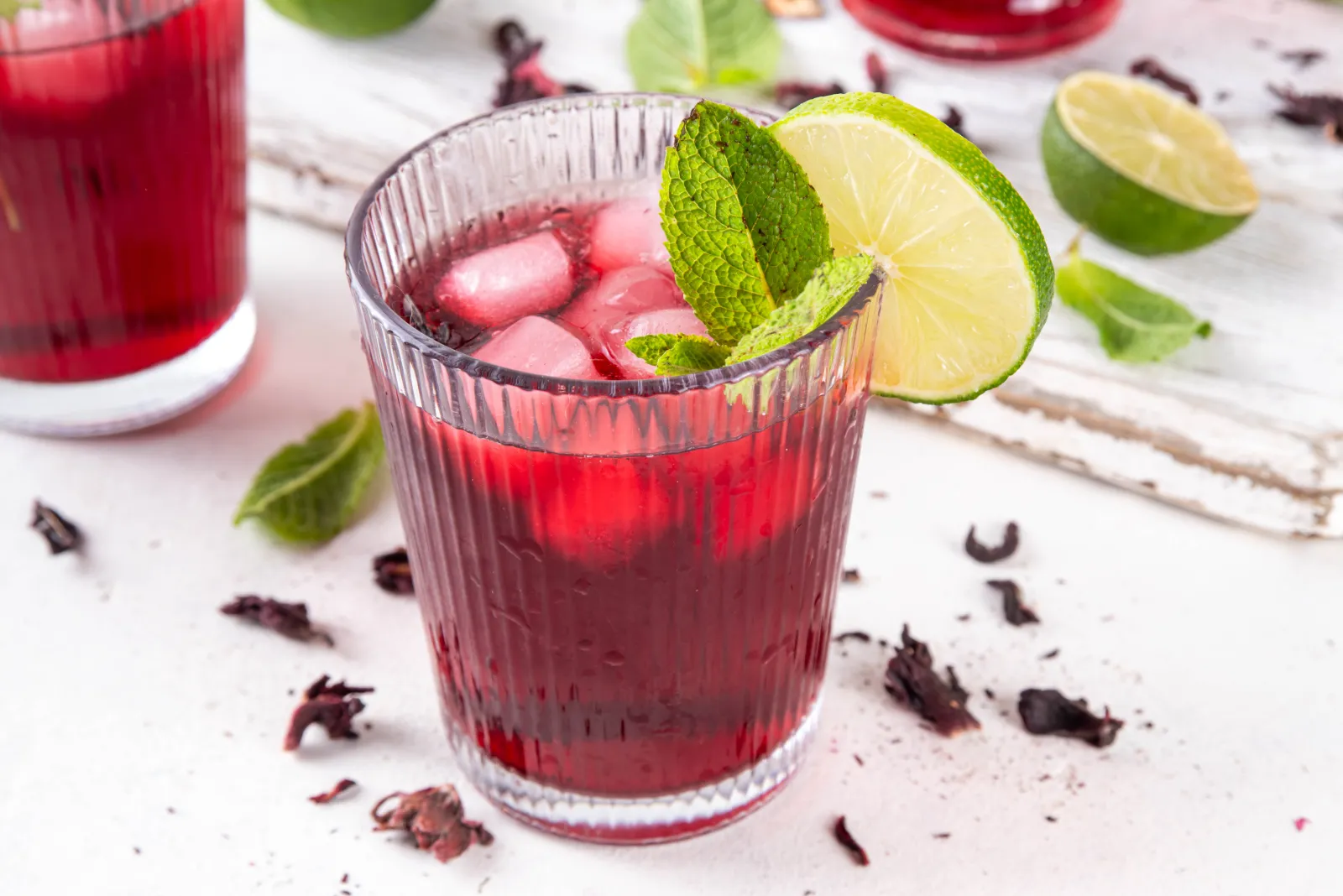

Agua de jamaica (ah-gwah deh hah-MY-kah) is the deep red drink you see in big glass jars at Mexican taquerías, next to horchata. It is made from the dried calyces of Hibiscus sabdariffa, the same thing Caribbean shops sell as sorrel and tea shops sell as hibiscus, steeped in water and sweetened, so think of it as a tart, cranberry-colored iced tea with no tea in it. The part that trips people up is strength: recipes measure the flowers in cups, and a cup of brittle dried petals can weigh almost anything. I weigh them, 30 g per liter of finished drink, or 2 oz for a 2 quart pitcher, and below is how to brew it hot or cold, scale it for a party, cut the sugar, reuse the flowers, and what the blood pressure research does and doesn’t say.
How do you make agua de jamaica?
How do you make agua de jamaica? Simmer 60 g (2 oz) of dried hibiscus flowers in 1 liter (4¼ cups) of water for 5 minutes, then steep, covered and off the heat, for 10 minutes. Strain, pressing the flowers, dissolve the sugar in the hot concentrate and top up with 1 liter of cold water, lime juice and ice. 30 minutes for 8 servings.
The whole job is about 7 minutes of hands-on work inside 30 minutes, most of it waiting for water to boil. What you get is 2 liters (about 2 quarts) of a clear, ruby drink, sour enough to stand up to sugar and lime, best served very cold.
Is it worth making instead of buying?
Yes. Bottled hibiscus drinks exist, but brewing your own lets you set the sweetness, and the flowers are cheap per pitcher. It is also caffeine-free, since there is no tea leaf in it, which makes it an easy pitcher drink for kids and late dinners.
It is not for everyone. Even sweetened, agua de jamaica stays tart. If you want something creamy and mellow, make horchata instead. And if you take blood pressure medication or are pregnant, read the health section further down first.
Hibiscus, jamaica, sorrel, roselle, and where to buy it
All four names point at the same dried red calyces. Which label you’ll find depends on the shop.
- US. Look for bags of flor de jamaica in the Hispanic aisle or any Mexican grocery; Caribbean grocers stock it as sorrel, with the most choice before Christmas, when sorrel drink is made across the Caribbean.
- UK. Dried sorrel at Caribbean and African grocers (sometimes labelled bissap, its West African name), loose hibiscus at health food and tea shops, and flor de jamaica from Latin American shops online.
- Check the label. You want 100% Hibiscus sabdariffa. “Sorrel” in a British greengrocer usually means the lemony leafy herb, which is a different plant. Many hibiscus tea bags are blends with rosehip or apple, which come out sweeter and paler.
Good flowers are whole or in large pieces, deep burgundy and dry to the touch. Brown, dusty ones make a dull drink. Stored in a sealed jar away from light, they keep for months.
Can I use tea bags? Only 100% hibiscus ones, and check the weight per bag on the box: you need 60 g (2 oz) in total for 2 liters, which usually costs more than loose flowers.
Hot brew, cold brew or concentrate
The three methods give different drinks, and each suits a different day.
Hot brew is the recipe card: fastest, deepest color. The one rule is the clock. Boil the flowers longer than 10 minutes and the drink turns bitter without getting any redder.
Cold brew. Put 60 to 80 g (2 to 2¾ oz) of flowers in 2 liters (2 quarts) of cold water, cover, and refrigerate 8 to 12 hours, then strain. It comes out a lighter red, more floral and softer on the tongue. Sweeten it with simple syrup (sugar dissolved in a splash of hot water), because granulated sugar barely dissolves in cold liquid.
Concentrate. The hot method with 100 g (3½ oz) of flowers per liter of water, bottled and diluted 1 to 1 with cold water when you pour. This is what I make for parties, because it takes half the fridge space.
Sweeteners and the sugar-free version
This recipe uses 120 g (4.2 oz) of sugar per 2 liters, 15 g per glass. That’s a middle setting.
Swaps. Honey dissolves best in the warm concentrate. Light brown sugar or piloncillo (Mexican unrefined cane sugar) adds a molasses note and darkens the color a little. Any sweetener you like in iced tea works.
Unsweetened. It is drinkable but sharp, so I brew it weaker, 20 g per liter, and add extra lime or a cinnamon stick to the simmer so it doesn’t taste thin.
Mistakes that make agua de jamaica bitter or flat
- Boiling the flowers for 20 minutes → bitter. A short simmer and a covered steep off the heat, then strain, a quarter of an hour in all.
- Leaving the flowers in the hot water overnight → bitter again. Strain at 15 minutes total.
- Scooping instead of weighing → too sour or too weak. 30 g per liter of finished drink.
- Sugar into cold water → it sinks. Dissolve it in the hot concentrate or use syrup.
- Fixing sourness with sugar → syrupy and still sour. Add 500 ml (2 cups) of water first, then taste.
- Straining over a wooden board → permanent pink stains. Hibiscus dyes wood, grout and cotton; strain over the sink.
Make it ahead and scale it for a crowd
Everything can be done the day before. Brew the concentrate, sweeten it, cool it and refrigerate it; dilute when guests arrive. Or set the cold brew going the night before.
Plan on 2 glasses of 250 ml (about 8½ fl oz) per person with a meal, 3 on a hot day or if it’s the only drink.
| Guests | Finished drink | Dried hibiscus | Sugar | Method |
|---|---|---|---|---|
| 4-6 | 2 liters (2 quarts) | 60 g (2 oz) | 120 g (4.2 oz) | recipe as written |
| 10-12 | 5 liters (1⅓ gallons) | 150 g (5.3 oz) | 300 g (10.6 oz) | concentrate in 2.5 L, dilute 1:1 |
| 20 | 10 liters (2⅔ gallons) | 300 g (10.6 oz) | 600 g (1.3 lb) | concentrate in 5 L in an 8 qt pot, dilute 1:1 |
The timing barely changes: 5 liters takes about 15 minutes to boil, the steep is the same. Keep ice in a separate bucket so the pitcher doesn’t water down.
Freezer cubes. Freeze the sweetened concentrate in ice cube trays. The cubes chill a glass of water and flavor it at the same time. I use them within 2-3 months.
What to do with the used flowers
A second brew. The strained flowers still have color. Simmer them 5 minutes in 1 liter (4¼ cups) of water for a paler, gentler drink; I blend it into the next batch or drink it unsweetened.
Hibiscus tacos. Rehydrated hibiscus is edible, and in Mexico it is cooked as a taco filling. Squeeze the flowers dry, rinse them once or twice if they’re very sour, chop them and sauté for 8-10 minutes with half a sliced onion, a garlic clove, a serrano chile and salt, until they look glossy and dry. They have the chew of braised greens. The flowers from one 2 liter batch fill 4-5 tacos, and they’re good with the chipotle sauce from a chicken tinga.
Does hibiscus water lower blood pressure?
There is some research, and it doesn’t support a promise. The trial people quote most, by McKay and colleagues in the Journal of Nutrition in 2010, gave 65 adults with borderline or mildly high blood pressure, not on medication, three 240 ml (8 fl oz) cups of hibiscus tea a day for 6 weeks. Systolic pressure fell by an average of 7.2 mmHg, against 1.3 mmHg for a look-alike placebo drink. It was small and short.
Reviews are more cautious. The Cochrane review Roselle for hypertension in adults, updated in 2021, judged the evidence on effect and safety against placebo very uncertain, too weak to draw conclusions. A 2010 review in Phytomedicine of four trials with 390 patients reached a similar verdict on using it as a treatment.
So treat agua de jamaica as a drink. It does not replace medication or a conversation with your doctor.
Warnings. The Drugs.com hibiscus monograph notes it may add to the effect of blood pressure–lowering drugs and advises against use in pregnancy and breastfeeding because safety data are lacking. If you take antihypertensives or diuretics, or are pregnant, check with your doctor before drinking it daily. As a food, the NIH’s LactMed database notes that the FDA lists hibiscus as generally recognized as safe (GRAS).
What it costs
The flowers set the price, and they’re the one ingredient no official price series covers: the US Bureau of Labor Statistics doesn’t track them. Work it out from your bag: 60 g (2 oz) per pitcher, so a 200 g (7 oz) bag makes 3⅓ pitchers, about 6.5 liters.
The rest is pocket change. At BLS US average prices for August 2026, 120 g of sugar ($1.024/lb) costs $0.27 and one 84 g lemon ($2.114/lb; the BLS tracks lemons, not limes) about $0.39. Without the flowers, a 2 liter pitcher costs $0.66, around 8 cents a glass.
How to serve it and how long it keeps
Taste. Tart and fruity, somewhere between cranberry and raspberry, with a slight tannic grip at the end. It tastes best ice-cold; at room temperature the sourness takes over.
Serving. A tall glass with plenty of ice, alongside food. Its acidity cuts through rich, spicy plates like tacos al pastor or cochinita pibil. For a drinks table, I put it next to a creamy Colombian soursop juice and a condensed milk lemonade, with a party-sized michelada recipe as the option for adults who want beer. At Christmas the same flowers color the Mexican Christmas punch.
Fridge. There is no official shelf life for this drink. Saveur says it keeps up to 5 days; I finish it within 3 days, covered, at 40°F (4°C) or colder, and pour it out if it fizzes or smells fermented. The sweetened concentrate keeps the same.
Warm. In Mexico it is also drunk hot like a tisane. Heat the diluted drink gently and don’t let it boil, or it turns bitter.
Frequently asked questions
Is agua de jamaica the same as hibiscus tea? Same plant, different strength. Agua de jamaica is brewed stronger, about 30 g of flowers per liter, sweetened and served cold as a drink with meals.
How much dried hibiscus per liter of water? 30 g per liter of finished drink (about 1 oz per quart). Use two-thirds of that for a lighter drink, or a little over 3 oz per quart for a concentrate you dilute by half.
How long do you steep hibiscus for agua de jamaica? Five minutes at a simmer, ten more off the heat with the lid on. Cold brew needs 8-12 hours in the fridge.
How long does agua de jamaica last in the fridge? I keep it 3 days at 40°F (4°C) or colder; Saveur gives up to 5. Discard it if it fizzes or smells sour-fermented.
Can you reuse hibiscus flowers? Once, for a paler second brew. After that, sauté them with onion and chile for tacos.
Does agua de jamaica have caffeine? No. It’s an infusion of hibiscus calyces with no tea leaves.
Is dried sorrel the same as hibiscus? Caribbean dried sorrel is Hibiscus sabdariffa, the same calyces as flor de jamaica. The leafy green herb called sorrel in UK shops is a different plant.
Nutrition per glass
Per 250 ml (8½ fl oz) glass, with 120 g of sugar and one lime per 2 liters. Unsweetened brewed hibiscus has 0 kcal and 4 mg sodium per 100 g according to USDA FoodData Central (SR Legacy), so the numbers below are almost entirely the sugar.
- Calories: 59 kcal
- Protein: 0 g
- Carbohydrates: 15 g
- Sugars: 15 g
- Fat: 0 g
- Fiber: 0 g
- Sodium: 10 mg
Halve the sugar and a glass drops to about 30 kcal; unsweetened, it’s 1 kcal from the lime.
Hibiscus wasn’t part of the food I grew up with in Venezuela. I met it in Colombia, in a bag of loose flowers, and my first pitcher came out nearly black because I’d packed the measuring cup to the brim. Now the scale comes out every time, and the spent flowers go into a skillet with onion instead of the bin. Josnaisis.