
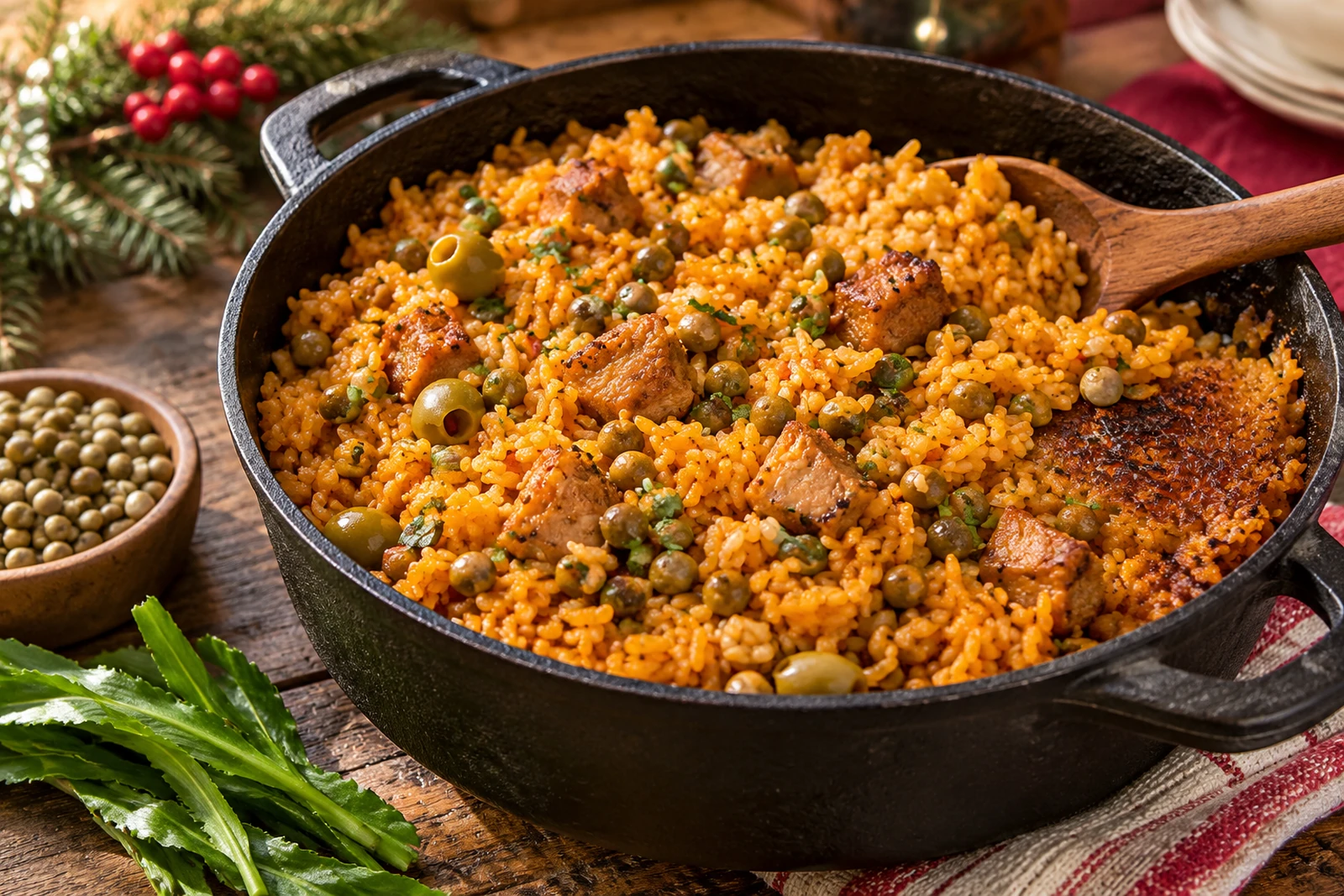

Puerto Rico’s holiday rice gets its color and smell from two things most US kitchens don’t stock: a green sofrito built on culantro and sweet ají peppers, and a packet of sazón tinted with annatto. Cooked in one heavy pot with ham, olives and pigeon peas, using 3 cups (720 ml) of liquid for 2 cups (390 g) of rice, it comes out orange-gold and fluffy, with a toasted crust on the bottom called pegao. Below you’ll find the recipe for 6, how to make the sofrito and the sazón from scratch, which jar to buy if you don’t, canned versus dried pigeon peas, and a game plan for a Christmas crowd.
What arroz con gandules is
How do you make Puerto Rican arroz con gandules? Brown ¼ lb (115 g) of ham in oil, cook ½ cup of green sofrito with a packet of annatto sazón, then add tomato sauce, olives, a drained can of pigeon peas and 2½ cups (600 ml) of salted hot water. Once it boils, add 2 cups (390 g) of rinsed rice, cook uncovered until the liquid drops below the rice, cover on the lowest heat for 20 minutes, fold and cook 10 minutes more. 75 minutes for 6 servings.
Arroz con gandules means rice with pigeon peas, and in Puerto Rico it is the rice for celebrations, served at Christmas next to roast pork and Puerto Rican pasteles. It is a side dish with plenty going on: smoky ham, briny olives and capers, earthy peas and an herbal note from the culantro.
Pigeon peas are small, round, beige-green legumes with a nutty taste. Puerto Ricans call them gandules; in the UK they are sold as gungo peas in Caribbean aisles.
How it differs from Dominican moro. The Dominican moro de guandules is a close relative. In many Dominican homes, and in that recipe, it is built on onion, cubanelle, celery and tomato paste, with no meat in the pot, so it comes out redder and leaner. The Puerto Rican pot adds four things:
- Sofrito or recaito made with culantro and ajíes dulces.
- Sazón with annatto, which dyes the rice yellow-orange.
- Alcaparrado, a jarred mix of stuffed olives and capers.
- Pork in the pot: cooking ham, bacon, or in some homes ribs or a smoked ham hock.
Cuban congri with red beans is another Caribbean one-pot rice, cooked in the bean liquid with bacon and cumin.
Time and difficulty. 75 minutes: 15 to rinse and prep, 60 on the stove, half of it covered and hands-off. Making sofrito from scratch adds 10 minutes on the day you blend it. Medium difficulty, because knowing when to cover and how low to set the heat takes one practice run.
The shopping list, decoded
This makes 6 generous side servings, about 8 on a holiday table with other dishes.
- Sofrito or recaito. Puerto Rican sofrito is green: culantro, sweet peppers, onion and garlic, blended. In jars, buy recaito (green). The red jarred “sofrito” is tomato-based and gives the rice a different taste.
- Sazón. Small packets sold in boxes, in the Hispanic aisle of US supermarkets. Pick one labeled coriander and annatto (culantro y achiote): the plain kind doesn’t color the rice. Each packet is about 5 g and fairly salty. In the UK, look online or in Caribbean shops, or mix your own (below).
- Alcaparrado. Sold by that name in jars next to the olives in US Hispanic aisles. Substitute 8 sliced pimento-stuffed olives and 1 tsp capers.
- Cooking ham. Diced cured ham sold in packs in US Latin aisles. Smoked bacon works; in the UK, smoked lardons or diced gammon. For a meatier pot, brown about ½ lb (250 g) of chopped pork ribs first and leave them in.
- Rice. Medium-grain is the common choice in Puerto Rico and gives slightly softer, clingier grains. US long-grain gives fluffier, more separate rice with the same liquid; it is also what most UK shops carry. Skip risotto rice and paella rice: they absorb too much water and release starch.
- Tomato sauce. US canned tomato sauce, which is thin and smooth. In the UK, plain passata.
- Pot. A caldero, the heavy cast-aluminum pot used across the Caribbean, or a Dutch oven of 4 to 5 quarts (4 to 5 liters) with a snug lid. A wider pot gives more pegao. If the lid is loose, lay a sheet of foil under it.
Canned, frozen, dried or fresh pigeon peas
| Pigeon peas | Prep first | Amount |
|---|---|---|
| Canned, 15 oz (425 g) | Drain and rinse | 1 can |
| Frozen | Boil 10 to 12 minutes in salted water, drain | 1½ cups (250 g / 9 oz) |
| Dried | Soak overnight, simmer unsalted 1¼ to 2 hours | ½ cup dried (about 100 g / 3½ oz) |
| Fresh | Simmer about 45 minutes, salting halfway | 9 oz (250 g) shelled |
Drain canned peas: the can liquid is salty and cloudy and softens the rice. Dried peas take 15 to 20 minutes in a pressure cooker or Instant Pot after soaking; keep their cooking water and use it as part of the 2½ cups. Toor dal will not work: it is hulled, split pigeon pea and collapses into mush.
Homemade sofrito and sazón
Green sofrito (makes about 1½ cups). Blend without water until it is a coarse paste:
- 1 medium onion (150 g / 5 oz)
- 1 cubanelle pepper or ½ green bell pepper (120 g / 4 oz)
- 6 ajíes dulces, seeded (60 g / 2 oz)
- 6 garlic cloves
- 10 culantro leaves
- 1 handful of cilantro (UK coriander) with tender stems (15 g / ½ oz)
You need ½ cup for this recipe. The rest keeps 4 to 5 days in a sealed jar in the fridge; freeze it in an ice cube tray and bag the cubes for longer. I use mine within 3 months.
If you can’t find the produce. Culantro (recao, sawtooth coriander) is sold in Latin and Asian grocery stores; in the UK, try Vietnamese shops, where it’s called ngò gai. Double the cilantro instead and the sofrito tastes milder. Ajíes dulces look like tiny habaneros but have no heat; mini sweet peppers or more cubanelle (UK: sweet pointed pepper) stand in, with less perfume.
Homemade sazón. Mix in a jar and use 1½ tsp for this recipe:
- 1 tbsp ground annatto (achiote)
- 1 tsp garlic powder
- 1 tsp onion powder
- 1 tsp ground coriander seed
- ½ tsp ground cumin
- ½ tsp dried oregano
- 1 tsp fine salt
Keep it sealed in a cool, dark cupboard. No ground annatto? Warm 3 tbsp oil with 1 tbsp annatto seeds over low heat for about 5 minutes, without letting it smoke, strain, and brown the ham in that oil. As a last resort, ½ tsp turmeric plus ½ tsp sweet paprika gives similar color, not the same flavor.
Step by step
Build the base. Brown the ham for 4 to 5 minutes over medium heat, until the edges crisp and it gives up some fat. The sofrito cooks 3 to 4 minutes in that fat, until the raw onion smell is gone and it looks almost dry. Sazón and oregano need just 30 seconds: burnt sazón tastes bitter.
Season the liquid, then taste it. Once the water boils, taste it. It should be a little saltier than you want the rice, because the grains absorb salt as they cook. Ham, sazón, tomato sauce and olives are all salty already, which is why the recipe uses only ½ tsp of salt. Adjust now; after the rice goes in you can’t season it evenly.
Uncovered, until the rice shows. Medium-high heat, no lid, 8 to 10 minutes, stirring from the bottom only once or twice. Cover when the liquid has dropped below the surface and small steam holes dot the rice. Cover too early and it turns soggy; wait until it is bone dry and the bottom scorches.
Covered, folded twice. Fold once, cover, and set the burner to its lowest setting that still makes steam: the lid should feel hot. 20 minutes without peeking. Then fold again without scraping the bottom, drizzle the last tablespoon of oil around the edge and cover for 10 minutes more.
Is it done? Taste grains from the top and from the bottom: tender, no chalky center, no liquid left in the pot. If they are still firm, sprinkle 2 to 3 tablespoons of hot water, cover and wait 5 minutes. Repeat if needed; a big splash makes it mushy.
How to get pegao without burning it
Pegao is the layer of crunchy, toasted rice stuck to the bottom of the pot, and in many Puerto Rican homes people fight over it. It forms during the covered stage when:
- The pot is heavy. Cast aluminum, cast iron or enameled cast iron. Nonstick barely makes any.
- The liquid is right. Too much and it never toasts; too little and it burns before the top is cooked.
- Nobody scrapes the bottom once the lid is on. When you fold, lift the rice over that layer.
- There is oil and steady low heat. The tablespoon of oil around the edge in the last 10 minutes is what crisps it and helps it release.
Use your ears and nose. A soft crackle and a smell like toasted bread are good. For a thicker crust, leave the pot 5 to 10 more minutes on low once the rice is done. If it smells burnt, turn off the heat, spoon out the rice without touching the bottom and leave the crust: the rice above it is still fine.
Serve the rice first, then pry the pegao off in big pieces with a metal spoon. Left covered in the pot, steam softens it.
Troubleshooting
- Mushy or wet. Unrinsed rice, too much liquid, undrained peas or too much stirring. Uncover and leave 5 minutes on the lowest heat to dry out.
- Hard rice, burnt bottom. Heat too high while covered, or steam escaping. Turn it down, seal with foil and use the 2-to-3-tablespoon water trick.
- Too salty. Salt on top of ham, sazón, olives and a salted jarred recaito. Always taste the liquid, and with bacon or a salty ham start with no added salt.
- Pale. Not enough sazón, or a sazón without annatto. A little annatto oil drizzled when you fold brings some color back.
- Bitter. The sazón or the garlic in the sofrito burned. Medium heat, 30 seconds for the sazón.
Allergens and heat. Gluten-free unless your sazón, jarred recaito or ham contains it, so check the labels. No dairy, no nuts. Not spicy: the ajíes dulces are sweet, and heat is added at the table. Kids usually like it; leave the olives whole if yours pick them out.
Holiday game plan and crowd quantities
| Servings | Rice | Pigeon peas | Tomato sauce | Water | Pot |
|---|---|---|---|---|---|
| 6 | 2 cups (390 g) | 1 can | ½ cup (120 ml) | 2½ cups (600 ml) | 4 to 5 qt (4 to 5 l) |
| 12 | 4 cups (780 g) | 2 cans | 1 cup (240 ml) | 4½ cups (1.1 l) plus ½ cup in reserve | 6 to 8 qt (6 to 8 l) |
| 18 to 20 | 6 cups, split between 2 pots | 3 cans | ¾ cup (180 ml) per pot | 3½ cups (840 ml) per pot plus ½ cup in reserve | 2 pots of 4 to 5 qt |
A big pot loses less liquid per cup of rice, so I don’t simply multiply the water: I start with these amounts and keep hot water nearby for the end. For 20 people, two medium pots beat one huge one. An overfilled pot burns on the bottom before the top is cooked, and two pots mean two batches of pegao. Scale the ham, sofrito and sazón too, and taste the liquid in each pot.
- 1 to 2 weeks ahead. Blend the sofrito and freeze it in cubes. Mix the sazón.
- 2 or 3 days ahead. If using dried peas, cook them and refrigerate them in their water.
- The day before. Dice the ham and drain the alcaparrado.
- 75 minutes before dinner. Rinse the rice and start cooking. If it has to wait more than a few minutes, move it to a covered dish in a low oven and check with a thermometer that it stays at 140°F (60°C) or above. Keep the pegao separate and uncovered.
Cooking it the day before? Don’t cool it in the pot. Spread it in shallow containers, no more than about 2 inches (5 cm) deep, and refrigerate within 2 hours.
Serving, storing and reheating
Serving. For Christmas, put it next to pernil or Cuban lechon asado with garlic mojo; a slow-roasted Venezuelan pernil and ensalada rusa, the beet potato salad, fit the same table. Pour coquito, the Puerto Rican coconut eggnog, and finish with tembleque coconut pudding, made the day before. Plan on 1 cup of cooked rice per person. On an ordinary weeknight, a ladle of habichuelas guisadas, Puerto Rican stewed beans, and some sliced avocado turn it into a meal.
Fridge. In a sealed container, refrigerated within 2 hours, it keeps 3 to 4 days. Store the pegao separately or it goes soft.
Freezer. Flat bags, single portions. I use it within 2 months, as the grains dry out after that. Thaw overnight in the fridge.
Reheating. In a covered pan over low heat with 2 to 3 tablespoons of water per 2 cups of rice, 5 to 8 minutes, folding once, until steaming and 165°F (74°C) in the center. In the microwave, covered, with 1 tablespoon of water per serving, in 1-minute bursts with a stir between each. The pegao crisps again in a dry skillet, 1 to 2 minutes per side.
Arroz con gandules FAQ
Can I make it without meat? Yes. Skip the ham, cook the sofrito straight in the 2 tablespoons of oil and use vegetable broth instead of water to make up for the flavor. For a vegan pot, check that your sazón doesn’t contain chicken bouillon. It tastes lighter, without the smoky backbone.
Can I make it in a rice cooker? Yes, but there is no pegao. Cook the base in a skillet (ham, sofrito, sazón, tomato sauce, olives), move it to the rice cooker with the peas and rinsed rice, and add the water your manual gives for 2 cups of white rice, counting the tomato sauce as part of it. A rice cooker barely evaporates, so don’t use the full 2½ cups.
Does it have coconut milk? The Puerto Rican version doesn’t. Coconut milk belongs to a Dominican variation, covered with quantities in the moro recipe.
Is it the same as Jamaican rice and peas? No. Jamaican rice and peas is usually kidney beans or gungo peas with coconut milk, thyme and a whole Scotch bonnet. This one has no coconut and no chile heat.
Nutrition per serving
Per serving (one-sixth of the recipe, with ham and alcaparrado), calculated ingredient by ingredient from the amounts above:
- Calories: 390
- Protein: 11 g
- Carbohydrates: 63 g
- Fat: 10 g, of which 2 g saturated
- Fiber: 3 g
- Sugars: 2 g
- Sodium: 890 mg
Rice provides about 235 calories per serving and oil about 60. Most of the sodium comes from the ham, sazón, olives and tomato sauce; without the added ½ tsp of salt, it drops to about 700 mg.
I cooked the Dominican moro for years before I learned this one, and the first time the culantro hit the hot oil I understood why people bother hunting it down: cilantro gets you close, but it doesn’t smell like that. Now I fill an ice cube tray with sofrito in November, and in December all I have to do is rinse the rice. The first piece of pegao always goes to Dylan. Josnaisis.