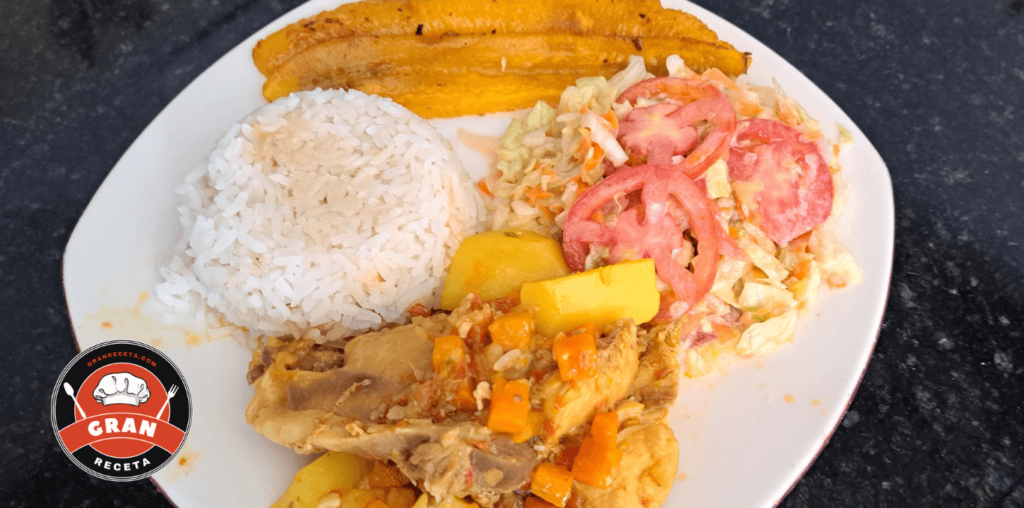
For once, the right cut is also the cheap one: 2.2 lb of bone-in thighs. Bone-in chicken thighs sit at the bottom of the poultry case in most US supermarkets and they are exactly what a 40-minute braise wants, because their collagen turns to gelatin while a breast in the same pot just loses water. This is pollo guisado as it is cooked on a Colombian weekday: browned chicken, a hogao of tomato, onion and annatto, potatoes in the same pot. Four servings, 60 minutes, 37 g of protein a plate.
How do you make Colombian stewed chicken? Season and dry bone-in thighs, brown them in batches for 12 minutes and set them aside. Build a hogao of onion, garlic, bell pepper and tomato on the fond, return the chicken with stock and braise covered 20 minutes. Add potatoes for 15 minutes and reduce 5. 60 minutes for 4 servings.
Which cut, and why it matters
Thigh and breast are structurally different animals. A thigh is working muscle, full of collagen and intramuscular fat, and 40 minutes improve it: the collagen hydrolyzes and the meat turns tender. Breast is flight muscle with almost no collagen, and past 15 minutes it only sheds moisture.
Bone-in beats boneless too, and not only on price. The bone gives the sauce body over a long braise, which is why a stew made with boneless thighs tastes right but feels thin. Mixing thighs and drumsticks is common and works perfectly.
The temperature, and why you go past the safe point
According to the USDA FSIS, chicken is safe at 165 °F internal. What is interesting about dark meat is that this is not where it is best: by around 185 °F, given time, the collagen has become gelatin and the texture changes completely.
That is why a stew can run far past the safe point without drying out, while a grilled breast comes off at exactly 165. Two different logics from the same bird, and confusing them is how you end up with dry breast swimming in a perfectly good sauce.
What hogao is
Hogao is the Colombian aromatic base: tomato, onion, scallion, garlic and annatto cooked in oil until the tomato breaks down and the oil splits away from it, about 10 minutes. It is on almost every Colombian table in some form.
If you know Italian soffritto or the Cajun trinity, the role is familiar but the outcome is not. Those two dissolve into the background of a dish; hogao carries tomato, so it stays loose and saucy and ends up being the sauce itself rather than the start of one. Annatto, sold as achiote or in Latin markets as color, is what makes it orange rather than red; paprika with a pinch of turmeric is a workable stand-in.
The 12 minutes of browning
Browning is not decoration. Drying the chicken and putting it into hot oil triggers the Maillard reaction, which builds the toasted compounds that later dissolve into the sauce. What sticks to the bottom of the pot is concentrated flavor waiting to be recovered.
Two conditions make it work. The chicken has to be dry, since surface water drops the pan temperature and steams the meat, and the pot cannot be crowded, since eight pieces together release enough steam to stop browning altogether. Hence 2 batches of 6 minutes rather than one long one.
When the grated tomato goes in, its acidity and water lift that fond: scrape with a wooden spoon and the whole dark layer joins the sauce.
Where the 60 minutes go
Twenty-two minutes are hands-on and the rest is a covered pot. The potatoes go in late because they need 15 minutes and no more; added with the chicken they disintegrate and thicken the sauce in a way this dish does not want.
The last 5 minutes are uncovered on purpose. That is where the sauce goes from watery to coating, and reducing is better than thickening with flour, which mutes the hogao.
Who this recipe is for
- If all you have is breast → cut it in large pieces and add it for the last 15 minutes, not at the start
- If you want a thicker sauce → crush one of the potatoes against the pot instead of adding flour
- If you use a pressure cooker → 12 minutes at pressure replaces the 35, with the potatoes cooked separately after
- If you are cooking for 8 → double everything but brown in 4 batches; crowding is the one thing that cannot be doubled
- If you want it ahead → it keeps 3 days refrigerated and improves, since the meat keeps drinking the sauce
Make ahead, storage and reheating
This is a better dish on day two. Cooled and refrigerated it keeps 3 days, within the 3 to 4 day window the USDA gives cooked dishes, and the chicken absorbs sauce as it sits.
Reheat gently, covered, about 10 minutes over low heat with a splash of stock. It freezes 3 months, though the potatoes turn mealy on thawing, so freeze the chicken in its sauce and cook fresh potatoes when you reheat.
What goes wrong
Not drying the chicken. No dry surface, no browning; no browning, a flat sauce.
Crowding the pot. Steam stops the browning however hot the oil is.
Using breast for a long braise. At 40 minutes it is dry inside no matter how good the sauce is.
Potatoes in too early. They fall apart over 35 minutes and cloud the sauce.
Thickening with flour. Five uncovered minutes do the same job without muting the flavor.
Variations
With carrots and peas. About 3.5 oz of each in the final 15 minutes, the school-lunch version.
With coconut milk. ¾ cup replacing some of the stock, very much the Caribbean coast; sweeter and denser.
With small waxy potatoes. They break down partly and thicken the sauce on their own.
Llanero style. No tomato, more scallion and cumin, giving a lighter, more aromatic stew.
What to serve with it
This is lunch food, and it is built around Colombian white rice: plain rice on the side, fried ripe plantain and a simple salad, about 9 oz of chicken with its sauce per person. The rice exists for the sauce, which gets spooned over it.
For a bird of a year and a half rather than six weeks, Colombian stewed hen is this same dish with an extra hour in the pot. For other ways with chicken, Colombian chicken rice puts everything in one pot and Colombian sancocho is the Sunday spoon version. Leftovers become the filling for Colombian empanadas the next day.
Frequently asked questions
Which cut is best? Bone-in thighs and drumsticks. They take 40 minutes in the pot and cost less than breast.
Can I use breast? Yes, but add it in the last 15 minutes and in large pieces, or it dries out.
Why is my sauce thin? It was never reduced uncovered. Five minutes is enough; flour would mute the hogao.
Can I freeze it? Yes, 3 months, though potatoes go mealy. Freeze the chicken in its sauce only.
What temperature is the chicken done at? The USDA FSIS gives 165 °F as safe; in thighs the best texture arrives later, around 185 °F.
Nutrition
Per plate, a quarter of the pot with its potato and sauce, calculated with the USDA database for the chicken, potatoes and vegetables:
- Calories: 380 kcal
- Protein: 37 g
- Carbohydrates: 22 g
- Fat: 14 g, of which 3 g saturated
- Fiber: 3 g
- Sodium: 520 mg
With the skin removed, thigh meat is leaner than its reputation: according to the USDA, skinless chicken thigh carries 121 calories and 19.66 g of protein per 100 g. The fat in the dish splits between that meat and the 2 tablespoons of oil in the sofrito, and the potato supplies nearly all of the carbohydrate.
Stewed chicken is what I cook when I cannot decide what to cook, and it took me years to notice that the step that changes it most is the dullest one: drying the pieces with paper before they hit the oil. In Venezuela we made it much the same way but with more sweet ají and no potato in the pot, and the first Colombian version I tried seemed to me to have one thing too many. Now I always add the potato, because it drinks the sauce. Josnaisis.