
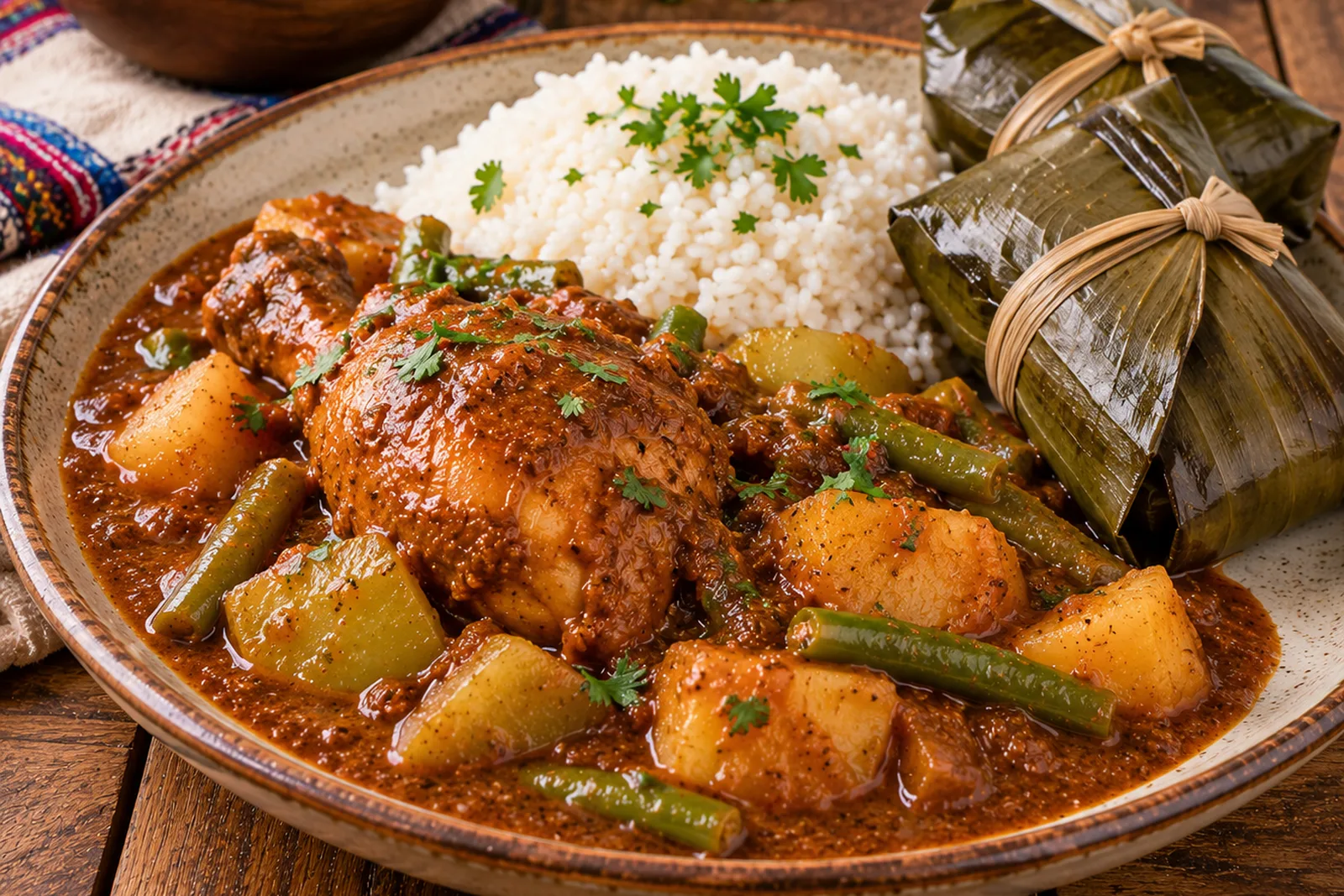

Pepian (peh-pee-AHN) is Guatemala’s best-known stew: chicken, potatoes, chayote and green beans cooked in a thick, brick-red sauce made from charred tomatoes and tomatillos, two kinds of dried chile, and equal parts toasted sesame and pumpkin seeds, blended with a piece of bread to give it body. It comes from the central highlands around Chimaltenango, and in 2007 Guatemala declared it part of the nation’s intangible cultural heritage. It tastes nutty and roasted rather than hot. The one place it goes wrong is the skillet, where seeds and chiles burn fast, so the timings and color cues below matter more than anything else.
What pepian tastes like, and how long it takes
How do you make Guatemalan pepian? Simmer 3¼ lb (1.5 kg) of chicken pieces in 6⅓ cups (1.5 liters) of salted water for 35 minutes. Meanwhile, dry-toast ⅓ cup each of sesame and pumpkin seeds, 2 guajillo and 1 ancho chile, and char tomatoes, tomatillos, onion and garlic. Blend with soaked bread and 2 cups (500 ml) of the broth, strain it over the chicken and simmer 25 minutes with potato, chayote and green beans. 90 minutes for 6 servings.
Time. 90 minutes in total, and the toasting happens while the chicken simmers, so there are only about 30 minutes of hands-on work. Difficulty. Medium: nothing is technical, but you have to stay at the stove while the seeds toast.
Flavor and texture. Brothy rather than gravy-thick, toasty, slightly tart from the tomatillos and mildly warm, so it’s usually fine for kids, especially over rice.
Pepian vs mole vs pipian
- Mexican mole poblano. Mole poblano uses four dried chiles plus chocolate, almonds and peanuts, and is a two-day project. Pepian has two or three chiles, no chocolate, no nuts, and the vegetables cook in the same pot.
- Mexican pipián. In Mexico, pipián means a sauce thickened mostly with pumpkin seeds. The green one from central Mexico is the same family as mole verde with pumpkin seeds, made with tomatillos and fresh herbs and kept green. Pepian toasts everything and ends up red.
- Colombian pipián. In Popayán, in southwest Colombia, pipián is not a sauce at all but a potato and toasted peanut stew, wrapped in corn masa for Colombian pipian tamales.
Shopping list, with US and UK swaps
| Ingredient | Metric | US | What to buy outside Guatemala |
|---|---|---|---|
| Chicken pieces, bone-in, skinless | 1.5 kg | 3¼ lb | Thighs and drumsticks stay juiciest |
| Tomatoes | 500 g | 1 lb 2 oz | Any ripe red tomato |
| Tomatillos (miltomate) | 250 g | 9 oz | US produce aisle; UK canned |
| Guajillo chiles (for chile guaque) | 2 | 2 | Hispanic aisle, Mexican shops, online |
| Ancho chile (for chile pasa) | 1 | 1 | Same; pasilla also works |
| Sesame seeds | 50 g | ⅓ cup | Raw, not pre-toasted |
| Pumpkin seeds (pepitoria) | 50 g | ⅓ cup | Hulled, raw, unsalted |
| Chayote (güisquil) | 500 g | 2 medium | US produce aisle; UK world-food shops |
| Green beans | 200 g | 7 oz | Fresh or frozen |
| Potatoes | 400 g | 2 medium | Waxy or all-purpose |
| Day-old French roll | 40 g | 1 small | Or 2 corn tortillas, for gluten-free |
The two chiles, and what to use instead
In Guatemala the sauce takes chile guaque, which brings aroma and red color with little heat, and chile pasa, which brings dark color and a slightly sweet body. Neither is easy to find abroad, so:
- Guajillo for guaque. The closest match, and sold in bags in the Hispanic aisle of most large US supermarkets. In the UK, look in Mexican shops or online.
- Ancho for pasa. Sweet, dark and mild. Pasilla works too, a little less sweet.
- Only one kind? Use 3 guajillos or 2 anchos. All guajillo gives a redder, tangier sauce; all ancho a darker, sweeter one.
- Not paprika. It colors the sauce but adds none of the body that blended chiles give.
Tomatillos, pumpkin seeds and chayote
- Tomatillos are the papery-husked green fruit Guatemalans call miltomate. US supermarkets sell them fresh; UK shoppers will mostly find them canned. Drain canned ones and blend them without charring. No tomatillos at all? Use 750 g (1 lb 10 oz) of tomatoes in total: the stew comes out sweeter and less tangy.
- Pumpkin seeds must be hulled, raw and unsalted. Salted snack pepitas will over-salt the pot. In Guatemala they’re called pepitoria, which has nothing to do with Colombian pepitoria, a rice dish made with goat blood and offal.
- Chayote is a pale green, pear-shaped squash with crisp flesh. If you can’t find it, zucchini (UK courgette) in cubes, added only for the last 8 minutes, is the nearest swap. It turns softer and releases more water.
Equipment. A 5-quart (5-liter) pot, a cast-iron skillet or griddle, a blender and a sieve. If your blender leaves the sauce gritty, strain it twice.
Toasting without burning
Every element is toasted dry and separately, because each one takes a different time. Start with the most delicate while the pan is still at medium-low:
| What | Heat | Time | Ready when | Gone too far when |
|---|---|---|---|---|
| Sesame seeds | medium-low | 3-4 min | pale gold, nutty smell | dark brown, smoking |
| Pumpkin seeds | medium-low | 3-4 min | puffed, popping, golden spots | brown all over |
| Cinnamon | medium-low | 1 min | fragrant | blackened |
| Chiles | medium | 1-2 min | pliable, fragrant, a shade darker | black, brittle, acrid smoke |
| Bread | medium | 1-2 min per side | golden | black |
| Tomatoes, tomatillos, onion, garlic | medium-high | 10-15 min | black spots, soft | charred right through |
Black spots on the tomatoes are what you want. On seeds and chiles they are not: dark sesame or a scorched chile makes the whole sauce bitter, and nothing fixes that later. If something burns, throw it out and toast it again.
Making the sauce and cooking the stew
Blend in two stages. Seeds and cinnamon go in first with 1 cup (250 ml) of broth for 1 minute, so they grind finely before the tomatoes fill the jar. Then everything else, for 2 minutes. Straining removes tomato skins and bits of chile and gives a silky sauce.
How thick it should be. At the end the sauce should coat the back of a spoon and hold a clean line when you run a finger through it, but still be loose enough to spoon over rice. For a thicker stew, blend in one more toasted tortilla. For a thinner one, add broth at the end.
Vegetables in order. Potatoes first, 10 minutes alone, then 15 minutes with the chayote and green beans, so the chayote stays in cubes and doesn’t collapse.
When the chicken is done. By the end it has simmered 60 minutes in total. The meat should pull away from the bone with a fork and read 165°F (74°C) next to the bone on an instant-read thermometer in the thickest piece. Clear juices or color alone don’t confirm the chicken is safe; if you don’t own a thermometer, a cheap one is worth buying.
Fixing common problems
- Bitter. Burnt sesame or chiles. Start those again over lower heat.
- Watery. Not enough bread, or too much broth. Simmer uncovered 5 to 10 minutes, or blend another toasted tortilla with a little broth and stir it in.
- Thick and sticking. Add hot broth or water ½ cup (125 ml) at a time and scrape the bottom.
- Gritty. The seeds weren’t ground finely. Blend them on their own first, then strain.
- Too tart. Lots of tomatillo or underripe tomatoes. Simmer 5 minutes more; next time use 150 g (5 oz) of tomatillos.
- Chayote turned to mush. It went in with the potatoes. Add it for the last 15 minutes only.
Heat and allergens. Mild as written. For more heat, toast a dried chile de árbol with the others. It contains sesame, a major allergen in both the US and the UK, and wheat from the bread; use corn tortillas to make it gluten-free.
Making it ahead, scaling up and variations
Night before. Blend and strain the sauce, cool it and keep it in a covered jar in the fridge. The next day you only need to simmer the chicken, add the sauce and cook the vegetables.
For 12. Double everything, use an 8-quart (8-liter) pot and blend the sauce in two batches.
Variations.
- Black pepian. The dark color comes from the peel of one ripe plantain, toasted on the skillet until almost black and blended into the sauce. Toast the chiles and seeds exactly as usual: if they burn, they turn bitter. The result has a deeper roasted flavor.
- Warmer spice. Toast 3 allspice berries and 2 cloves with the cinnamon.
- Beef, pork or stewing hen. These take much longer than chicken. Simmer them in the broth until nearly tender before the sauce and vegetables go in.
- With chicken breast. Bone-in only. Simmer 20 minutes, lift it out, and return it with the chayote for the last 15 minutes so it stays juicy. Check for 165°F (74°C).
Cost. The chicken is the biggest expense, then the seeds. Thighs and drumsticks cost less than breast and stay juicier.
Serving, storing and reheating
Serve in shallow bowls with plenty of sauce and a mound of fluffy white rice to soak it up. In Guatemala it comes with tamalitos, small plain tamales of corn masa and salt wrapped in corn husks, or with warm homemade corn tortillas. Avocado slices on the side are good. Each bowl, without rice, is about 465 kcal and 46 g of protein.
Fridge. Cover and refrigerate within 2 hours of cooking. It keeps 3 to 4 days and thickens a lot as it sits.
Freezer. 2 to 3 months in portions. Potato turns mealy and chayote weeps after thawing, so if you plan to freeze some, set that portion aside before adding the vegetables.
Reheat in a covered pan over low heat with a splash of broth or water, stirring, until it simmers gently and the chicken reaches 165°F (74°C). In the microwave, covered, in 1-minute bursts with a stir in between.
Pepian questions
Is pepian Guatemala’s national dish? It is the dish most often given that title, and it holds official intangible cultural heritage status there since 2007.
Is pepian spicy? Not much. Guajillo and ancho bring color and flavor more than heat.
Can I use store-bought pepian spice mix? You can, but this sauce gets its flavor from the charred tomatoes and freshly toasted seeds, which a dry mix doesn’t replace. If you use one, still char the tomatoes and tomatillos and follow the package for quantity.
Why did my pepian turn brown instead of red? Over-toasted chiles or seeds, or using only ancho. Two guajillos toasted just until pliable keep it red.
The first time I made pepian I toasted the sesame while waiting for the pumpkin seeds to pop and lost the whole batch to smoke. Now I toast one thing at a time and don’t step away from the skillet until everything is on the plate. I also blend the sauce before the vegetables go in, so I can taste it and decide whether it wants another chile. Josnaisis.