
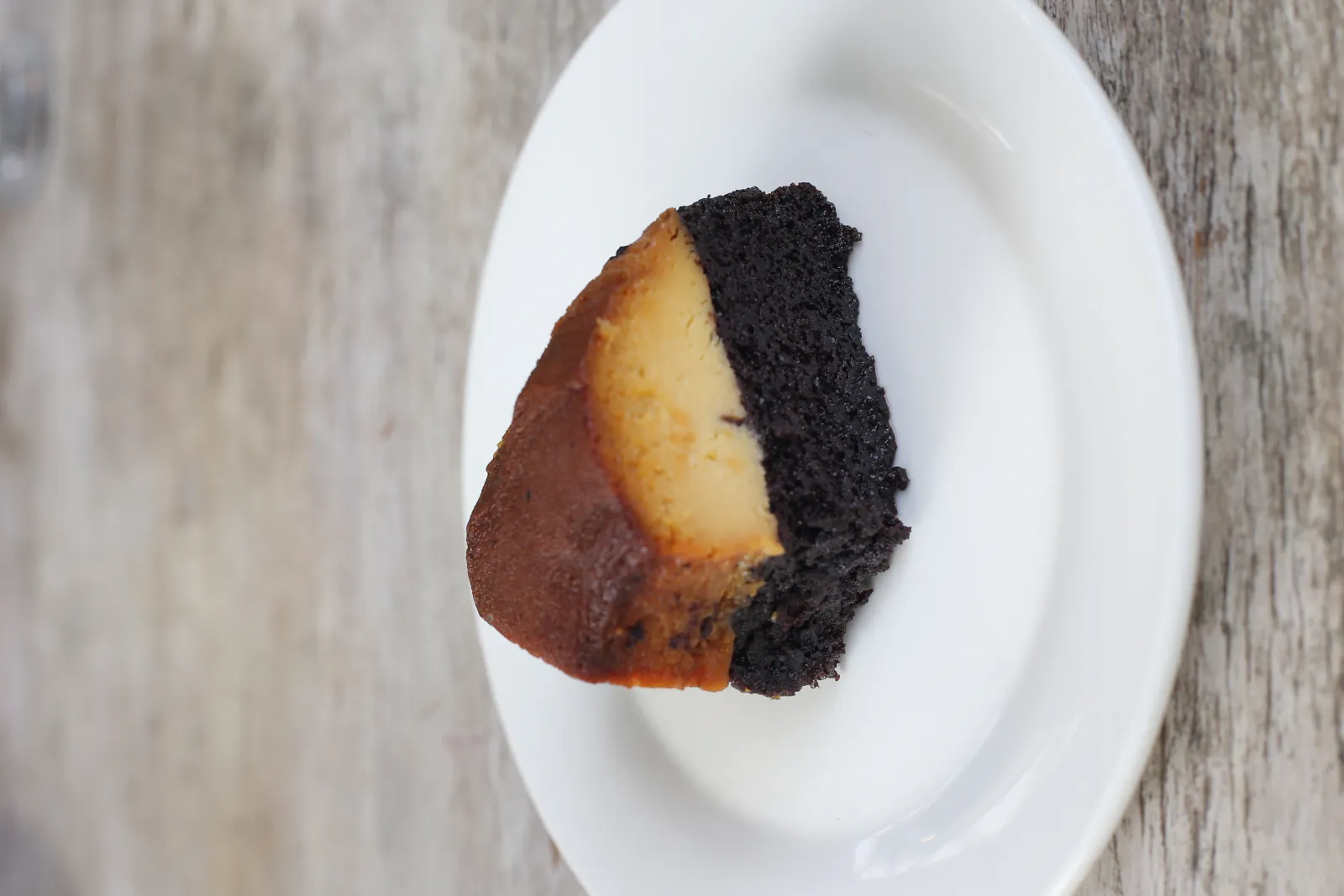

Spread a chocolate cake batter over a cup of cajeta in a Bundt pan, pour a cream cheese flan on top, and 85 minutes later the cake has climbed to the top and the flan has sunk to the bottom. That swap is why Mexican cooks call chocoflan pastel imposible, the impossible cake. It isn’t magic and it isn’t luck, and once you know what drives it you can make it work every time. Below is a version for 16 slices, with the swaps for a US or UK supermarket, two ways to know it’s done, and the overnight plan that makes it an easy party dessert.
What is chocoflan, and who is it for?
How do you make chocoflan? Butter a 12-cup Bundt pan, pour in 1 cup (240 ml) of cajeta, spread a chocolate cake batter over it and gently ladle a blended flan of condensed milk, evaporated milk, cream cheese and 5 eggs on top. Bake covered in a water bath at 350°F (175°C) for about 85 minutes, then chill 8 hours before turning it out. Ready in 650 minutes for 16 servings.
Chocoflan (CHO-co-flahn) is a two-layer Mexican dessert: a moist chocolate cake on the bottom and a dense, creamy flan on top, glazed with cajeta, a Mexican caramel made from goat’s milk. It’s sold in markets and pastry shops in Mexico and baked in many Mexican-American home kitchens. Where it started is unclear, and no one has a documented answer.
Make it if you have a crowd of a dozen or more, want a dessert that has to be made the day before, and own a Bundt pan and a roasting pan it fits into.
Skip it if you need dessert in two hours (the 8-hour chill is not optional), want something light (415 kcal a slice), or are cooking for someone who can’t have eggs, dairy or wheat.
Honest difficulty: medium. Each layer is simple. The three moments that matter are ladling the flan without mixing the layers, knowing when to pull it, and waiting before you flip it.
Why the layers swap places in the oven
When the pan goes in, a thick batter sits under a liquid flan. As the batter heats, the baking powder and baking soda release carbon dioxide, the batter fills with bubbles and gets lighter. Once it is less dense than the still-liquid flan, it rises through it in clumps while the flan settles down onto the cajeta. Then each layer sets where it ended up.
Two practical rules come from that:
- Fresh leavening. Old baking powder or soda won’t lighten the batter enough, and it stays on the bottom. Check the dates.
- A gentle pour. Ladle the flan over the batter slowly. If the two mix in the pan, they bake mixed.
Ingredients, and what to buy in the US and UK
The exact quantities are in the recipe card. Three things deserve a closer look.
Cajeta and its stand-ins
Cajeta is goat’s milk cooked down with sugar until it turns into a thick caramel sauce. It goes in the bottom of the pan and ends up as the glaze. In the US, look in the Latin aisle of large supermarkets for a jar or squeeze bottle. If you’d rather make it, my homemade cajeta gives about 750 ml (3 cups), enough for this cake with plenty left over.
| If you can’t find cajeta | What changes |
|---|---|
| Dulce de leche (US supermarkets; in the UK, canned caramel made from condensed milk) | Milkier and a little sweeter, no tangy goat note. The closest swap. |
| Colombian dulce de leche (arequipe), homemade | Thicker; warm it so it pours. |
| Jarred caramel sauce | Thinner glaze that runs off the cake more. |
| 100 g (½ cup) sugar cooked to an amber caramel in the pan | More bitter, thinner sauce, and you need nothing but sugar. |
The flan layer
This is the same mix as my Mexican flan napolitano: a 14-oz (397 g) can of sweetened condensed milk, a 12-oz (354 ml) can of evaporated milk, 190 g (6.7 oz) of cream cheese, 5 eggs and vanilla. The cream cheese is what makes the flan dense enough to slice cleanly against the cake.
- US: a standard block is 226 g (8 oz); you need about three-quarters of it.
- UK: evaporated milk cans are often bigger than 12 oz; measure 360 ml (1½ cups). Full-fat soft cheese from a tub works, and the flan comes out a little softer than with a brick.
- No cream cheese: leave it out. The flan is softer and the slice drops to about 373 kcal.
- Don’t swap the cans. Two cans of evaporated milk make a bland flan with no body; condensed milk has no quick substitute.
The chocolate cake
It’s a one-bowl oil cake with 40 g (½ cup) unsweetened cocoa, mixed by hand. The batter has to be thick enough to spread with a spatula, because a runny batter blends into the flan when you pour. In the UK use cocoa powder, not drinking chocolate, which is mostly sugar. Swapping half the milk for brewed coffee gives a darker chocolate flavor.
Equipment
- 12-cup (2.8-liter, 10-inch) Bundt pan, ideally a simple design; fine ridges stick. A 10-cup pan is too small for this amount.
- A deep roasting pan the Bundt pan fits into with water around it.
- Blender, two bowls, whisk, foil, and an instant-read thermometer if you have one.
- No Bundt pan? A 10-inch (25 cm) round pan with tall sides works, but the center takes longer and the layers are thinner.
The make-ahead plan
650 minutes on the clock, 25 of them hands-on. Turn on the oven and heat the water first; the batter and flan come together while the oven reaches 350°F (175°C).
The best plan is to bake it the afternoon or evening before, let it chill overnight in the pan, and unmold it an hour before serving. If you make your own cajeta, do that days ahead; it keeps in a jar in the fridge.
How to tell chocoflan is done
There are two layers and each has its own test. Start checking at 75 minutes.
- Cake: a toothpick pushed into the cake comes out clean or with a few moist crumbs, and the top feels firm.
- Flan: an instant-read thermometer in the flan reads 170-180°F (77-82°C). That’s past the 160°F (71°C) that makes an egg dish safe, and below the 185°F (85°C) where custard curdles.
If the toothpick shows wet batter, give it 5-10 minutes and test again. The flan looks soft coming out of the oven; it finishes setting with residual heat and in the fridge.
Why the water bath matters. The water around the pan can’t climb past 212°F (100°C), so the flan at the edge doesn’t overcook while the center catches up. Keep the foil sealed, start with hot water, and if the water is boiling hard, your oven runs hot.
Chilling and unmolding without tears
One hour on the counter, then 8 hours in the fridge, or overnight; 6 hours is the absolute minimum. Flip it earlier and the flan is still soft and the cajeta still stuck to the pan, so half the cake stays behind.
To turn it out, run a thin knife around the outside and the center tube, set the pan in hot water for 1-2 minutes to loosen the cajeta, cover with a rimmed platter and invert in one confident motion. Some cajeta always stays in the pan; scrape it out and spoon it over.
Mistakes that ruin chocoflan
- The layers didn’t switch. Expired leavening, or the flan was poured so fast it churned into the batter.
- Cracked or weeping flan. It went past 185°F (85°C). Bake at 350°F (175°C), not hotter, foil sealed, water in the pan from the start.
- Holes in the flan. Too much air from the blender. Under a minute, on low.
- Raw cake in the middle. Pulled too early, or the pan is narrower and deeper than a 12-cup Bundt. Toothpick before it leaves the oven.
- Stuck to the pan. The center tube wasn’t buttered, or it was flipped before 6 hours of chilling.
- Overflowing pan. A 10-cup Bundt is too small for this recipe.
- White specks in the flan. Cold cream cheese. Leave it out 30 minutes and blend it with the evaporated milk first.
Kid-friendly? Yes, nothing spicy, just chocolate, flan and caramel. The vanilla adds only a trace of alcohol, split 16 ways after 85 minutes in the oven. Allergens: egg, dairy and wheat. No nuts unless you decorate with pecans. Some commercial cajeta blends cow’s and goat’s milk, so check the label.
Which chocoflan should you make?
- Short on time: use a boxed chocolate cake mix, prepared as the box says, in place of the scratch batter. The layers still swap; I find the cake comes out lighter and sweeter. If the pan looks nearly full, hold back some batter and bake it as cupcakes.
- No water bath: possible, but I don’t do it. Without that cushion the flan at the edge overcooks and turns porous and weepy before the center sets. Any deep baking dish that holds the pan with a little water is better than none.
- Serving 12-16: the recipe as written; cut it into 12 generous or 16 standard slices.
- Feeding a crowd: bake two 12-cup pans side by side for 24-32 people. Two pans beat one giant one, where the center never sets in time.
- Caramel instead of cajeta: 100 g (½ cup) sugar cooked to amber in the pan. More bitter, less sweet.
- Mocha: half milk, half coffee in the batter.
What chocoflan costs
The cajeta, the two cans and the cream cheese swing a lot by brand, so I won’t put one number on them. The staples are cheap: at US average prices for September 2026, the 6 eggs, sugar, flour, milk and butter come to $2.24 for the whole cake.
Yield: 16 slices of about 150 g (5.3 oz), or 12 thicker ones.
Serving and storing
Taste and texture. A smooth, dense flan on top with cajeta running down the sides, over a moist chocolate cake that’s soaked where it meets the flan. Very sweet; the cocoa keeps it in check.
Serving. Cold, in wedges, with the cajeta from the platter spooned over. Take it out 15 minutes before serving so the glaze loosens. After a bowl of Mexican pozole rojo with a cup of café de olla, it’s a full Mexican party menu. If you want a second cake on the table, pick one without custard, like tres leches cake.
Fridge. Covered, 3 to 4 days at 40°F (4°C) or below. You can leave it in the pan and flip it the day you serve it. Keep it out of the fridge no more than 2 hours.
Freezer. No. The flan weeps and turns grainy when it thaws.
Reheating. Don’t; it’s served cold. If the cajeta on the platter firms up in the fridge, a few seconds in the microwave turns it back into sauce.
Chocoflan FAQ
Why is it called impossible cake? Because the layers trade places in the oven. The chocolate batter goes in on the bottom and comes out on top, lifted by bubbles from the baking powder and soda.
Is chocoflan Mexican? Yes, chocoflan as it’s made today, with cajeta, cake and flan in a Bundt pan, is a Mexican dessert, also called pastel imposible.
How long do you bake chocoflan? About 85 minutes at 350°F (175°C) in a water bath, in a 12-cup Bundt pan. Some ovens need 90 minutes, so start checking at 75.
How do I know when chocoflan is done? A toothpick in the cake comes out clean or with moist crumbs, and the flan reads 170-180°F (77-82°C).
How long should chocoflan chill before flipping? 8 hours or overnight, after an hour on the counter. Less than 6 hours and it tears.
Can I make chocoflan with a box cake mix? Yes. Prepare the mix as the box directs and use it instead of the scratch batter; everything else stays the same.
Can I make chocoflan without a water bath? You can, but the flan turns porous and weepy at the edge. The water bath keeps it under 185°F (85°C) while the cake bakes.
What can I use instead of cajeta? Dulce de leche is the closest. Caramel sauce or a sugar caramel made in the pan also work, with a thinner, less milky glaze.
How long does chocoflan last? 3 to 4 days covered in the fridge. Don’t freeze it.
Nutrition per slice
Per serving (one-sixteenth of the cake, about 150 g), calculated ingredient by ingredient from this recipe, with dulce de leche standing in for the cajeta:
- Calories: 415 kcal
- Protein: 10 g
- Carbohydrates: 50 g
- Fat: 20 g, 8 g of it saturated
- Fiber: 1 g
- Sugars: 39 g
- Sodium: 304 mg
Without the cream cheese, a slice comes to about 373 kcal and 16 g of fat.
I grew up in Venezuela with chocolate cake and quesillo as two separate desserts, so the first time I made chocoflan I didn’t believe they would switch places. I opened the oven halfway through to look and splashed water from the bath into the pan. Now the door stays shut until minute 75, and I bake it the day before so I’m not tempted to flip it early. A chocoflan rewards the cook who waits. Josnaisis.