
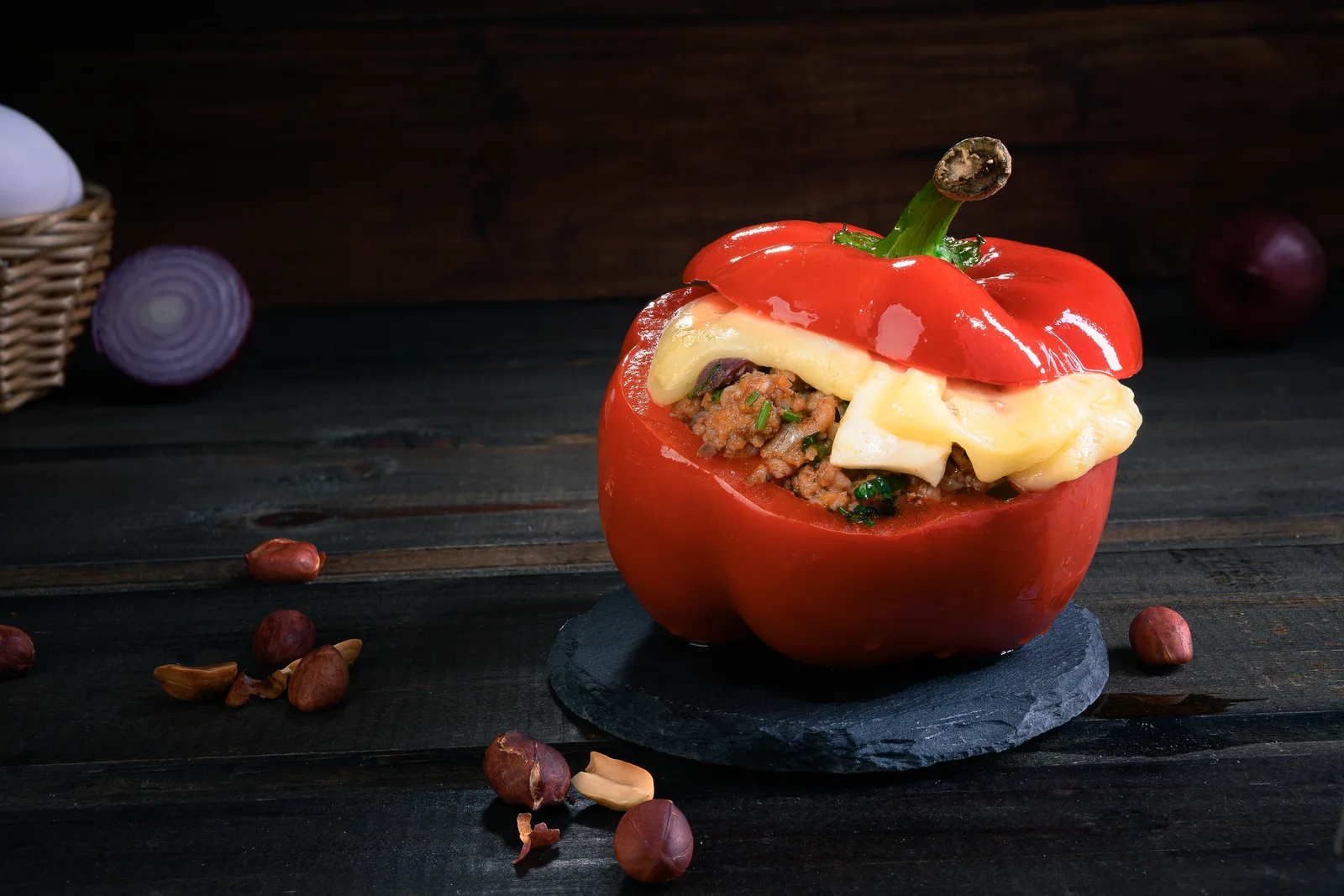

Rocoto relleno (roh-KOH-toh reh-YEH-noh) is Peru’s stuffed pepper, the signature plate of the picanterías, the traditional lunch houses of Arequipa in the southern Andes. A rocoto is a round, thick-walled red chile the size of an apple and far hotter than a jalapeño, so the whole trick is taming it: scrape out the veins, then boil it three times in fresh water with sugar, vinegar and salt. What comes out of the oven is a tender pepper with a medium kick, filled with beef, ají panca, peanuts, raisins, olives and egg, under melted cheese and an egg-and-evaporated-milk custard.
What rocoto relleno is and how long it takes
How do you make rocoto relleno? Seed and devein 6 rocoto peppers, boil them three times for 3 minutes in fresh water with sugar, vinegar and salt, and stuff them with beef cooked with ají panca, peanuts, raisins, olives and hard-boiled egg. Top with cheese and the lids, pour 2 eggs whisked with 1 cup (240 ml) of evaporated milk around them and bake at 350°F (180°C) for about 30 minutes, until the custard sets. 90 minutes for 6 servings.
Total time 90 minutes, about 55 of them hands-on. Medium difficulty: nothing is hard, but deveining without tearing the pepper and getting the boils right take care.
It isn’t the same as Mexican chiles rellenos. Those are roasted, peeled poblanos dipped in egg batter and fried, and they’re barely hot. A rocoto is never roasted or battered; it’s boiled to calm it down and then baked.
How hot is it? After three boils, medium for anyone used to chiles and noticeably hot for anyone who isn’t. For kids, use the red bell pepper version below.
Allergens. Peanuts, egg and milk. Gluten-free if your ají panca paste is; check the label.
Ingredients, and what to buy in the US and UK
| Ingredient | Amount | Where to find it, or what to use instead |
|---|---|---|
| Rocoto peppers | 6 large | Frozen in Latin and Peruvian grocers; red bell peppers |
| Beef | 500 g (1 lb 2 oz) | Hand-chopped is traditional; ground beef works |
| Ají panca paste | 2 tbsp (30 g) | Jar in the Hispanic aisle; ancho or guajillo paste |
| Queso fresco | 180 g (6½ oz) | Firm queso fresco; UK: firm block mozzarella |
| Evaporated milk | 240 ml (1 cup) | Any supermarket |
| Black olives | 60 g (2 oz) | Kalamata or any brine-cured black olive |
Finding rocotos, and the bell pepper swap
Fresh rocotos rarely show up outside South America. What you can find:
- Frozen whole rocotos. In the freezer case of Peruvian and Latin grocers in the US, and online in the UK. The closest thing to fresh. Thaw them in the fridge, devein, and give them two or three shorter boils, just until the water comes back to a boil: they thaw softer and tear sooner. Pierce the wall after each one and stop as soon as a knife slides in with little resistance while the pepper still holds its shape.
- Jarred or canned whole rocotos. Same shops, or online. They come soft and a little tangy. Drain, rinse and taste a sliver of the wall; boil once only if it’s still too hot.
- Red bell peppers. Pick small ones with thick walls. One 3-minute blanch in plain salted water softens them; skip the sugar and vinegar. You get a good dish, but sweet with no heat of its own. For a kick, stir 1 or 2 tsp of rocoto paste (sold in jars next to the ají panca) into the filling.
The other ingredients
- Ají panca is a dried Peruvian chile, dark red, fruity and barely hot; it gives the filling its color. If you can’t find the paste, soaked and blended ancho or guajillo chiles get close in color and sweetness, though the flavor shifts.
- Cheese. Arequipa uses queso paria, a firm fresh cheese that melts without weeping. A firm Latin queso fresco works in the US; in the UK, a firm block mozzarella. Soft, wet fresh cheeses release water into the dish.
- Beef. Hand-chopped beef gives a chunkier filling; ground beef is quicker and fine. Half beef and half pork is also traditional.
Equipment. Disposable gloves, a pot that fits 6 peppers, a teaspoon or melon baller, a large skillet and a deep baking dish about 8 x 12 in (20 x 30 cm) where the peppers stand snugly.
How to take the heat out of rocoto
Devein without tearing
Most of a chile’s heat lives in the white veins (the placenta) that hold the seeds, not in the seeds themselves. With gloves on, cut a ½ in lid with the stem, scoop out the seeds and scrape every vein off the walls until the inside is smooth and red. Go slowly: a hole in the wall lets the filling and custard leak out.
Don’t touch your eyes or face while you work, and wash your hands with soap afterwards, gloves or not.
Three boils, and why sugar and vinegar
Every boil is the same: water to cover, 1 tbsp sugar, 1 tbsp vinegar and 1 tsp salt, peppers and lids in once the water is boiling, 3 minutes, drain, cold rinse. Then fresh water and again. Each change of water carries off some of the heat the pepper releases, and the cold rinse stops the cooking so the walls don’t go limp.
The sugar and vinegar don’t soak up the heat. They season the pepper: sweetness and acidity balance the heat that’s left and give the dish its familiar flavor.
Doneness check. After the third boil, a knife tip slides into the wall with little resistance and the pepper keeps its shape when you hold it. If it flops like a rag, it’s overdone.
Want it barely hot? Don’t add boils. Instead, soak the deveined peppers overnight in the fridge in water with 2 tbsp vinegar and 1 tbsp sugar, then give them the usual three boils.
Step by step
The filling. Fry the ají panca paste for 1 minute until it smells toasty, then brown the beef over medium heat for 6 to 8 minutes until no pink remains. The onion goes in after the beef, over lower heat, for 10 minutes, so it softens in the meat juices and sweetens the filling. It’s ready when the onion is soft and there’s almost no liquid when you drag a spoon through the pan; a wet filling soaks the pepper and stops the custard setting. Peanuts, raisins, olives and egg go in off the heat.
Stuffing and the custard. Pack the filling tight to the rim with the back of a spoon, add the cheese and the lid, and stand the peppers close together so they hold each other up. Pour the egg and evaporated milk around them, not just over the top: it bakes into a savory custard about ½ to ¾ in (1 to 2 cm) deep that gets spooned onto each plate.
Baking. 350°F (180°C) for about 30 minutes. It’s done when the custard doesn’t wobble liquid in the middle of the dish, the edges are turning golden and the cheese is melted under the lid. An instant-read thermometer in the custard should read 160°F (71°C). Rest 5 minutes before serving.
Troubleshooting
- Too hot. Veins were left behind or the peppers got fewer boils. Next time scrape harder and use the overnight soak rather than extra boils. At the table, the custard and a slice of potato gratin soften it.
- The pepper split. Too many or too long boils, or a frozen rocoto treated like fresh. If it only cracks, set the lid on and lean it against its neighbors.
- Runny custard. A wet filling, a dish so big the custard is a thin film, or not enough time. Give it 5 more minutes and check again.
- Watery cheese. The cheese was too soft. Pat it dry on paper towels or use a firmer one.
Make-ahead plan and leftovers
The day before. Devein and boil the peppers and keep them drained in a covered container in the fridge. Make the filling, cool it and store it separately. On the day, stuff, pour and bake; with fridge-cold filling allow 5 to 10 extra minutes and check that the center and custard reach 160°F (71°C).
For 12. Double everything and use two dishes, side by side in the oven, not stacked.
Fridge. Cool and refrigerate within 2 hours; keeps 3 to 4 days.
Freezer. Hard-boiled egg and egg custard turn rubbery and watery when frozen, so don’t freeze the finished dish. Freeze the filling without the egg for 2 to 3 months and add fresh chopped egg after thawing.
Reheating. Covered with foil in a 350°F (180°C) oven for about 20 minutes, until the center passes 165°F (74°C). In the microwave, halve the pepper and heat at medium power in 1-minute bursts so the custard doesn’t dry out.
What to serve with rocoto relleno
In Arequipa it nearly always comes with pastel de papa, a potato gratin layered with queso fresco and a little aniseed and set with egg and evaporated milk. For 6 as a side:
- 2 lb (900 g) potatoes, boiled in their skins, peeled and thickly sliced
- 8 oz (225 g) queso fresco, sliced
- 1 tsp aniseed
- 4 eggs, 1½ cups (360 ml) evaporated milk, salt and pepper
- 1 tbsp butter for the dish
Butter a dish and make three layers of potato, cheese and a pinch of aniseed. Whisk the eggs until frothy, mix in the milk, salt and pepper, and pour it over. Bake at 350°F (180°C) for about 40 minutes, until golden and set in the middle. It shares the oven with the peppers: put it in 10 minutes before them and they come out together.
For something lighter, a sliced onion and tomato salad or cold papa a la huancaína, potatoes in a creamy chile-cheese sauce works too. To round out a Peruvian meal, start with causa limeña, layered potato terrine and pour glasses of chicha morada, the purple corn drink.
FAQ
Can I use ají amarillo instead of rocoto? Not for stuffing: it’s long and thin-walled. As a paste, 1 tbsp in the filling gives bell peppers some heat.
Is rocoto relleno very spicy? Raw rocoto is fierce. Deveined and boiled three times it’s medium, softened further by the custard and cheese. With bell peppers it isn’t hot at all.
What can I do with leftover filling? Stuff a bell pepper, stir it into white rice or use it in empanadas. It keeps 3 to 4 days in the fridge.
Nutrition per serving
One stuffed pepper with its share of custard, without the potato gratin, calculated from the recipe quantities and assuming each rocoto weighs about 3½ oz (100 g):
- Calories: 570 kcal
- Protein: 33 g
- Carbohydrates: 28 g
- Fat: 38 g (14 g saturated)
- Fiber: 4 g
- Sugars: 17 g
- Sodium: 850 mg
Most of the sugar comes from the raisins, onion and evaporated milk, not from the boiling water, which is poured away.
When I make this, everything rides on the deveining: if every vein comes out, three boils are enough and the pepper reaches the table whole. I chop the beef by hand even though it takes longer, because the filling keeps pieces you can tell apart from the peanuts and raisins. And I make the filling the night before, since it tastes better the next day. Josnaisis.