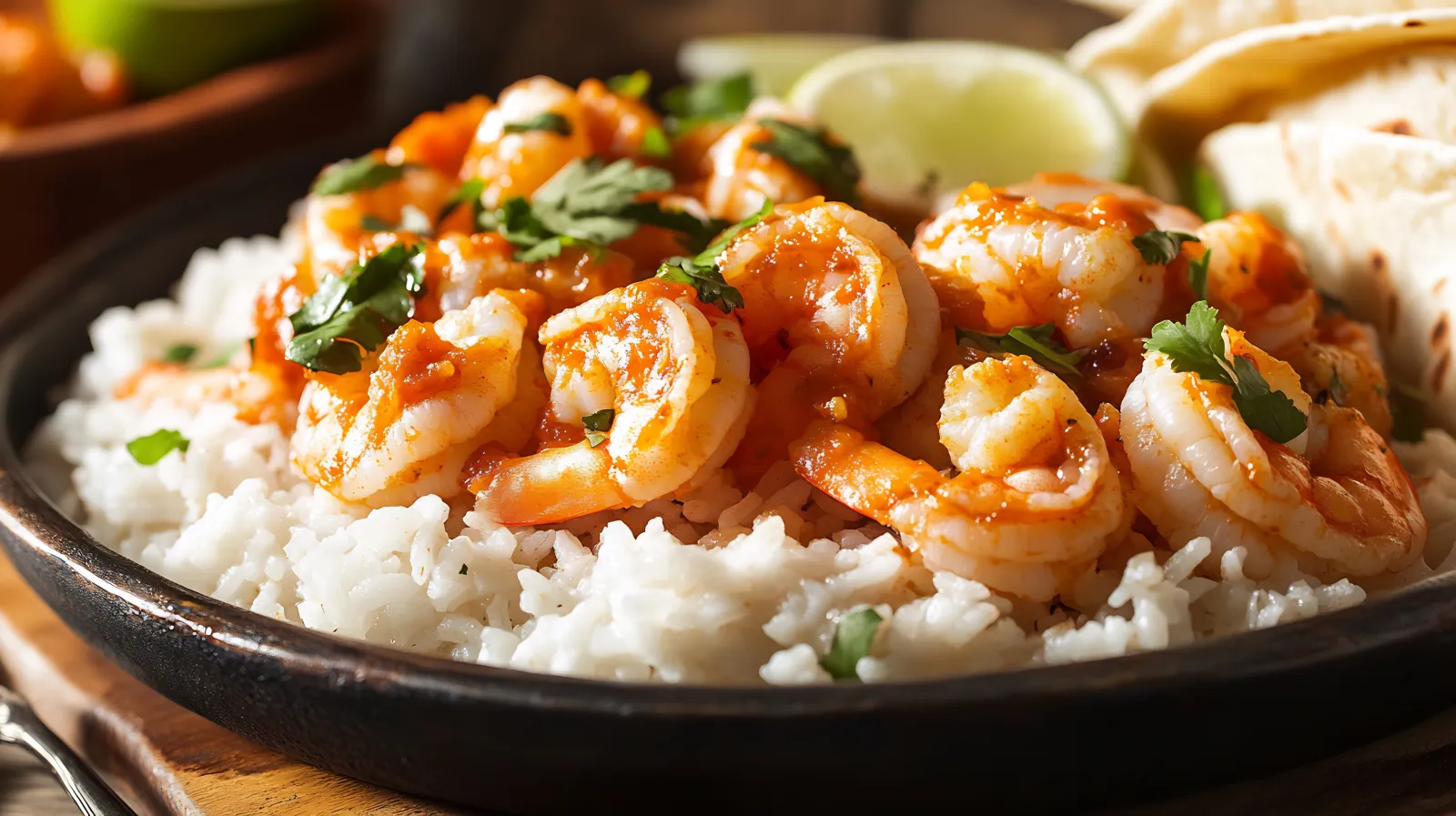

At 15,000 to 30,000 Scoville heat units, the skinny dried chile de árbol is the devil in camarones a la diabla (kah-mah-ROH-nehs ah lah dee-AH-blah). The dish is Mexican shrimp cooked in a thick red sauce of dried guajillo chiles, chiles de árbol and smoky chipotles in adobo, blended with tomato and garlic and served over rice. It is spicy by design, but the heat comes from one ingredient you can dial up or down, and the shrimp only need 4 minutes. Everything that goes wrong with this dish happens in those 4 minutes.
What camarones a la diabla are, and whether they’re worth making
How do you make camarones a la diabla? Toast dried guajillo and árbol chiles, simmer them 10 minutes with tomatoes, onion and garlic, then blend with chipotles in adobo and strain. Fry the sauce in oil for 10 to 12 minutes until thick and brick red, then add raw shrimp and cook 4 to 5 minutes for large shrimp, until pink, opaque and curled into a C, 145°F (63°C). Ready in 40 minutes for 4 servings.
Worth it if you want a seafood main that needs no oven and no deep-frying: 40 minutes on the clock, about 25 of them hands-on, and the sauce can be made a day ahead, which leaves 10 minutes on the night. It suits a weeknight for 4, a Lent Friday, or a Mexican dinner for a crowd, since the sauce scales and holds.
It is not the dish for anyone with a shellfish allergy, or for a table that wants no heat at all and won’t let you tweak the chiles. It is also a poor fit for small precooked salad shrimp, which turn chewy and soak up almost no sauce.
If you know shrimp fra diavolo, the Italian-American cousin, the idea is similar and the flavor is not. Fra diavolo is tomato, garlic and crushed red pepper flakes, usually over pasta. The Mexican version builds its sauce from whole dried chiles, so it is earthier, smokier and darker, and it goes over rice.
The chiles, what each one does, and how to set the heat
Three dried chiles, three jobs. Going by the ranges listed on Wikipedia, chile de árbol sits far above the other two at 15,000 to 30,000 Scoville heat units (SHU), while chipotle, a ripe jalapeño dried over smoke, reaches 8,000 at most and guajillo tops out at 5,000.
Guajillo gives the color and a mild, fruity backbone. Chipotle in adobo adds smoke and a little vinegar tang. Chile de árbol adds heat and not much else, which is exactly why it is the one to adjust.
- Mild → 4 guajillos and 1 chipotle without its adobo, no árbol. Red, smoky, gentle.
- Medium, as written → 4 guajillos, 3 árbol, 2 chipotles and 1 tbsp adobo. Clearly spicy, still a full plate.
- Full diabla → 4 guajillos, 6 árbol, 3 chipotles. For the person who orders the hottest thing on the menu.
Overshot the heat? Don’t add sugar. Blend 200 g (7 oz) more simmered tomato into the sauce and fry it 5 minutes longer. It dilutes the heat and keeps the flavor.
Which shrimp to buy, and what to do with frozen
Buy raw, peeled and deveined shrimp, size 26/30 per pound (that’s the count, so 26 to 30 shrimp make a pound, or 57 to 66 per kilo). For a main course over rice, plan on 6 oz (175 g) raw peeled shrimp per person. In the UK they’re sold as king prawns, often by the kilo with a count on the bag.
Thawing frozen shrimp safely. The FDA’s advice: thaw overnight in the fridge, or in a sealed bag submerged in cold water, changing the water every 30 minutes, which takes about an hour for a 1 lb (450 g) bag. Cook them right after, and never thaw on the counter. Pat them very dry before they go in: water from wet shrimp thins the sauce.
Precooked shrimp. Thaw, dry, and stir them into the finished sauce with the heat off. 60 to 90 seconds and they’re warm through. Any longer and you’re cooking them a second time, which is where the rubber-band texture comes from.
Cooking time by shrimp size
Size sets the time, not the clock on the recipe card. These are minutes in already-thickened sauce at a medium simmer, starting from raw:
| Size (count per lb) | Per kg | Minutes in the sauce | Best use |
|---|---|---|---|
| Small 41/50 | 90-110 | 2-3 min | tacos |
| Medium 31/40 | 68-88 | 3-4 min | over rice |
| Large 26/30 | 57-66 | 4-5 min | this recipe |
| Jumbo 16/20 | 35-44 | 5-7 min | check 145°F (63°C) |
The FDA’s doneness cue for shrimp is flesh that turns firm, pearly and opaque, and 145°F (63°C) for most seafood. My own shortcut is the shape. Raw shrimp are nearly straight; cooked, they curl into a loose C. Leave them on the heat and the tail meets the head in a tight O, and by then they’re tough.
The sauce ingredients and US and UK supermarket swaps
Guajillos, árbol chiles and canned chipotles in adobo are in the Hispanic aisle of most large US supermarkets and every Mexican grocery. In the UK, Mexican food specialists online carry all three, and canned chipotles in adobo also turn up in larger supermarkets’ world-food aisles.
| Ingredient | Best swap | What changes |
|---|---|---|
| Guajillo chiles, 4 (1 oz / 25 g) | 2 ancho chiles, or 2 tbsp sweet paprika | Ancho is darker and sweeter; paprika gives the color but a flatter flavor |
| Chile de árbol, 3 | ¼ tsp cayenne or 2 dried bird’s eye chiles | Start with half; heat is less predictable |
| Chipotles in adobo, 2 | 1 tsp smoked hot paprika (pimentón) plus 1 tsp vinegar | Smoke without the adobo’s body |
| Fresh tomatoes, 14 oz (400 g) | 1 can (14 oz / 400 g) whole peeled tomatoes, no simmering | Redder, slightly sweeter; cut salt to ½ tsp |
| Mexican oregano | Regular oregano, same ½ tsp | Less citrusy, barely noticeable here |
Equipment. A blender, a fine sieve, an 11 to 12 inch (28 to 30 cm) skillet and a small pot. An instant-read thermometer isn’t required, but with jumbo shrimp it settles every doubt.
Game plan, make-ahead and scaling for a crowd
40 minutes, 25 of them hands-on. Peel the shrimp while the chiles simmer, and don’t let the shrimp near the pan until the sauce is done.
Make ahead. The fried sauce keeps covered in the fridge and tastes rounder the next day. Raw shrimp, cleaned and dried, can wait in the fridge too, but the FDA gives fresh shrimp only 1 to 2 days at 40°F (4°C) or below, so don’t buy them earlier than that. On the day, bring the sauce back to a simmer, about 3 minutes, and add the shrimp.
| Servings | Raw peeled shrimp | Guajillo | Árbol | Chipotle | Tomatoes | Pan |
|---|---|---|---|---|---|---|
| 4 | 1½ lb (700 g) | 4 | 3 | 2 | 14 oz (400 g) | one 12 inch (30 cm) |
| 6 | 2⅓ lb (1.05 kg) | 6 | 4 | 3 | 1⅓ lb (600 g) | one 12 inch, tight single layer |
| 10 | 3¾ lb (1.75 kg) | 10 | 7 | 5 | 2¼ lb (1 kg) | two skillets or a wide braiser |
| 20 | 7¾ lb (3.5 kg) | 20 | 14 | 10 | 4½ lb (2 kg) | sauce in a pot, shrimp in batches |
For 10 or more, make the sauce the day before and split it between two pans. Never pile the shrimp two deep: they steam, release water and thin the sauce. For 20, cook 2 lb (1 kg) batches in 6 cups (1.5 L) of hot sauce and move each into a covered dish. They hold 10 minutes covered off the heat; a lit chafing dish keeps cooking them.
Mistakes that ruin camarones a la diabla, plus heat, kids and allergens
- Rubbery shrimp → cooked while the sauce was still reducing, or left in a hot pan. Thick sauce first, 4 to 5 minutes, heat off.
- Bitter sauce → a chile burned while toasting. There’s no fixing it; start the sauce again before the shrimp go in.
- Gritty sauce → it wasn’t strained. Guajillo skins survive any blender.
- Tastes raw, like boiled chile → the sauce wasn’t fried long enough. Those 10 to 12 minutes in oil turn it from purée into a cooked sauce.
- Watery sauce → wet or crowded shrimp. Dry them and give them one layer.
- Too salty → the adobo and the shrimp both carry salt. Start with ¾ tsp and adjust at the end.
Heat level, 3 out of 5 as written, 1 out of 5 for the mild version, 4 to 5 for full diabla.
Kids. For one sauce that feeds everyone, keep the chiles de árbol out of the pot: toasting them is enough. Blend the base first without árbol or chipotles (guajillos, tomatoes, onion, garlic, oregano and the cooking water), pour off 1 cup (240 ml), and only then add the toasted árbol and the chipotles with their adobo to the blender and blend again. Fry the reserved cup in a small pan and cook 5 oz (150 g) of shrimp in it for the children. It looks the same and barely registers as spicy.
Allergens. Crustacean shellfish is one of the FDA’s 9 major food allergens and one of the 14 the UK and EU require on labels. Anyone allergic shouldn’t eat the sauce either if it cooked with the shrimp. The recipe has no gluten, dairy, egg or nuts, but check the chipotle can’s label for a coeliac guest.
Versions worth knowing
- Weeknight, 20 minutes → skip the dried chiles. Blend a 14 oz (400 g) can of tomatoes with 3 chipotles, 2 tbsp adobo, garlic and onion, fry 8 minutes, add shrimp. Smokier and less fruity; in Mexico this is closer to camarones enchipotlados.
- Creamy diabla → stir in ½ cup (120 ml) heavy cream at the end over low heat, as many US restaurants do. Softer heat, about 100 kcal more per plate.
- Lighter → 1 tbsp oil instead of 3, about 60 kcal less per plate, and ½ tsp salt.
- Vegetarian → 1⅓ lb (600 g) quartered mushrooms, sautéed 6 minutes before the sauce. Not camarones anymore, but the sauce carries it.
- For tacos → small 41/50 shrimp, 3½ oz (100 g) per person, in warm corn tortillas with sliced onion and lime.
- Mild, cooked into the rice → that is a different dish from the other side of the Caribbean, Colombian shrimp rice, where the heads and shells become the cooking stock.
What camarones a la diabla cost for 4
In the US, with shrimp at $8.53 a pound, the average supermarket feature price in Expana’s Q2 2026 shrimp report, plus BLS and USDA AMS averages for tomatoes, onion, garlic and rice, dinner for 4 comes to about $15.78, roughly $3.95 a serving. Dried chiles, chipotles, oil and salt aren’t tracked in those price series, so they’re left out.
Yield. 4 main-course plates of about 6 oz (175 g) shrimp with sauce, over rice. As tacos or a starter, it stretches to 6 or 8.
What drives the cost. The shrimp, 83 % of the total. Frozen raw shrimp are usually the cheapest route to the same result, and medium shrimp cost less per pound than large and cook just as well. A bag of guajillos covers several batches.
Serving, storing and reheating
Taste and texture. A thick, dark red sauce that clings to each shrimp: fruity from the guajillo, smoky from the chipotle, with heat that builds on the second bite. Shrimp cooked to the C stay juicy and snap slightly when bitten.
How to serve them. Over Mexican red rice or plain white rice to catch the sauce, with lime wedges and warm corn tortillas, plus refried beans if you want a full plate. For a seafood spread, open with a cold Mexican shrimp cocktail or shrimp aguachile, which contrast well with a hot, spicy main. For a milder fish dish in tomato sauce on the same table, fish Veracruz style brings olives and capers instead of chile.
Fridge. Cooked seafood keeps 3 to 4 days at 40°F (4°C) or below, according to the FDA storage chart, and nothing should sit out more than 2 hours. Store the shrimp in their sauce in a shallow container.
Freezer. Cooked shrimp can be frozen, but they come back tougher and weepy. I freeze only the sauce, which keeps 2 to 3 months like any stew, and cook fresh raw shrimp in it after thawing.
Reheating. Covered, over low heat, stirring until the sauce simmers gently and the shrimp reach 165°F (74°C), the USDA’s mark for leftovers. Add 2 tbsp water if the sauce has tightened. In the microwave, 30-second bursts with a stir in between; 3 minutes straight shrinks the shrimp.
Camarones a la diabla FAQ
What is diabla sauce made of? Dried guajillo and árbol chiles simmered with tomato, onion and garlic, blended with chipotles in adobo and oregano, strained and fried in oil until thick. Some cooks add chicken stock or cream.
Are camarones a la diabla very spicy? Medium-hot as written, about 3 out of 5. Almost all of that comes from the chile de árbol, the hottest of the three by far; leave it out for a mild version.
How long do you cook shrimp in the sauce? 4 to 5 minutes for large 26/30 shrimp, 2 to 3 for small and 5 to 7 for jumbo, starting raw in already-thickened sauce. Pull them when they’re opaque and curled into a C, 145°F (63°C).
Why did my shrimp turn rubbery? They overcooked, usually because they went in before the sauce had thickened or stayed in the hot pan afterwards. A tight O shape is the giveaway.
Can I use frozen shrimp? Yes. Thaw overnight in the fridge or in a sealed bag in cold water, changing the water every 30 minutes, and pat them dry before cooking.
Can I make the sauce ahead? Yes. Frozen, the fried sauce keeps 2 to 3 months; chilled, 3 to 4 days. Cook the shrimp on the day.
What’s the difference between camarones a la diabla and shrimp fra diavolo? Fra diavolo is Italian-American: tomato, garlic and red pepper flakes, usually with pasta. Camarones a la diabla use whole dried Mexican chiles and chipotle for a smokier, darker sauce served with rice.
Nutrition per serving
Per serving (about 6 oz / 175 g shrimp with sauce, rice not included), calculated ingredient by ingredient from USDA FoodData Central (SR Legacy) using this recipe’s quantities. Dried ancho stood in for the guajillo and árbol, the closest entry, and canned jalapeño for the chipotles in adobo:
- Calories: 293 kcal
- Protein: 38 g
- Carbohydrates: 12 g
- Fat: 12 g, of which 2 g saturated
- Fiber: 4 g
- Sugars: 4 g
- Sodium: 925 mg
Serving it over rice? Count about 45 g of carbohydrates and 205 kcal more per cup (158 g) of cooked white rice. Shrimp are naturally a little salty (208 mg sodium per plate here), the adobo adds 125 mg and the added salt 581 mg. Halve the salt to ½ tsp and a plate lands near 630 mg.
Growing up in Venezuela, shrimp meant garlic shrimp or shrimp in rice, and the hot sauce lived in a bottle on the table. This dish taught me to cook with dried chiles, and the hardest part wasn’t the sauce. It was turning off the burner while the shrimp still looked like they needed another minute. They never do. Josnaisis.