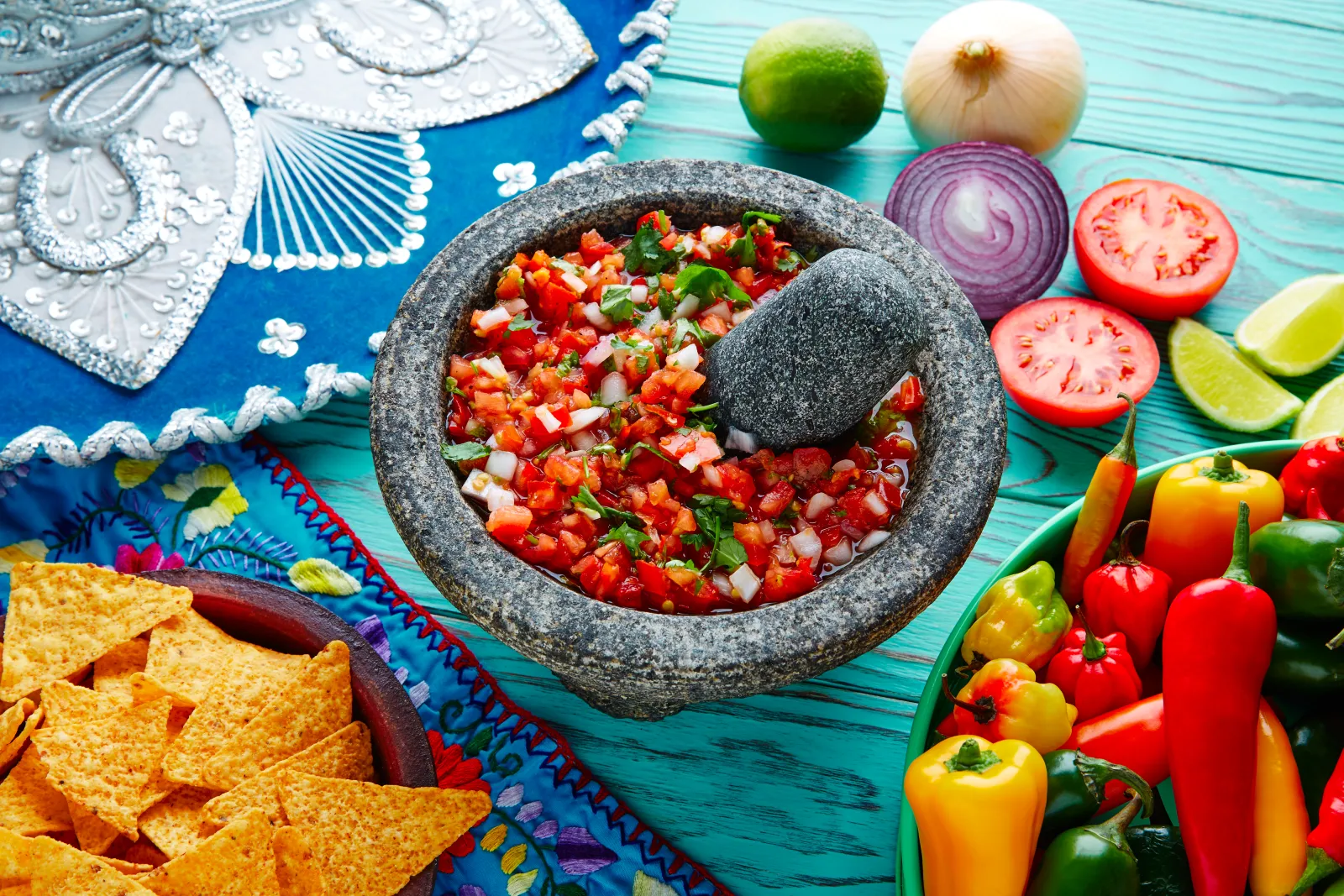

Pico de gallo (PEE-koh deh GUY-oh) is Mexico’s knife-cut salsa, four raw ingredients diced and dressed with lime and salt: tomato, white onion, fresh green chile and cilantro. Mexico’s own dictionary of Spanish, published by El Colegio de México, defines it in one line as a sauce of chopped raw tomato, onion and green chile. In US stores it is often sold as salsa fresca. The only hard part is the one nobody warns you about, the puddle of tomato juice that appears in the bowl after twenty minutes, and this recipe is built around stopping it.
Is homemade pico de gallo worth 30 minutes?
How do you make pico de gallo that isn’t watery? Seed 600 g (1⅓ lb) of Roma tomatoes, dice them into 1 cm (3/8 inch) cubes, toss with ½ teaspoon of salt and drain in a sieve for 20 minutes. Meanwhile dice white onion, two serrano chiles and cilantro, then combine everything with lime juice and the rest of the salt right before serving. Ready in 30 minutes for 6 servings.
Yes. It takes about 15 minutes of actual chopping and 30 on the clock, no stove involved. The payoff is texture: every cube of tomato stays firm and the onion stays crisp, which is the whole point of a fresh salsa and the first thing a store-bought one loses.
It is worth it for taco night, a bowl of chips before dinner, weekend eggs or anything off the grill. It is less suited to a make-it-tomorrow plan: pico is at its best within a few hours.
The ratio, per 100 g (3½ oz) of tomato
I think of pico de gallo per 100 g of tomato, because then it scales to any crowd without guesswork. The full batch for 6 is in the recipe card.
| Ingredient | Per 100 g (3½ oz) tomato | For 6 | For 20 |
|---|---|---|---|
| Roma tomatoes | 100 g (1½ tomatoes) | 600 g (1⅓ lb) | 2 kg (4½ lb) |
| White onion | 20 g (2 tbsp diced) | 120 g (4 oz) | 400 g (14 oz) |
| Serrano chile | ⅓ chile | 2 chiles | 6 to 7 chiles |
| Cilantro, chopped | 2.5 g (1½ tbsp) | 15 g (½ oz) | 50 g (1¾ oz) |
| Lime juice | 5 ml (1 tsp) | 30 ml (2 tbsp) | 100 ml (scant ½ cup) |
| Fine salt | 1 g | 1 tsp (6 g) | 3⅓ tsp (20 g) |
Five parts tomato to one part onion is where the onion is present without taking over. If you like it oniony, go to four to one.
Shopping for pico de gallo in a US or UK supermarket
Everything here is in an ordinary supermarket. The choices that matter are which tomato, which onion and which chile.
| You’ll see | Use it? | What changes |
|---|---|---|
| Roma / plum tomatoes | Best choice | Thick walls, little jelly, firm dice |
| Round slicing or beefsteak tomatoes | Yes, with care | Much more juice; seed fully and drain 30 minutes |
| Cherry or baby plum tomatoes | Good in winter | Sweeter, more work, quartered rather than diced |
| White onion | Best choice | Clean, crisp, the Mexican default |
| Red onion | Yes | Sweeter, pink color, nice with fish |
| Yellow onion / UK brown onion | Only if it’s all you have | Heavier and sulfurous raw; soak it 10 minutes |
| Serrano chile | Best choice | Hotter, grassier, thin enough to mince fine |
| Jalapeño | Yes | Milder, thicker flesh; use 1 instead of 2 serranos |
| UK green finger chilli | Yes | Heat varies a lot; add half, taste, then more |
| Coriander (UK) / cilantro (US) | Required | Same herb, two names |
Salt. The recipe uses fine table salt, 6 g to the teaspoon according to the USDA. If you cook with kosher salt, weigh it: flakes take more room, so a teaspoon of kosher holds less salt than a teaspoon of table salt.
How hot each chile really is
The University of Arizona’s extension service puts jalapeños at 2,500 to 5,000 Scoville units and serranos at 10,000 to 23,000, which is why one jalapeño stands in for two serranos here. New Mexico State University adds that heat in the same variety shifts with weather and watering, so taste a sliver before you commit the whole chile. Most of the burn sits in the white ribs and seeds; cut them out and a serrano keeps its flavor while losing much of its bite.
How to make pico de gallo step by step
Start with the tomatoes, because they are the only thing that has to wait. While they drain for 20 minutes, everything else gets chopped.
The salt-and-drain step that keeps it dry
According to the USDA, a ripe tomato is 94.5% water. Salt pulls that water out of cut cells within minutes, which is exactly what you want in a sieve and exactly what you don’t want in the serving bowl. So the salt goes in twice: ½ teaspoon on the diced tomato in the sieve, and the rest at the very end with the lime. After 20 minutes you’ll see several tablespoons of pink liquid in the bowl below and the cubes still intact.
No sieve? Spread the salted tomato on a double layer of paper towels for the same 20 minutes.
Knife sizes, and why they differ
- Tomato → 1 cm (3/8 inch) cubes; for tacos, a bit smaller, 6-7 mm (¼ inch), so they stay on the tortilla.
- Onion → 5 mm (¼ inch), half the size of the tomato, so it doesn’t dominate a bite.
- Chile → ⅛ inch (2-3 mm), minced fine so nobody gets a whole chunk.
- Cilantro → chopped, not pulverized; bruised cilantro darkens fast.
A sharp knife matters more than usual. A dull one crushes the tomato instead of slicing it and squeezes out the juice you just worked to remove. A food processor turns the whole thing into purée in seconds.
Who this recipe is for
- If you’re feeding a taco crowd → the drained version holds up on a buffet for the full 2 hours.
- If you’ve only ever had store-bought salsa → start with jalapeño, ribs removed, and work up.
- If you have 15 minutes → seed the tomatoes, skip the drain and serve immediately.
- If you need a vegan or gluten-free dish → it already is.
Make-ahead plan and pico de gallo for a crowd
What you can prep. The onion, chile and cilantro can be chopped up to 4 hours ahead and kept separately in the fridge. The tomatoes can be diced, drained and chilled up to 3 hours ahead. Combine everything, with lime and the final salt, in the last 30 minutes.
How much to make. I count about 100 g (3½ oz) of tomato per person when pico is the main salsa with tacos or chips, and half that when guacamole and another salsa share the table.
| Guests | Pico is the only salsa | With other salsas |
|---|---|---|
| 4-6 | 400-600 g (about 1-1⅓ lb) tomato | 200-300 g (7-11 oz) |
| 10 | 1 kg (2¼ lb) | 500 g (1.1 lb) |
| 12-20 | 1.2-2 kg (2⅔-4½ lb) | 600 g-1 kg (1⅓-2¼ lb) |
Past 1 kg (2¼ lb), drain the tomatoes in two sieves; piled into one, the bottom layer stays wet.
Mistakes, heat level, kids and allergens
- Watery bowl → seeds left in, no draining, or round tomatoes. Seed, then drain round tomatoes for 30 minutes and Romas for 20.
- Flat taste → under-salted. Add salt a pinch at a time and taste on a chip.
- Onion overload → pieces too big or a harsh onion. Give it a 10-minute cold soak and dice it to ¼ inch (5 mm).
- Too hot → make a second chile-free batch of tomato and onion and mix the two. Extra lime won’t fix it.
- Mushy tomato → dull knife or hard stirring. Fold with a spoon from the bottom up.
Heat level. Two serranos with ribs gives medium heat; ribs and seeds out, mild. A seeded jalapeño barely registers.
Kids. Many eat the tomato and push the onion aside. I set aside a chile-free portion with finer onion before adding the chile to the rest.
Allergens. No gluten, dairy, egg, nuts, fish or soy. Check the chips, not the salsa.
Food safety. USDA FSIS advises keeping perishable food out of the fridge for no more than 2 hours, or 1 hour above 90°F (32°C). At an outdoor party, nest the bowl in a larger bowl of ice or refill in small batches.
Which version should you make?
- Mango pico → swap 200 g (7 oz), a third of the tomato, for firm mango in 1 cm (3/8 inch) dice, and use red onion. Sweeter, great with fish tacos and pork. Eat it the same day.
- Cucumber pico → swap 150 g (5 oz) of tomato for seeded cucumber. Crisper and drier.
- With avocado → fold in one diced Hass avocado at the end. That’s halfway to a chunky authentic Mexican guacamole, and it browns within hours.
- With habanero → in Yucatán, xnipec combines habanero, red onion, tomato and sour orange juice. Half a seeded habanero is plenty for 600 g (1⅓ lb) of tomato.
The Jalisco “pico de gallo” is a different dish. In Guadalajara and central Mexico the name also covers a fruit snack: jicama, orange, cucumber and sometimes pineapple, with lime and chile powder, no tomato at all. Cookbook author Zarela Martínez describes it as a salad sold from street carts in paper cones. If someone in Jalisco offers you pico de gallo, expect fruit.
Pico de gallo vs salsa. Pico is chopped and raw. Most jarred and restaurant table salsas are cooked and blended, with a pourable texture. A green Mexican salsa verde is built on tomatillos instead of tomatoes, and a taqueria red salsa made with dried chiles de árbol is the cooked, smoky one you’ll see next to it at taco stands.
What a batch of pico de gallo costs
At the US average tomato price from the Bureau of Labor Statistics for August 2026, $1.98 per pound, plus USDA retail ad prices for the rest, a batch for 6 costs about $4.47, or $0.75 a serving. Tomatoes are 59% of the bill. Buying Romas on promotion that week, at $1.27 per pound in USDA’s ad survey, brings the batch to about $3.53. It yields roughly 3 cups, enough for 18 to 20 tacos.
Serving it, and how long pico de gallo keeps
What to serve it with. Pile it on tacos al pastor or carnitas tacos, spoon it over chicken tinga on tostadas, or put a bowl next to chilaquiles verdes at brunch. It also works with grilled fish and steak, and next to egg-battered chiles rellenos, where its acidity cuts the fried coat. At breakfast, spoon it cold over Mexican molletes with refried beans and melted cheese straight from the oven.
Fridge. It is best the day you make it. Covered at 40°F (4°C) or below, it keeps for up to 2 days in my kitchen, but after 24 hours the tomatoes soften, more juice pools and the onion gets louder. Drain off the liquid and re-season with a squeeze of lime and a pinch of salt before serving leftovers.
Freezer. Not for eating raw: thawed tomato collapses. A two-day-old pico does make a fine cooked sauce, though; 5 minutes in a skillet over medium heat with a little oil and it’s the base for Mexican-style scrambled eggs.
Frequently asked questions
Why is my pico de gallo watery? The tomato is releasing its juice. Use Roma tomatoes, scoop out the seeds and jelly, salt the dice and drain for 20 minutes, and add the rest of the salt and the lime just before serving.
Should pico de gallo use serrano or jalapeño? Serrano is the traditional choice and the hotter one; jalapeño sits at 2,500-5,000 Scoville units, serrano at 10,000-23,000. For 600 g (1⅓ lb) of tomato use 2 serranos or 1 jalapeño.
What’s the difference between pico de gallo and salsa? Pico de gallo is raw and chopped. Salsa roja, the red table salsa, is cooked and blended. In Mexico pico is also called salsa mexicana or salsa bandera.
Can I use red onion? Yes. It is sweeter and turns the pico slightly pink. White onion is the Mexican default.
How long does pico de gallo last? It is best the same day and keeps up to 2 days covered at 40°F (4°C). Leave it out no more than 2 hours, or 1 hour above 90°F (32°C).
Can I make pico de gallo the night before? Chop the onion, chile and cilantro the night before if you must, but dice the tomatoes on the day and combine within 30 minutes of serving.
How much pico de gallo for 20 people? About 4½ lb (2 kg) of tomatoes if it’s the only salsa, half that alongside guacamole and other salsas.
Nutrition
Per serving (one-sixth of the batch, about ½ cup), calculated ingredient by ingredient from USDA FoodData Central (SR Legacy), counting the whole tomato and all the salt:
- Calories: 29 kcal
- Protein: 1 g
- Carbohydrates: 6 g
- Fat: 0 g
- Fiber: 2 g
- Sugars: 4 g
- Sodium: 395 mg
The real sodium is lower than that figure, since part of the draining salt leaves with the juice. Each serving also carries about 290 mg of potassium and 18 mg of vitamin C.
Here in Colombia the sauce on most tables is ají, loose and vinegary, and you spoon it on with its liquid. Pico de gallo asks for the opposite, every cube dry and separate, and for a long time I blamed the lime when mine turned to soup. It was the tomato all along. Josnaisis.